
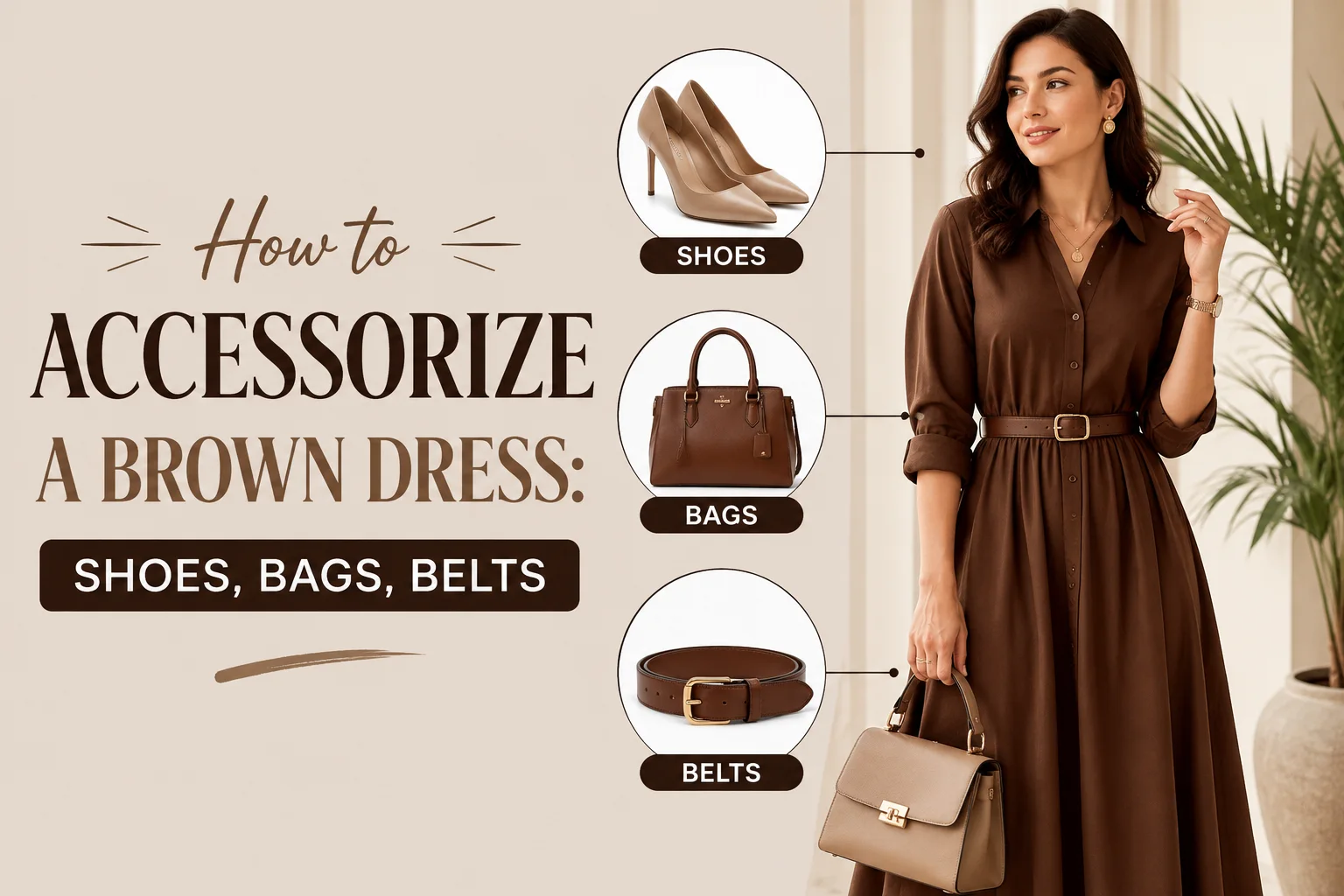
A brown dress is one of the easiest neutrals to build an outfit around, but it’s also easy to under-accessorize because “brown goes with everything” can feel like it leaves no real decision to make. It does: the real choice is between contrast and harmony. Contrast pairs a light dress with darker accents, or a dark dress with lighter, warmer tones, and creates a defined focal point. Harmony keeps your shoes, bag, and belt in the same tonal family for a softer, monochromatic finish. Both are legitimate approaches from classic color theory — contrast borrows from complementary styling, harmony from analogous or monochromatic styling — and neither is more “correct.”
What actually makes an outfit look put-together is that one piece anchors the look and the rest support it, rather than every accessory competing for attention.
What Accessories Would Look Good With a Brown Dress?
Four things carry most of the styling work: shoes, a bag, a belt, and jewelry. Shoes set the tone from the ground up and are usually the easiest anchor piece to choose first. The bag adds a finishing point of color, texture, or shine. The belt does double duty — it’s not just a color decision; it also shapes the silhouette by defining the waist, which changes how the whole dress reads on your body. Jewelry ties the metal tones together and is where a lot of brown-dress outfits quietly go wrong, because gold and silver are not interchangeable against brown the way they might be against black or navy. Together, these four elements turn a simple dress into a complete outfit.
Find Your Dress’s Undertone First
Before choosing any accessory color, it helps to know whether your brown dress leans warm or cool — this single detail affects every other decision in this guide, from shoe color to jewelry metal. Warm browns (think chocolate, chestnut, camel, or cinnamon) have golden, reddish, or orange undertones. Cool or “ash” browns have a slightly gray or taupe cast and read more muted. Hold the dress up to natural light next to a piece of gold jewelry and a piece of silver jewelry: if the dress and the gold piece seem to glow together, it’s warm-toned; if the silver looks cleaner against it, it’s cooler-toned. This is the same undertone logic used for matching jewelry to skin tone, and it works just as well for matching jewelry — and accent colors generally — to a brown garment.
Your own skin undertone matters too, and it doesn’t always match your dress. A common quick check: look at the veins on the inside of your wrist in natural light. Blue or purple veins usually mean a cool undertone; greenish veins usually mean a warm undertone; if you can’t tell, you likely have a neutral undertone. If your skin and your dress are both warm-toned, gold jewelry and warm accent colors will read as effortless. If they’re mismatched — say, a warm chocolate-brown dress on cool-toned skin — that’s not a problem to fix, just something to balance: choose your jewelry metal for your skin, not the dress, and let a warm-toned bag or shoe carry the dress’s warmth instead.
The Matching vs. Connecting Rule
Perfect color matching is not the goal, and chasing it usually makes an outfit look stiffer, not sharper. A more useful approach is connecting pieces through one shared element instead of matching every item exactly. A colored belt can link a neutral bag and shoes. A metallic bag can echo a belt buckle without repeating the exact shade. This also answers a question a lot of people have but don’t ask directly: no, your shoes and dress don’t need to be the same brown, and in fact an exact match can look accidental or dated rather than intentional — a close but slightly different tone reads as a deliberate choice. This flexible rule makes styling easier and looks more natural than forcing an exact match.
How to Choose Shoes for a Brown Dress
Shoes shape the entire look, so start here first.
Neutral Shoe Options
Neutral shoes are the safest, most versatile choice for a brown dress. Nude and tan lengthen the leg and keep the outfit soft. Black adds sharp, modern contrast, especially against lighter or warmer browns. White works well with pale or camel-toned dresses for a fresh finish, though it reads more casual and is worth avoiding for formal daytime events under traditional dress codes.
Contrast Shoe Options
Bold shoe colors create a clear focal point. Burgundy, oxblood, or deep red add a rich, jewel-toned contrast that pairs naturally with warm brown. Bright tones like red or cobalt work well for evening events. Keep the bag and belt simple when the shoes carry the statement — this is the anchor-piece principle in practice: pick one element to stand out, and let the rest recede.
Dress Shade to Shoe Color Guide
| Dress Shade | Undertone | Best Shoe Colors |
|---|---|---|
| Camel, beige, tan (light brown) | Warm | Nude, white, tan |
| Chestnut, caramel, cinnamon (medium brown) | Warm | Beige, black, caramel |
| Chocolate, espresso, mahogany (dark brown) | Warm | Black, burgundy, deep tan |
| Taupe, mushroom, ash brown | Cool | Black, grey, muted tan |
Matching Shoes to the Occasion
Shoe style matters as much as color. Flats, sneakers, or sandals suit casual settings. Loafers or block heels work for office wear. Pointed pumps or heels finish a formal look with polish. If the dress is worn with bare legs, keep the shoe color close to your skin tone for the most leg-lengthening effect; with tights or hosiery, the shoe can match the tights instead of your skin, which is a common way to extend a brown dress into cold-weather wear without losing the silhouette. Sheer nude or brown-toned tights keep the leg line unbroken, while opaque black tights create a deliberate contrast point similar to a black shoe.
How to Match a Bag With a Brown Dress
A bag should support the outfit, not compete with it. Choose a bag one shade lighter or darker than the dress instead of an exact match. This small gap in tone reads as intentional, not accidental. Texture is just as important as color here: a smooth leather shoe with a suede or quilted bag, or a structured saffiano-leather bag against a soft jersey dress, adds visual depth without adding a new color. Mixing a matte dress fabric with a glossy patent-leather bag or belt is another easy way to create contrast that doesn’t rely on color at all.
Bag Color Guide by Look
| Look Type | Bag Colors |
|---|---|
| Everyday | Tan, beige, cream |
| Dressy | Black, metallic gold or bronze |
| Bold styling | Deep red, mustard, green |
Bag size shifts the outfit too. A small clutch suits formal or evening plans. A structured handbag sharpens a work outfit. A crossbody bag keeps daily wear relaxed and practical.
Choosing a Belt: Color, Width, and Silhouette
A belt in the same tone as your shoes creates the cleanest, most coordinated finish, and this tone-on-tone approach anchors the outfit without adding extra visual noise. A black belt can also be worn with brown shoes when it’s a deliberate design choice — for instance, a black patent belt with a sleek evening look — but as a general rule of thumb in classic, conservative styling (particularly business and formal settings), belt and shoe are kept in the same color family. This is a long-standing menswear convention that has carried over into womenswear tailoring, not an absolute rule, so treat it as the safer default rather than the only option.
Beyond color, belt width and placement change the shape of the outfit. A narrow belt (roughly 1–1.5 inches) adds definition without bulk and works well over a fitted dress. A wide belt (2.5 inches or more) creates a more dramatic waist and can add structure to a looser, shift-style dress that otherwise has no defined waistline. Where you place the belt matters too: at the natural waist it creates a classic, balanced silhouette; worn slightly higher, just under the bust, it can elongate the legs on shorter frames; worn loosely at the hip, it reads more relaxed and casual. A dress with no waist seam at all is often the best candidate for a statement belt, since the belt is doing the shaping work the dress’s cut doesn’t.
What Color Handbag Goes With Brown Shoes?
A handbag close in tone to your shoes keeps the outfit cohesive, though this doesn’t mean an exact color match. A caramel bag with tan shoes, or a black bag with espresso shoes, both read as coordinated. Metallic gold or bronze hardware also bridges warm brown tones smoothly, since warm metals sit naturally alongside warm brown leather.
Brown Dress Jewelry: Gold or Silver?
Jewelry finishes the outfit, and metal tone matters here more than most people expect. As a general guideline, gold, bronze, and brass suit warm brown dresses better than silver, since warm metals echo the golden or reddish undertones already in the fabric. A cooler, ash-toned brown dress pairs more naturally with silver, white gold, or platinum instead, which mirror its muted, grayer cast. Rose gold sits in between and can work with either, since it carries both a warm base and a pink coolness — it’s a reliable choice if you’re genuinely unsure which way your dress leans.
If your skin undertone and your dress undertone don’t match, prioritize the metal that suits your skin — it will read more flattering close to your face — and let the bag or shoes carry the dress’s own warmth or coolness instead. If you’re working with a black belt or black bag in an otherwise brown outfit, either metal works with black, so let your skin undertone make the call there. Matching the metal to your undertone, rather than defaulting to gold because it’s the “expected” brown-dress pairing, keeps earrings, chains, and belt hardware feeling connected rather than random.
Coordinating Shoes, Bags, and Belts Together
Pick one anchor piece first, usually the shoes. Match a second item, either the bag or the belt, to that anchor. Keep the third piece neutral so the outfit does not feel heavy or overdone. This is the same logic that resolves the black-belt question above: if your shoes are black, a black belt reinforces the anchor; if your shoes are brown, keep the belt in the same brown family and save black for the bag instead.
Simple Combination Examples
| Shoes | Bag | Belt | Jewelry |
|---|---|---|---|
| Black | Black | Black | Silver or gold |
| Tan | Tan | Same tone | Gold or bronze |
| Bold color (burgundy, red) | Neutral | Neutral | Gold |
Common Mistakes to Avoid
A few small errors are behind most accessory missteps with a brown dress.
- Forcing an exact color match instead of a close, complementary tone
- Mixing warm and cool metals without a clear reason, or defaulting to gold regardless of your dress’s undertone
- Wearing a black belt with brown shoes in conservative business or formal settings, where the mismatch is most noticeable
- Overloading the outfit with too many accent colors at once, instead of letting one piece anchor the look
- Ignoring fabric and texture, and relying on color alone to create contrast or interest
Seasonal and Occasion Styling
The same brown dress can shift from relaxed to polished — and from summer to winter — with a few accessory and fabric changes.
Casual and Day Looks
Beige, cream, and soft tan tones keep the outfit light. Sandals or simple flats add comfort. A small crossbody bag finishes the look without extra bulk. Lightweight cotton or linen brown dresses suit this look best; linen in particular wrinkles easily, so casual, low-structure accessories match the fabric’s relaxed character.
Work and Smart Looks
Structured bags and loafers or block heels bring a neat, professional finish. A matched belt and shoe combination adds a clean, put-together edge. This is also where the belt-and-shoe color rule from earlier matters most, since business settings tend to read mismatched neutrals as an oversight rather than a style choice.
Formal, Wedding-Guest, and Night Looks
Darker leather, sleeker finishes, and metallic accents suit evening settings. A small clutch and pointed heels complete a polished formal outfit. For a wedding guest look specifically, a warm brown dress pairs well with a metallic clutch (gold or bronze rather than silver, unless the dress is cool-toned) and a single statement piece of jewelry rather than several competing accents — most wedding dress codes reward restraint over bold color contrast, so this is a good setting to lean toward harmony rather than contrast.
Cold-Weather Layering
A brown dress worn with a coat needs the coat treated as part of the color plan, not an afterthought thrown on at the door. Camel or tan wool coats are the classic pairing for a warm brown dress and tend to look intentional rather than accidental, since camel already sits in the same tonal family. A black or charcoal coat creates contrast in the same way a black shoe does, and works well when the rest of the outfit — bag, shoes, belt — stays neutral so the coat can be the contrast point. Suede and wool-blend outerwear echo the texture-mixing principle used with bags and shoes, so a wool coat over a smoother dress fabric adds depth without adding another color to track.
Conclusion
Accessorizing a brown dress comes down to a short list of decisions made in order: find your dress’s undertone, pick one anchor piece (usually the shoes), choose contrast or harmony for the rest, and match your jewelry metal to whichever undertone — dress or skin — you want to lead with. None of this requires an exact color match anywhere in the outfit. Small, deliberate choices in tone, texture, and metal are what turn a simple brown dress into a finished, considered outfit, whether you’re dressing it down for a weekday or up for a formal night out.

