

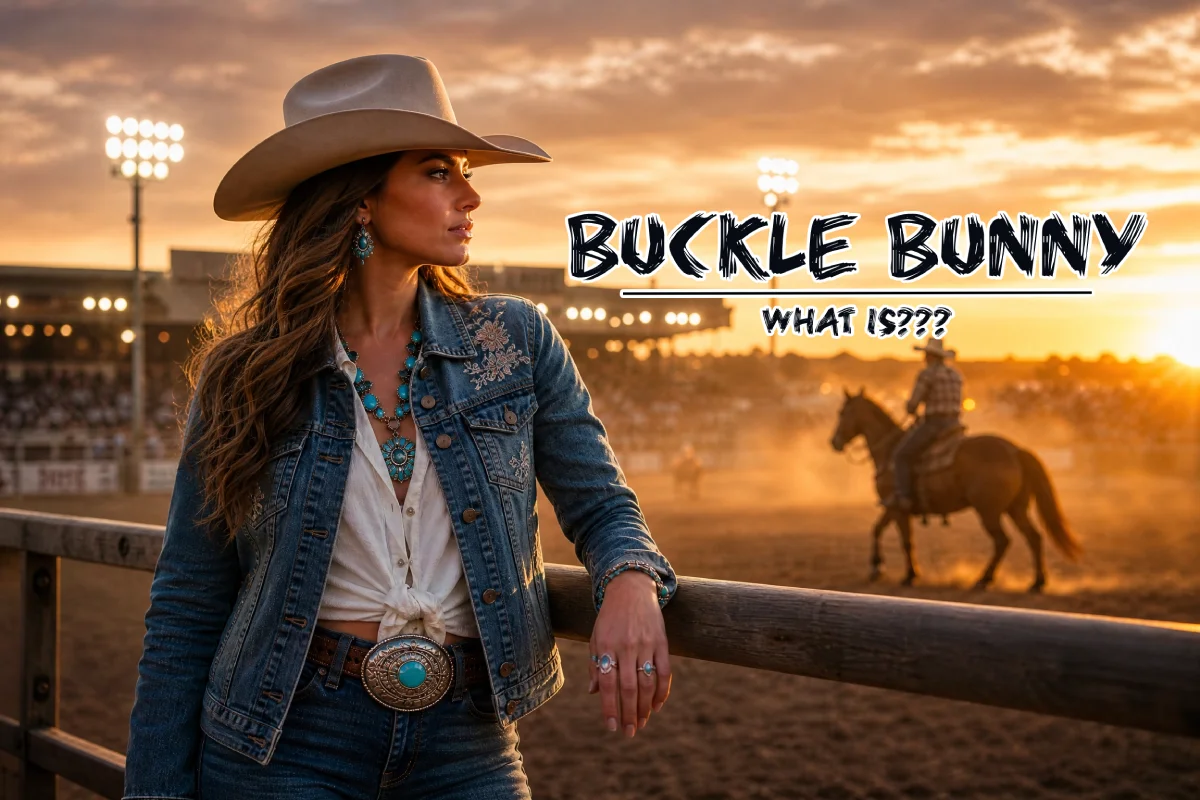
A buckle bunny is a woman who’s drawn to rodeo cowboys, especially ones who’ve won championship belt buckles. The term comes from American rodeo culture — “buckle” for the trophy buckle cowboys win at events, and “bunny” borrowed from old slang like “ski bunny” for someone who shows up wherever the action is.
Picture this: you’re at a rodeo in Oklahoma, the bronc riding event just wrapped up, and the winner walks off with a huge gold belt buckle clipped to his jeans. A few minutes later, you notice a group of women angling for his attention near the chutes. Someone next to you leans over and says, “Watch out, the buckle bunnies are out tonight.” You laugh along, but you have no idea what that means.
Maybe you heard it in a country song, saw it trending on TikTok, or read it in an interview and felt too embarrassed to ask. Either way, you’re not alone — it’s one of those slang terms everyone seems to know except you.
By the time you finish reading, you’ll know where it came from, what it means, and whether to think twice before using it yourself.
What Is a Buckle Bunny?
A buckle bunny is a woman who shows up at rodeos hoping to catch the attention of a winning cowboy — specifically one wearing a championship belt buckle. That’s the short version. But it’s a nickname, not an official title — almost always tossed out casually, with a wink or a smirk attached.
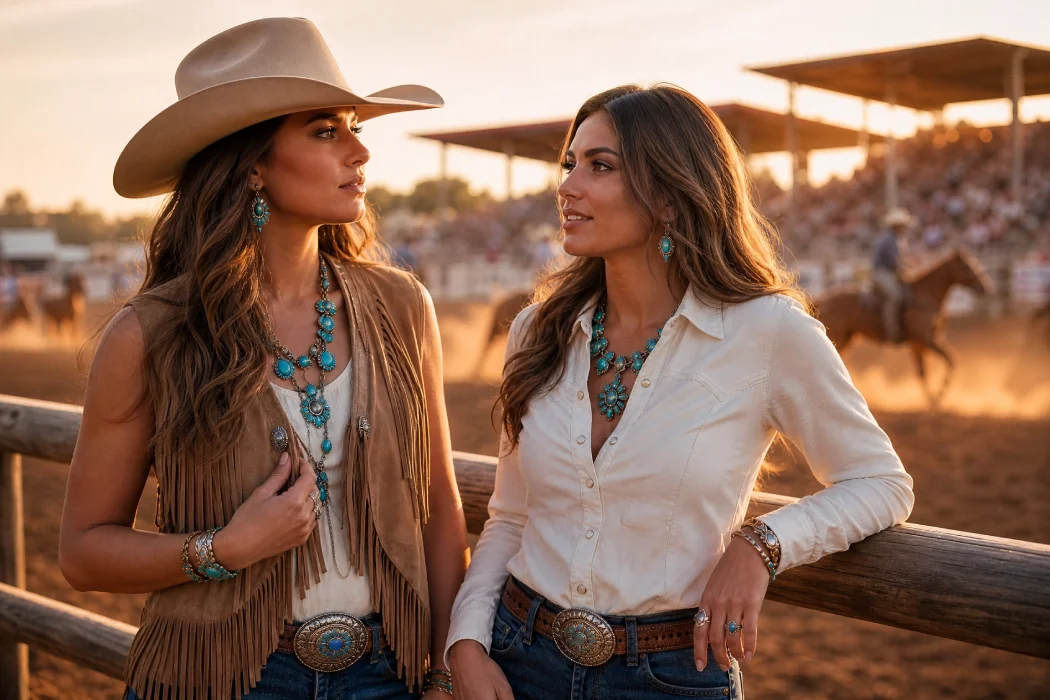
The stereotype comes with a look: tight jeans, cowboy boots, a low-cut top, maybe a fringe jacket, all put together for rodeo night. That deliberate getup is why the term carries judgment — it implies the outfit is a costume, not everyday style. You’ll hear the phrase most in rodeo towns across Texas, Oklahoma, and Wyoming, where competitive rodeo culture runs deep.
What Are Buckle Bunnies?
When people use the plural, they’re usually talking about a group, not just one woman. You might hear someone say, “There were buckle bunnies lined up by the trailers after the show,” meaning a cluster of women lingered near the action, hoping to meet cowboys. The phrase gets tossed around at the arena, in a bar afterward, or in a text recapping the night.
Buckle Bunny Meaning — More Than Just Slang
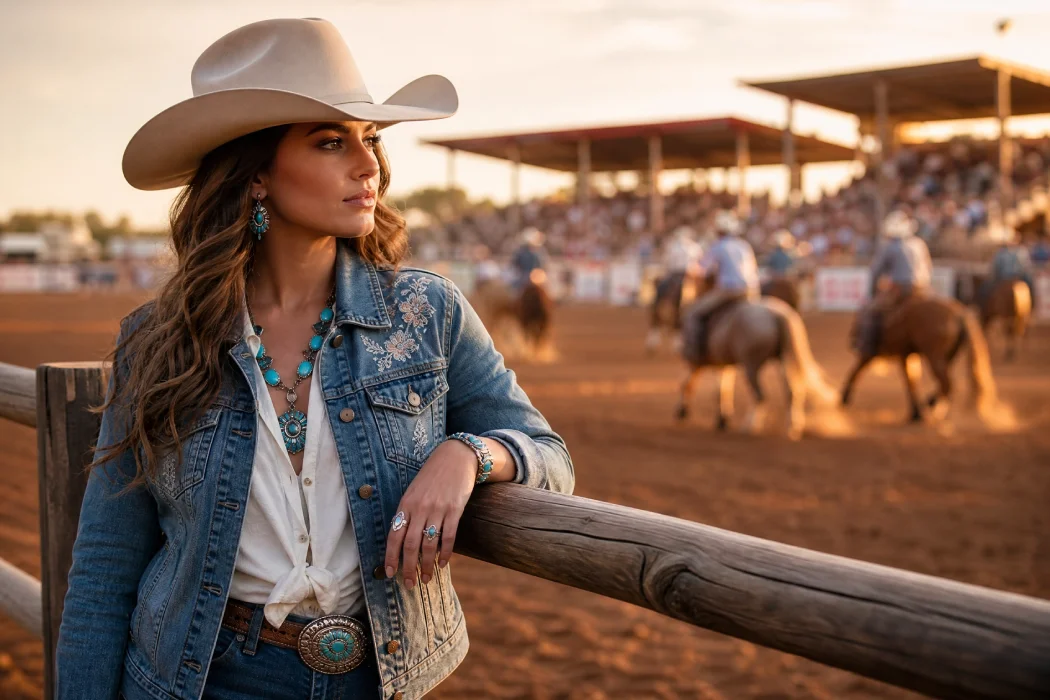
Most people assume this slang term has one fixed meaning. It doesn’t. The phrase carries different layers depending on who’s saying it.
The “buckle” half refers to the oversized, engraved belt buckles that rodeo competitors win for placing in events like bull riding, barrel racing, or roping. The “bunny” half borrows from older slang like “ski bunny” or “beach bunny” — a soft, eager word for someone who shows up wherever the action is.
Put those together, and you get three rough categories of meaning:
- Critical: used to call out a woman as fake, attention-seeking, or only interested in a cowboy’s status rather than the man himself.
- Neutral: simply describes someone who’s part of the rodeo dating and social scene, no judgment attached.
- Self-claimed: worn on purpose by women who like the look, the lifestyle, and the attention, and don’t see anything wrong with it. Country singer Tanner Adell put it bluntly when she told Frieze magazine in 2024, “If being called a buckle bunny means I look hot, then call me one.”
Next time someone uses it, the meaning depends on tone and context.
Where Did the Term Come From?
Most accounts trace it to American rodeo culture in the 1970s and ’80s, when professional rodeo was growing as a spectator sport across Texas, Oklahoma, and Wyoming. Rodeo had been around since the late 1800s, but televised competitions and movies like Urban Cowboy glamorized the lifestyle, and the cowboy-as-celebrity image took hold — with slang to match right behind.
The comparison to groupie culture isn’t a stretch — the dynamic mirrors what grew up around rock bands in the 1960s . Just swap the tour bus for a horse trailer and the guitar solo for an eight-second bull ride, and you’ve got the same story: fans drawn to performers, and a nickname invented to describe them, usually by people outside that fan group. Some groupies even became “road wives” — women who traveled with musicians for extended periods, handling their wardrobe and social life . The buckle bunny world has its own version of that, minus the tour bus.
The Belt Buckle Trophy Connection
To understand the whole phrase, you need to understand the buckle itself. In rodeo, winners don’t take home a trophy or a medal — they take home a belt buckle. These aren’t cheap accessories — they’re large, custom-engraved, sometimes solid silver pieces that double as a public record of every event a cowboy has won. Wearing one is the rodeo equivalent of wearing a championship ring . Some buckles even feature silver discs — called conchos — worked into the design, a detail rooted in old Western leatherwork that’s now woven into rodeo’s visual language.
Because the buckle is the symbol of success in this world, slang for someone chasing that success formed around it. A buckle bunny isn’t (according to the stereotype) interested in just any cowboy — she’s interested in the one wearing proof that he won.
Is “Buckle Bunny” an Insult?
It can be — and historically, that’s exactly how it was meant. Dictionary entries from earlier decades lean hard into the negative: implying a woman is putting on a “country girl” act, exaggerating her interest in horses or ranch life, and showing up purely to hook up with a winning cowboy. That version of the term isn’t flattering, and plenty of people still use it that way.
But context changes everything. Some women have reclaimed the label on their own terms, stripping out the shame and keeping what they like — the fashion, the confidence, the rodeo lifestyle. Whether it lands as an insult or a compliment depends on who’s saying it and why.
When in doubt, let people choose their own labels. It’s one thing to use the term about yourself; it’s another to slap it on someone who never asked for it.
Buckle Bunny vs. Groupie — What’s the Difference?
These two terms get compared often — they describe the same social pattern in two different worlds.
| Aspect | Buckle Bunny | Groupie |
|---|---|---|
| Scene | Rodeo / Western culture | Rock and music touring culture |
| Roughly emerged | 1970s–80s American rodeo circuit | Mid-1960s rock music scene |
| Drawn to | Rodeo cowboys, especially buckle winners | Musicians and bands |
| Stigma | Seen as fake or status-chasing | Seen as promiscuous or fame-chasing |
| Reclaimed by | Tanner Adell and the modern Western fashion scene | Memoirists like Pamela Des Barres |
The big difference is the stage, not the story. Groupies have decades of documented history behind them, including memoirs from women like Pamela Des Barres, who wrote openly about that world starting in the late 1980s . Buckle bunny culture hasn’t gotten nearly as much serious writing or attention, even though the dynamic is just as real and just as old.
Buckle Bunny in Modern Pop Culture
The phrase got fresh attention in 2023 when Tanner Adell — a Wyoming-raised country singer who describes her sound as “glam country” — released her debut album, Buckle Bunny . Before that, she’d already been turning heads: she’d been inducted into CMT’s Next Women of Country and earned a feature on Beyoncé’s Cowboy Carter after tweeting that she hoped Beyoncé would “sprinkle her with a dash of her magic” . Her path there wasn’t easy — she sold everything she owned to move to Nashville, lived in low-income housing, and had her lights turned off more than once while chasing the dream .
Rather than running from the buckle bunny stereotype, she leaned all the way into it, turning the title track into a confident anthem about driving her own truck, paying her own way, and still getting dressed up for a night out. The song and its surrounding aesthetic gave the term a second life online, especially on TikTok and Instagram, where Western fashion and rodeo-inspired outfits have become their own style category.
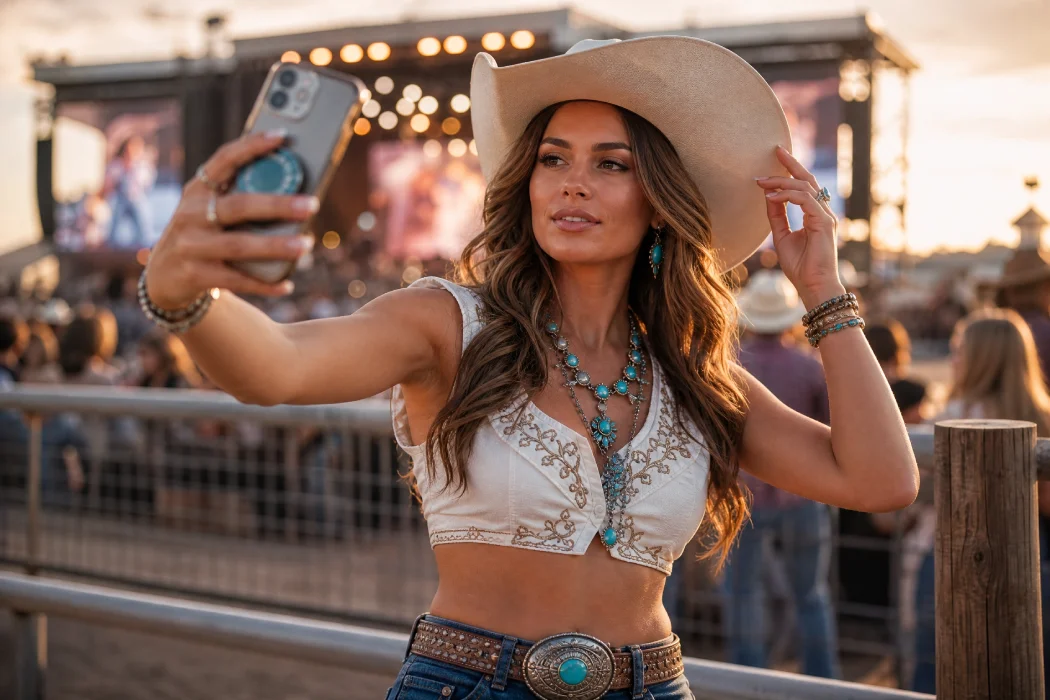
That look — rhinestones, cowboy boots, big belt buckles, fringe — now circulates well beyond rodeo grounds. Plenty of people wear the aesthetic without ever setting foot near a chute, simply because the fashion caught on. The broader trend has even spawned substyles like “yallternative,” a mashup of Western and alternative fashion built around flat-brim hats, turquoise jewelry, and concho belts . The term has stretched from a pointed insider nickname into something closer to an aesthetic label, the same way “cottagecore” or “coquette” describe a vibe more than a literal lifestyle.
FAQs
What is a buckle bunny?
A buckle bunny is slang for a woman who’s drawn to rodeo cowboys, particularly ones who’ve won championship belt buckles. It started as rodeo insider language and has since spread into wider pop culture.
What does buckle bunny mean?
At its core, it describes someone chasing the attention of a winning cowboy — and by extension, the status that comes with him. Depending on the speaker, it can be teasing, dismissive, or worn with pride.
What are buckle bunnies?
“Buckle bunnies” is just the plural — a group of women hanging around a rodeo, arena, or country bar hoping to meet competitors.
Is buckle bunny an insult?
It can be, especially in its older, more judgmental usage that implies someone is faking a country lifestyle. These days, plenty of women use the label about themselves without any of that baggage.
Where did the term buckle bunny come from?
It grew out of American rodeo culture, most likely in the 1970s and ’80s, as professional rodeo became a bigger spectator event and cowboys became local celebrities.
Why are they called buckle bunnies?
“Buckle” points to the engraved belt buckles cowboys win at rodeo events, and “bunny” is an old slang suffix for someone who shows up wherever the action is — similar to “ski bunny.”
Are buckle bunnies the same as groupies?
They’re close cousins. Both describe people drawn to performers and their status, just in different worlds — rodeo versus the music touring scene.
Final Thoughts
“Buckle bunny” started as rodeo insider slang for women chasing winning cowboys, and depending on who’s using it, it can still sting that way. But language shifts, and this one has shifted a lot — from a pointed jab whispered behind someone’s back to, for some women, a title they choose for themselves. Knowing the backstory — the belt buckles, the rodeo culture, and the way artists like Tanner Adell flipped the script — means you understand the term instead of guessing at it.
So, what’s your take? Is “buckle bunny” outdated slang best left at the rodeo gate, or a label some people have earned the right to wear however they want? Drop your thoughts in the comments.

