
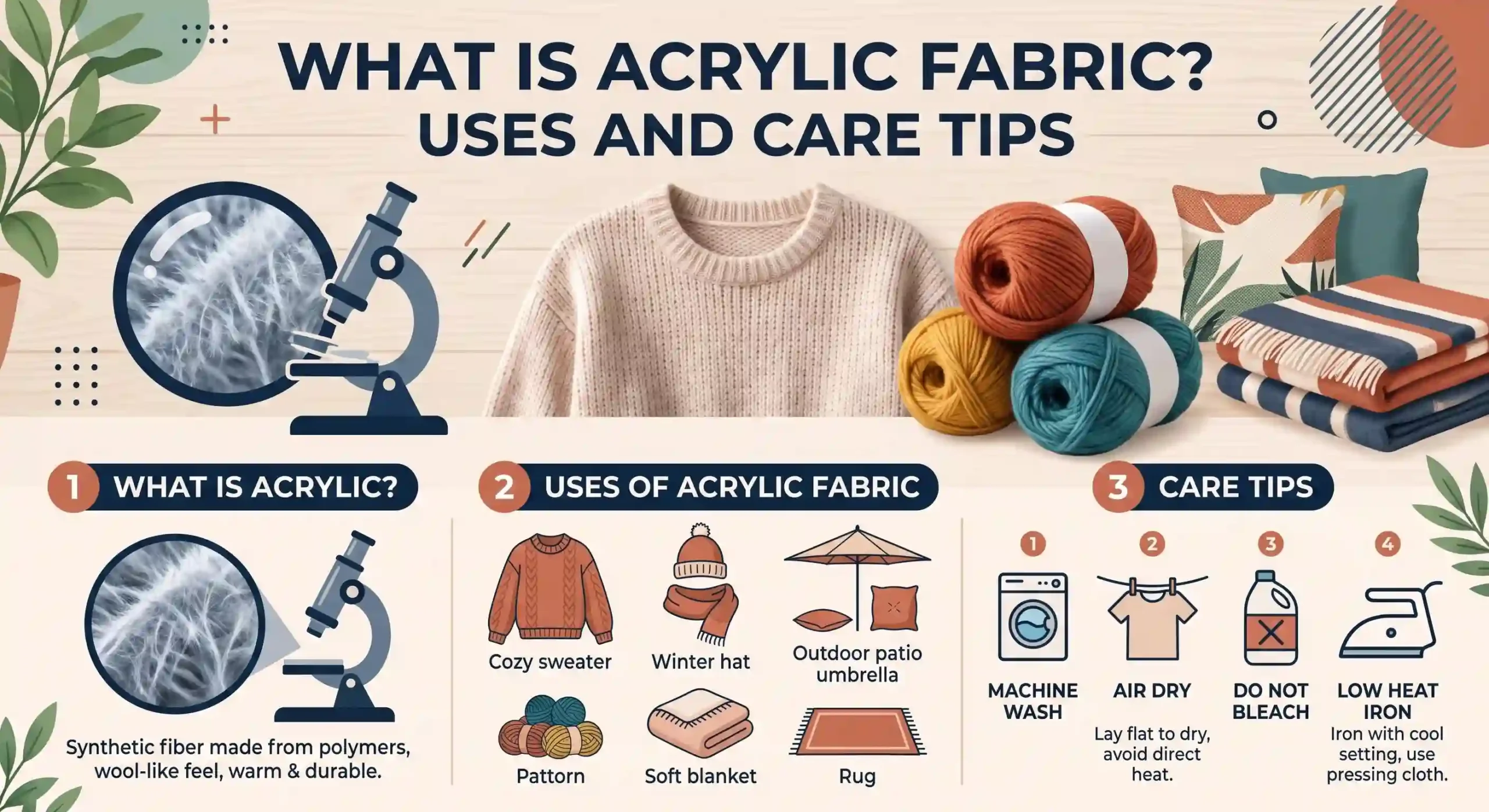
Acrylic fabric is a synthetic textile made from acrylonitrile, a compound derived from petroleum. Manufacturers first developed it in the 1940s as a lighter, more affordable substitute for wool, and it has since become a staple in sweaters, blankets, and winter accessories. Here’s what acrylic is made of, where it shows up in clothing and home goods, and how to wash, dry, and store it so it lasts.
What Is Acrylic Fabric Made Of?
Acrylic starts as acrylonitrile, a chemical compound manufacturers derive from petroleum or coal. Through a process called free-radical polymerization, they convert it into long polymer chains that get spun into fiber.
In the United States, federal textile regulations require a fiber to contain at least 85% acrylonitrile by weight to be labeled “acrylic.” The remaining share usually consists of other compounds, such as vinyl acetate, that improve the fiber’s softness and how well it takes dye.
Because acrylic is a plastic-based fiber rather than a natural one, it tends to respond differently than cotton, wool, or silk when exposed to heat and moisture. That distinction shapes most of the care advice later in this article.
A close relative, modacrylic, contains between 35% and 85% acrylonitrile. The lower ratio gives it better flame resistance, though it has a different hand-feel than standard acrylic and shows up more often in wigs, faux fur, and protective clothing than in everyday sweaters.
Common Uses of Acrylic Fabric
Acrylic’s combination of warmth, low cost, and wool-like texture puts it in three broad categories of products.
Clothing and accessories rely on acrylic for insulation without added bulk:
- Sweaters and cardigans
- Scarves, hats, and gloves
- Socks and leg warmers
- Fleece linings for jackets and coats
Home textiles use acrylic for its durability and color retention:
- Blankets and throws
- Faux fur trim and accents
- Area rugs and carpeting
Outdoor and specialty items take advantage of acrylic’s resistance to sun damage:
- Awnings and boat covers
- Outdoor furniture upholstery
- Craft yarn for hand-knitting
Acrylic Properties: What to Expect
A few core traits explain why acrylic ended up in so many wool-adjacent products. It’s lightweight relative to the warmth it provides, and its texture is soft enough to pass for wool at a glance, sometimes with a slightly fuzzier finish depending on the weave.
It holds color well over repeated washes, which is part of why it’s common in bright, budget-friendly knitwear. It also tends to resist fading from sun exposure better than many natural fibers, which is why manufacturers use it in outdoor fabrics.
On the downside, acrylic doesn’t breathe as freely as cotton or wool, and its fibers can be prone to pilling in areas that see repeated friction, such as underarms or where a bag strap rests. Static buildup is also common, particularly in dry indoor air.
Acrylic vs. Wool: How Do They Compare?
Acrylic was designed to imitate wool, so shoppers frequently weigh the two against each other before buying.
| Factor | Acrylic | Wool |
|---|---|---|
| Source | Synthetic, petroleum-based | Natural, from sheep |
| Warmth | Good insulation | Excellent insulation |
| Breathability | Lower | Higher |
| Care | Usually machine washable | Often hand wash or dry clean |
| Cost | Generally more affordable | Generally more expensive |
| Pilling | Can be more prone to it | Varies by quality and weave |
Wool fibers have a natural crimp that traps air and helps wick moisture away from the skin. Acrylic lacks that structure, so it tends to insulate well but breathe less effectively — which is one reason an acrylic sweater can feel warm to the point of stuffiness during physical activity, in a way a comparable wool sweater often doesn’t.
Acrylic vs. Polyester
The two get confused often since both are synthetic and petroleum-based, but they’re built differently and feel different in use.
Acrylic is engineered to mimic wool, so it tends to run softer, fuzzier, and warmer to the touch. Polyester fibers are typically smoother and slightly cooler against the skin, and they generally hold up better against pilling and general wear over time. Acrylic is more common in sweaters, scarves, and knitwear, while polyester shows up more in activewear, linings, and woven fabrics where durability and moisture-wicking matter more than a wool-like feel.
Care requirements are broadly similar for both — cool water, gentle cycles, and low heat — though it’s still worth checking the specific garment’s care label, since finishes and blends can change the instructions.
Pros and Cons of Acrylic Fabric
Pros
- Generally affordable compared to wool
- Warm for its weight
- Soft, wool-like texture
- Typically easy to machine wash
- Holds color well over time
- Resistant to moth damage
Cons
- Can be prone to pilling, especially with friction
- Less breathable than most natural fibers
- Sensitive to high heat, which can distort or damage the fibers
- Can develop static, particularly in dry conditions
- Not biodegradable
Is Acrylic Fabric Good for Summer?
Not usually the first choice. Acrylic is built for warmth and insulation, which makes it better suited to cool-weather layers than hot, humid conditions. Its lower breathability means it doesn’t move moisture away from the skin as efficiently as cotton or linen, both common picks for summer clothing.
That said, lightweight acrylic blends in loose knits can work for transitional weather — early fall or a cool spring evening — even if they’re not the go-to for peak summer heat.
How to Care for Acrylic Fabric
Always check the garment’s care label first, since washing and drying instructions can vary depending on the garment’s construction and any blended fibers. The guidance below covers general best practices for acrylic.
Washing
Use cool to lukewarm water on a gentle cycle with a mild detergent, and skip the bleach or high-alkali soaps, which can weaken the fibers faster than normal wear does. Turning items inside out before washing also cuts down on friction, one of the main contributors to pilling.
Drying
High heat is where acrylic garments are most likely to get damaged. A hot dryer setting can shrink, stiffen, or in some cases distort the fibers. The safer approach is to lay the item flat on a towel, let it air dry, and gently reshape it while it’s still damp to help it keep its original fit.
Ironing
If a piece needs ironing, use the lowest heat setting, turn the garment inside out first, or place a pressing cloth between the iron and the fabric. Direct high heat can scorch or warp acrylic fibers quickly.
Storage and Pilling
Fold acrylic garments instead of hanging them — hanging can stretch knits out of shape over time. Store items in a cool, dry space away from direct sunlight to help prevent fading.
Acrylic can be prone to pilling because of how its fibers are structured. A fabric shaver or a pilling comb clears the surface without damaging the weave underneath. For static cling, a dryer sheet or other anti-static method may help reduce the effect, though results can vary by garment and climate.
Removing Stains
Blot fresh stains with a clean, damp cloth rather than rubbing, which can push the stain deeper into the fibers. Treat the spot with a mild detergent before running it through a normal wash cycle. For stains that have already set, soaking the item in cool water with detergent for 20 to 30 minutes can help, and it’s worth testing any treatment on a hidden seam first.
Is Acrylic Fabric a Good Choice?
That depends on what you’re prioritizing. Acrylic holds its own on affordability, warmth, and low-maintenance care — it resists moth damage, tends to shrink less readily than wool, and generally keeps its color well through repeated washing.
The trade-offs are real, though. Breathability lags behind most natural fibers, so acrylic can feel uncomfortably warm during activity, and it isn’t biodegradable the way wool or cotton is.
If you’re working with a limited budget or have a wool sensitivity, acrylic is a sound choice. If breathability or biodegradability matters more to you, wool remains the better fit — and if durability against wear is the priority, polyester is worth a look too.
Frequently Asked Questions
What Are the Disadvantages of Acrylic Fabric?
It can pill more easily than many fabrics, doesn’t breathe as well as natural fibers, and is sensitive to high heat. It’s also not biodegradable, which matters to environmentally conscious shoppers.
Can Acrylic Fabric Go in the Dryer?
Sturdier items like blankets often tolerate a low-heat tumble dry, but it’s best to check the care label first. For sweaters and delicate knits, air drying flat is generally the safer option, since high heat risks shrinking or distorting the fibers.
What Is Acrylic Fabric Best For?
Cold-weather clothing, blankets, and outdoor fabrics, where its warmth, affordability, and resistance to sun fading matter most.
Is Acrylic Fabric Safe Against the Skin?
Most people wear it without issue, though those with sensitive skin sometimes report irritation, similar to how some react to wool. A lined garment or a soft-finish blend is often more comfortable in that case. Anyone with ongoing skin concerns should consult a dermatologist rather than rely on general fabric guidance.
Making the Call
Acrylic earns its popularity through warmth, affordability, and easy care, but it comes with real trade-offs — heat sensitivity, a tendency to pill, and lower breathability chief among them. Wash on a gentle cool cycle, keep it away from high heat in the dryer and iron, and reshape knits while they’re still damp. Handled that way, an acrylic sweater or blanket can stay in solid shape through years of regular wear.

