

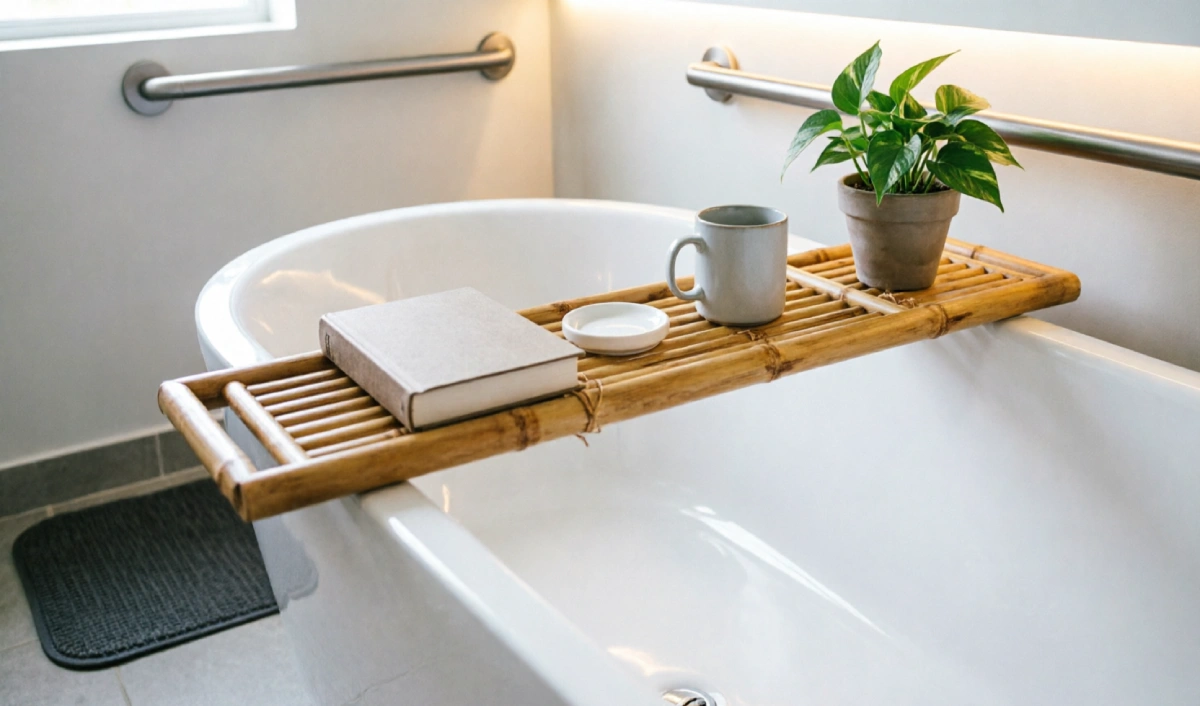
Most bathroom falls don’t start with wet tile. They start with someone leaning too far to grab the shampoo.
If you’re setting up a bathroom for yourself or an aging parent, you’ve probably already thought about grab bars and non-slip mats. There’s a smaller, cheaper fix that gets overlooked: where you actually store your soap, shampoo, and razor. Fewer than one in ten U.S. homes are set up for aging in place, and bathroom storage is one of the easiest gaps to close.
Here are 10 bath caddies for aging in place, sorted by bathing setup, so you can find the one that fits your situation.
Why Bath Caddies Matter for a Safe Bathroom for Elderly Users
Falls are the leading cause of injury for older adults at home, and the bathroom is where most of them happen. Wet floors get blamed, but reaching is usually the real problem — twisting toward a shelf that’s too far away, or bending down for a bottle that rolled off the tub edge. The right storage keeps everyday items within easy reach.
Staying independent in your own bathroom, without needing someone to hand you the soap, is part of what makes aging in place work.
1. Shower Chair Caddy
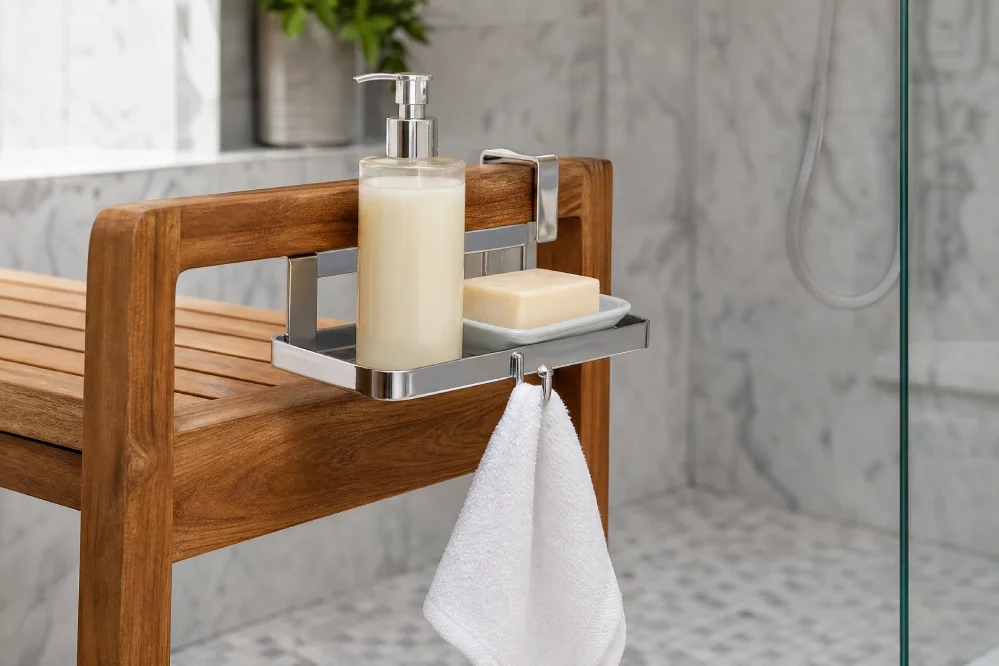
If you sit while bathing, a caddy that hangs on the arms of your shower chair or bench puts everything where your hands already are — no reaching across the shower or bending toward the floor. These typically clip on without tools and fit almost any standard chair or bench, making them one of the simplest aging-in-place upgrades available. The shower bench caddy for elderly users is a small investment with an immediate payoff.
Estimated Cost:
- $15–$40 for clip-on models
- $30–$50 for padded or multi-compartment versions.
Pair it with a transfer bench instead of a stand-alone chair. You get the same storage, plus an easier way in and out of the tub.
2. Wall-Mounted Rust-Proof Shower Caddy
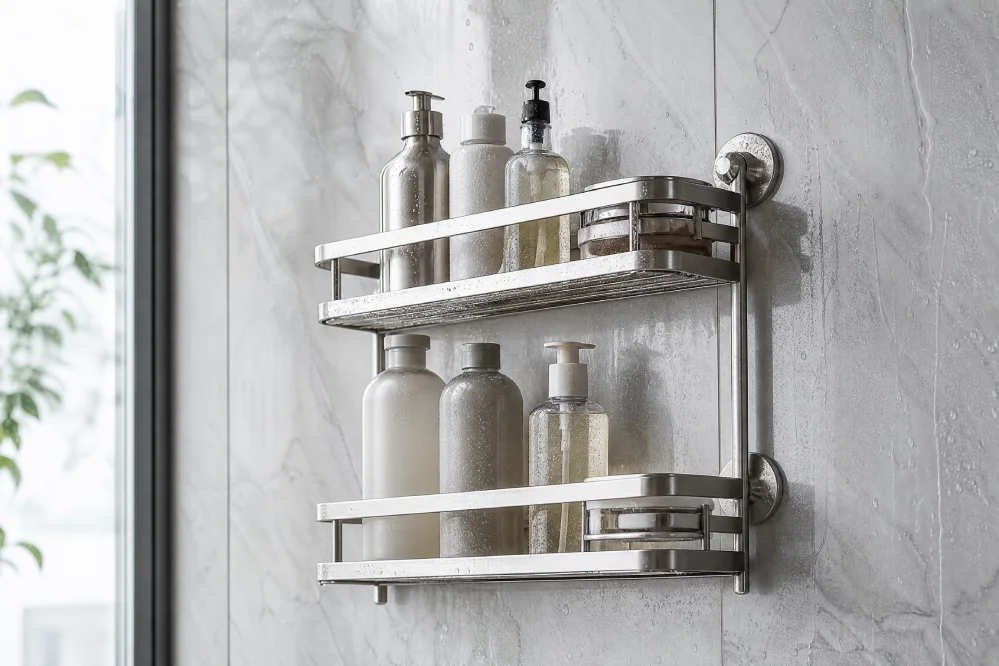
Suction cups fail eventually, especially in steamy bathrooms. A caddy mounted directly into the wall eliminates that worry. Look for stainless steel, anodized aluminum, or heavy-duty plastic — rust-proof materials that hold up for years, not months. This rust-proof wall shower organizer mounts at the exact height you need: shoulder level for someone standing, lower for someone seated.
Estimated Cost:
- $20–$50 for standard models
- Premium stainless steel versions can reach $60–$80.
Use a stud finder before mounting. A caddy loaded with bottles needs something solid behind it, not just drywall.
3. Over-the-Showerhead Caddy
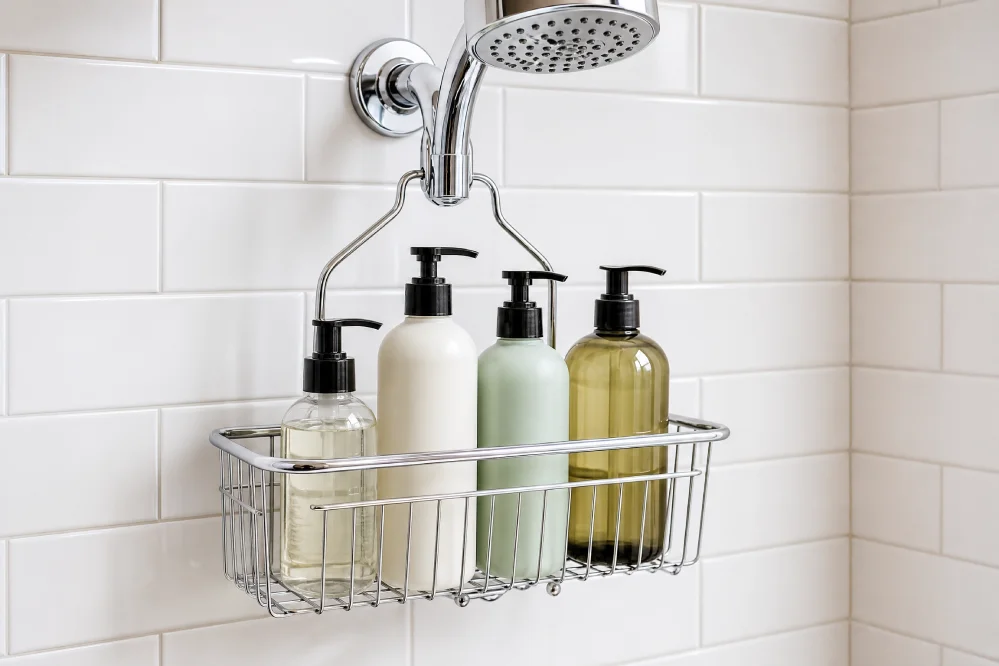
Renting or don’t want holes in the tile? This style hangs over the showerhead pipe — no tools, no permanent changes. It fits most standard setups and works as a low-commitment way to test a no-drill shower caddy before upgrading to something fixed.
Estimated Cost:
- $15–$35
- Heavier-duty models with backup suction anchors run $30–$45.
Check the weight rating before loading it up. An overloaded caddy can tug the showerhead out of position. Models with a backup suction anchor hold steadier.
4. Bathtub Caddy Tray
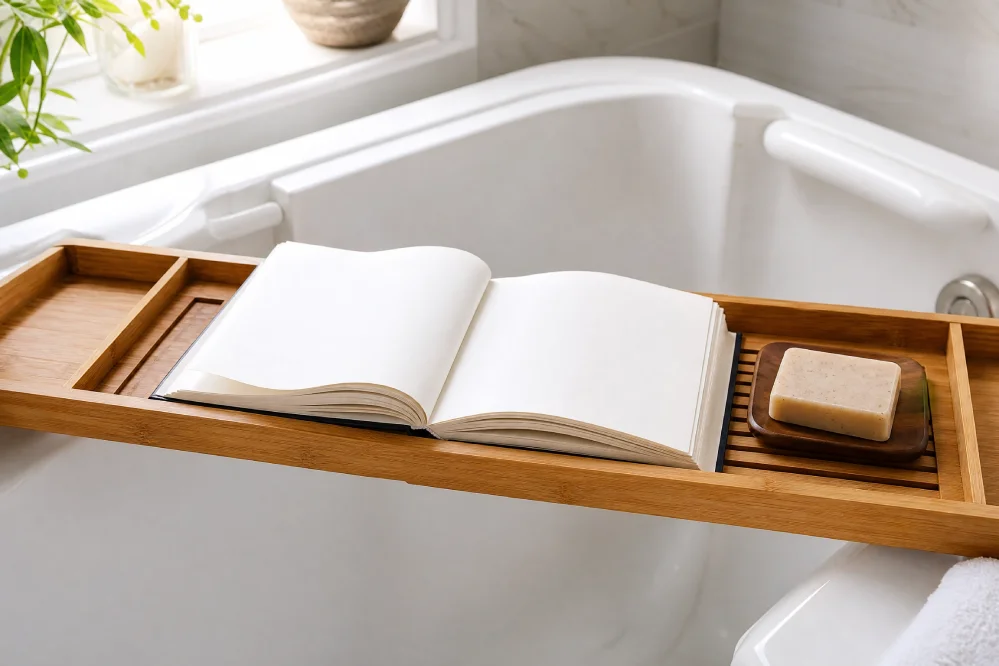
For walk-in tub users, a tray spanning the width of the tub keeps soap, a phone, or a book within reach while soaking — no leaning over the edge. It’s one of the more overlooked walk-in tub accessories, since most people associate caddies with showers. Balance improves too, with no need to twist or stretch.
Estimated Cost:
- $25–$60 for bamboo or composite trays
- Adjustable-width models run $40–$70.
Bamboo or composite trays hold up better than solid wood, which tends to warp or crack with repeated water exposure.
5. Corner Shower Caddy
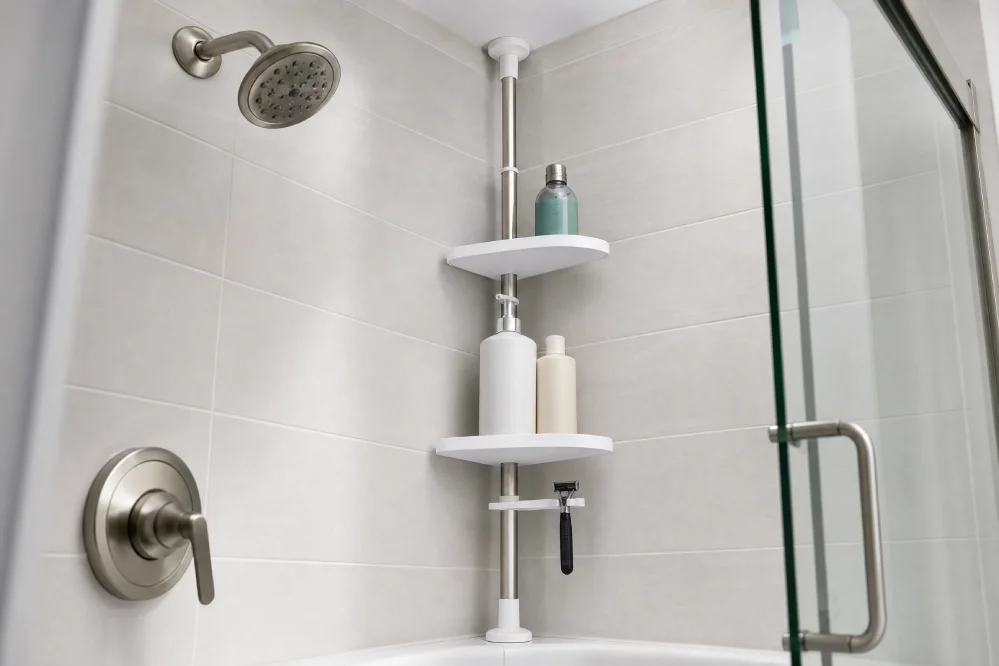
Corners go unused in most showers, making them a natural fit for storage. Mounted with tension poles or adhesive, a corner caddy keeps the center open — important in a small bathroom where floor space near a shower chair is limited. This space-saving corner shower shelf works especially well in bathrooms under 40 square feet, where clutter on the floor becomes a tripping hazard quickly.
Estimated Cost:
- $15–$40 for adhesive models
- Tension-pole corner units run $30–$55.
Measure your corner before buying. Some models are sized for standard showers and won’t fit a smaller stall properly.
6. Tension Pole Shower Caddy
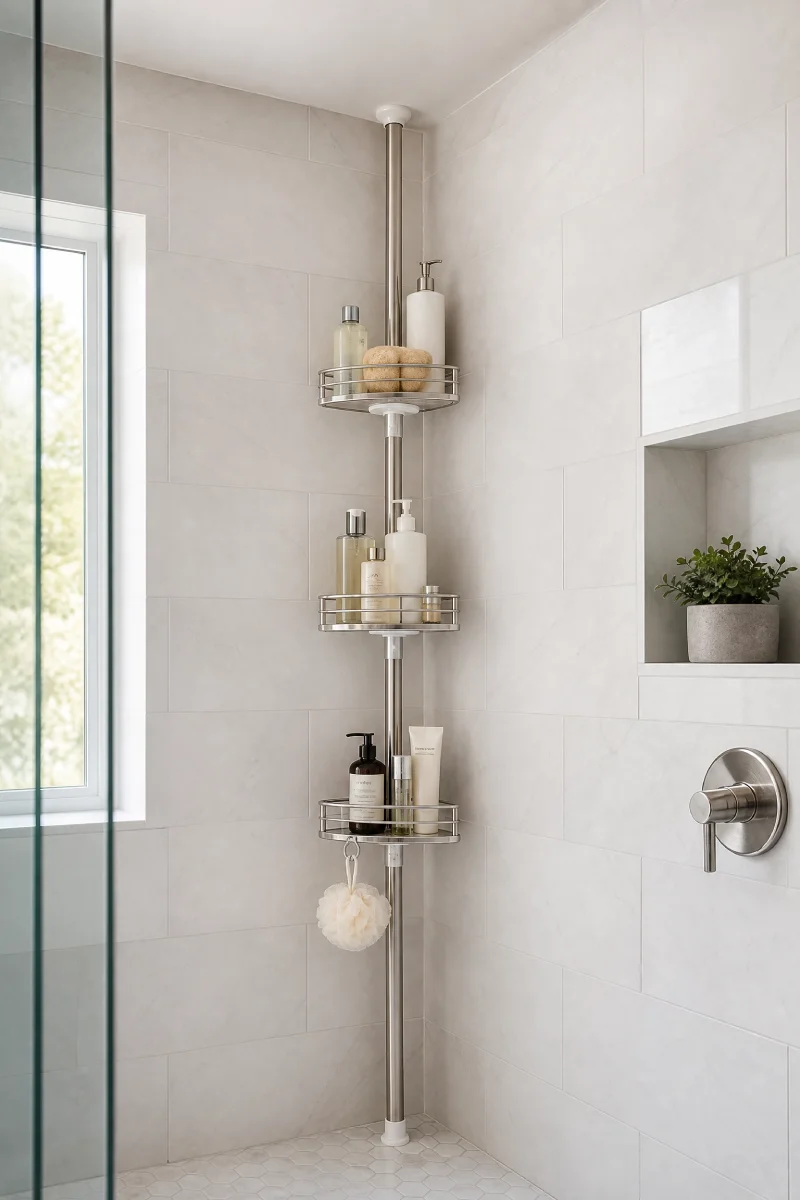
Running floor to ceiling, this style stays in place through tension rather than screws. Several shelves at different heights let you position daily items at arm level while stashing backup supplies above or below. Shelves rearrange as needs change, making this adjustable tension pole caddy a setup that adapts over time.
Estimated Cost:
- $25–$55 for standard models
- Higher-end versions with rust-resistant coatings run $50–$75.
Keep the middle shelf — usually at seated arm height — for shampoo, soap, and razor. Save the top shelf for backup supplies.
7. Suction Cup Shower Organizer
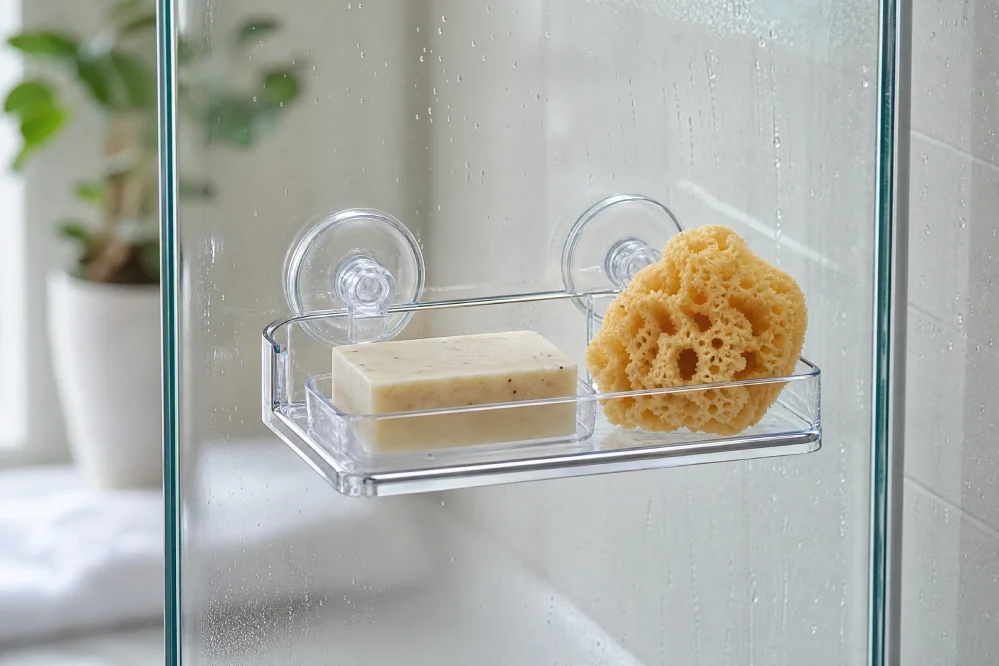
These attach to smooth tile or glass and move easily as needs shift — useful for caregivers adjusting a setup over time. Not the most permanent option, but the simplest to try before committing to something fixed. This repositionable shower caddy works best on glass doors or smooth tile; textured surfaces usually won’t hold.
Estimated Cost:
- $10–$25 for basic models
- Larger multi-shelf suction units run $20–$40.
Wipe the surface with rubbing alcohol before sticking it on. Suction cups grip clean, smooth surfaces — textured tile usually won’t hold.
8. Hanging Shower Caddy
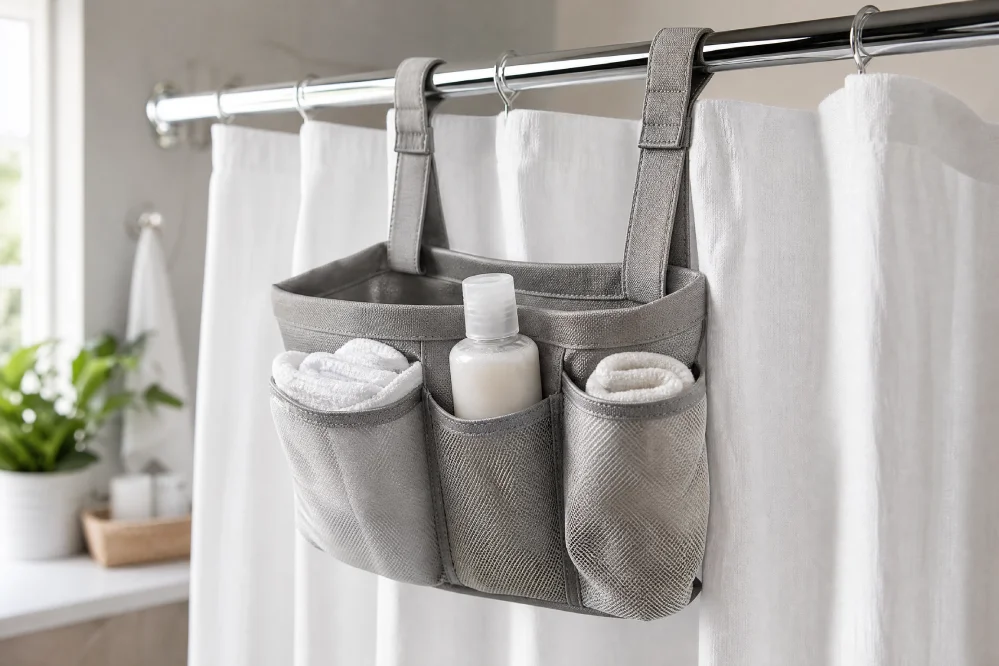
Hook it over a towel rack, shower door, or curtain rod — nothing to install. This style works well for guest bathrooms or for a grandparent visiting for the week. A hanging shower basket is also the easiest option to pack along when you move.
Estimated Cost:
- $10–$30 for single-basket models
- Double-tier versions with hooks run $25–$40.
If you’re hanging it on a glass door, add a few adhesive bumpers where it touches the glass so it doesn’t scratch over time.
9. Built-In Shower Niche
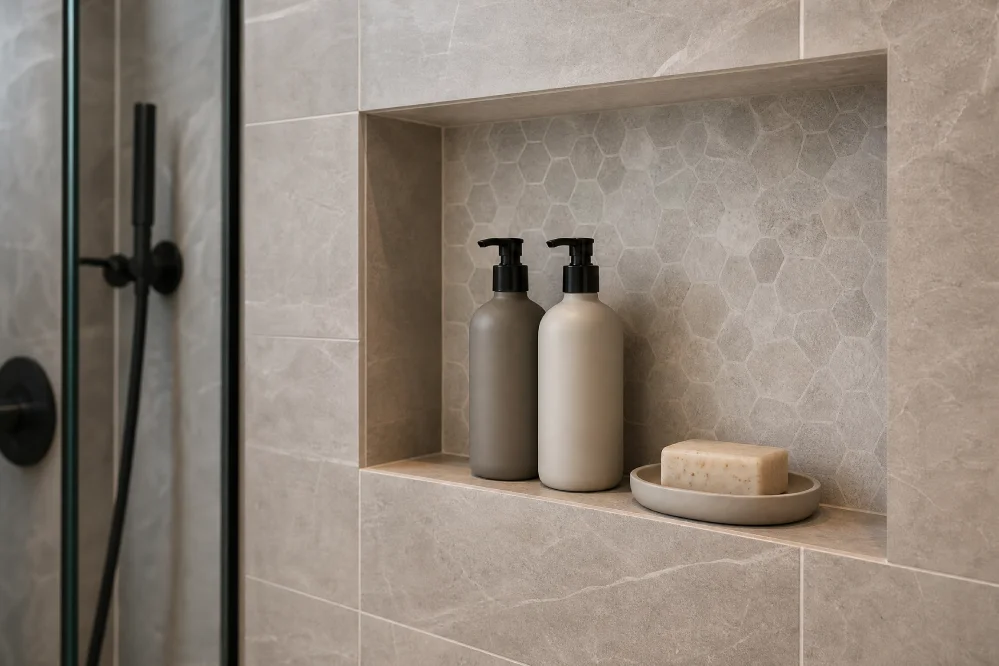
Planning a remodel already? A recessed shelf built into the wall is worth considering. Nothing protrudes into the shower — no bumping into a caddy or knocking bottles to the floor. A built-in shower niche typically measures around 12 by 24 inches, room enough for several bottles. Since a full bathroom remodel often runs close to $10,000, adding a niche during that work is a small incremental cost for a permanent fix.
Estimated Cost:
- $75–$200 for a prefab niche unit
- Installation labor adds $100–$300 if not part of a larger remodel.
If a remodel isn’t planned soon, skip this one for now. It only makes sense as part of a larger renovation, not as a standalone purchase.
10. Shower Caddy With an Integrated Grab Bar
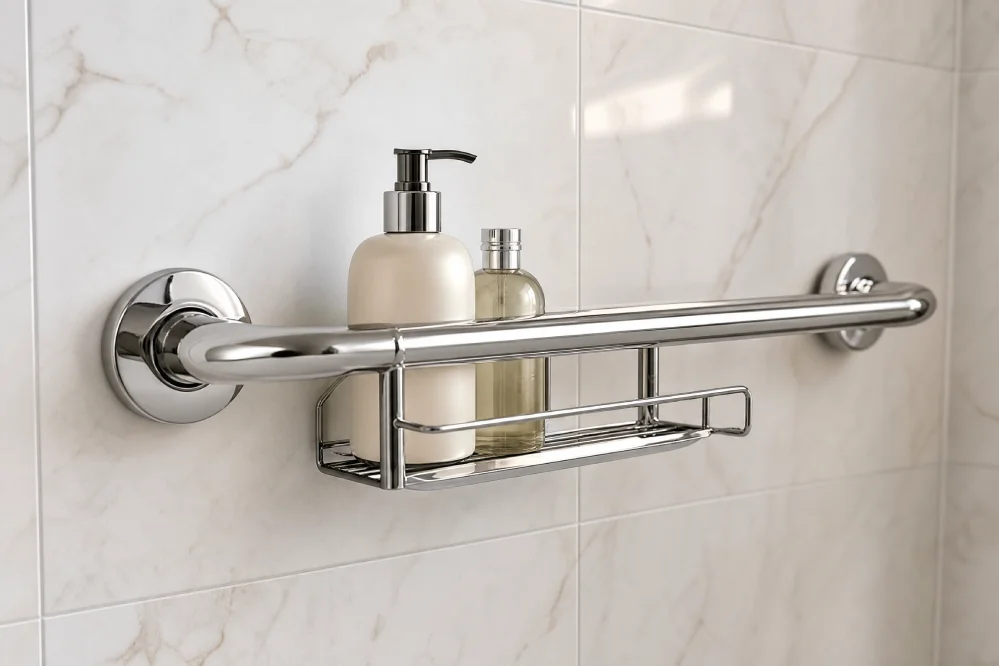
Some caddies double as grab bars, combining storage and a support handle in one fixture. When a grab bar is already on your to-do list, this saves a separate installation. A grab bar shower caddy solves two problems with a single bracket — one of the more practical picks on this list.
Estimated Cost:
- $35–$80 for standard models
- ADA-compliant combo units run $60–$120.
Confirm the weight rating before buying. ADA guidelines call for grab bars to support at least 250 pounds, and not every combo unit meets that standard.
How to Choose the Right Bath Caddies for Aging in Place
Start with how you actually bathe, not which caddy looks best online. Sitting while bathing? A shower chair caddy or one paired with a transfer bench is the clear choice. Walk-in tubs call for a bathtub tray over almost anything else here. Small showers do well with a corner caddy or wall-mounted version — both keep the floor clear. Renters gravitate toward over-the-showerhead or tension pole styles, since neither requires drilling. And when a full remodel is already planned, a built-in niche is worth the small added cost.
Final Thoughts
A bath caddy isn’t a major purchase, but it solves a problem that causes real harm — reaching too far, too often, in a slippery room. Aging in place doesn’t require only big projects like walk-in tubs or widened doorways; smaller details matter too, like having shampoo within arm’s reach instead of across the shower.
Start by looking at how you actually bathe, then pick the caddy type that fits your space and routine. Your future self will likely thank you for it.

