

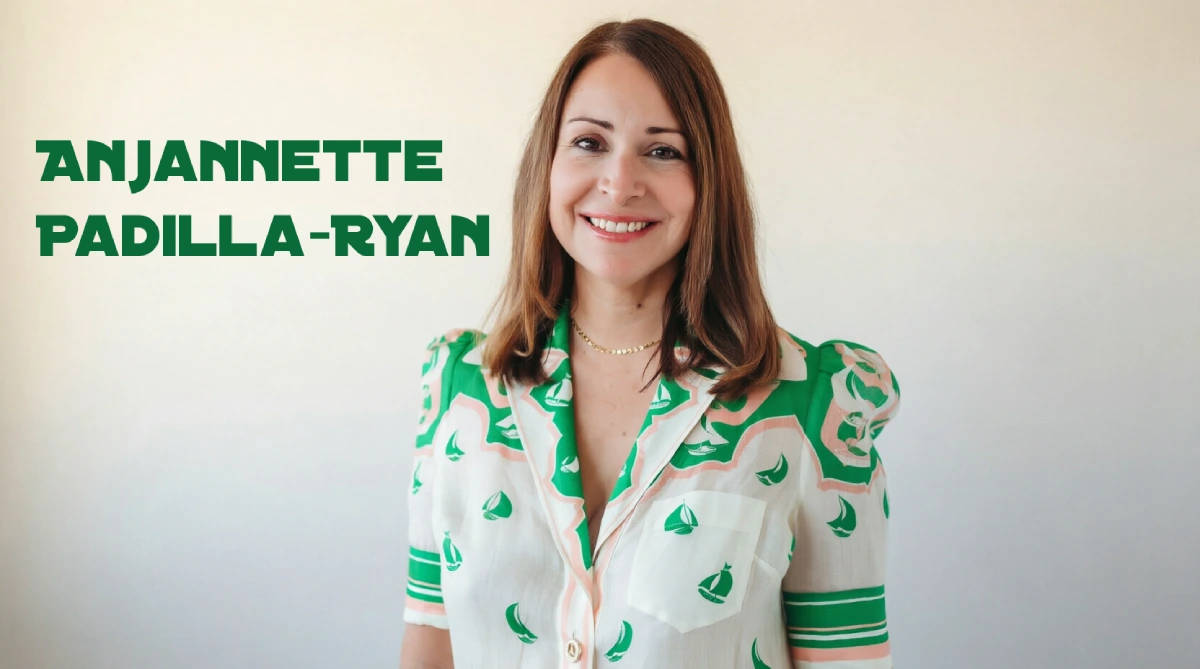
Sarah, a new mother in Silver Lake, scrolls through therapist profiles late at night, baby monitor glowing nearby. She needs support for postpartum anxiety — but wants more than quick fixes. She wants a clinician who understands both the science of stress and the weight of emotional change. That combination — research-backed methods paired with present-moment awareness — is what defines Dr. Anjannette Padilla-Ryan’s work.
With over 16 years of clinical experience and specialized training in mindfulness-integrated psychotherapy, she helps adults manage anxiety, navigate life changes, and address perinatal challenges with steadiness and genuine care.
This guide covers her verified credentials, therapeutic approach, and what sets her apart for those seeking lasting mental health support in Los Angeles.
Who Is Dr. Anjannette Padilla-Ryan?
Education, Licensure, and Clinical Experience
Dr. Anjannette Padilla-Ryan is a Licensed Clinical Psychologist in California under license number PSY 28188, verifiable through the California Board of Psychology. She earned her doctoral degree in Clinical Psychology from The New School for Social Research in New York City. The program is APA-accredited and one of the few clinical psychology doctoral programs to combine a psychoanalytic focus with the scientist-practitioner model — a training background that shapes how she works with clients today.
Her clinical career was built across diverse, high-pressure settings: she provided psychological care to veterans at the Bronx VA Hospital and supported cardiac surgery patients recovering at Northwestern Hospital in Chicago. This hospital-based experience gave her advanced skills in treating complex cases — chronic pain, medical trauma, and adjustment disorders — within teams of different healthcare specialists. Today, she brings that depth to her private practice in Los Angeles, serving adults in Studio City and via teletherapy across California.
From Hospital Settings to Private Practice
Moving from institutional care to private practice was not a step down in complexity — it was a shift toward depth and personalization. In hospital settings, interventions often prioritize stabilization. In her Los Angeles practice, Dr. Padilla-Ryan focuses on sustainable change: helping clients not only manage symptoms but understand the patterns behind them. Her 16+ years of experience span community mental health clinics, VA systems, and private practice, which allows her to tailor approaches to individual needs rather than rigid protocols.
Her Therapeutic Approach: Where Mindfulness Meets Psychodynamic Depth
The Integrative Framework
Dr. Padilla-Ryan’s method is integrative: she blends mindfulness-based practices with psychodynamic psychotherapy. This is not a generic “mindfulness therapist” label — it is a specific framework backed by clinical research.
Psychodynamic work explores how past experiences, relationships, and unconscious patterns shape present emotions and behaviors. Mindfulness practices build present-moment awareness, reducing reactivity and creating room for thoughtful choices. Together, they allow clients to:
- Recognize habitual emotional reactions as they arise
- Explore the origins of those patterns without judgment
- Practice new responses grounded in self-compassion and personal values
As she states on her practice site: “Focusing on the present moment is the only way to truly experience the joys of everyday life. It is the only time we can connect with our inner world, examine our thoughts, recognize our habitual reactions — and thereby give ourselves a chance to change our behavior.”
Modalities in Practice: MBSR, DBT, and ACT — When and Why
Dr. Padilla-Ryan is trained in three structured modalities, selecting tools based on what each client needs:
| Modality | Best For | How It’s Applied |
|---|---|---|
| MBSR (Mindfulness-Based Stress Reduction) | Chronic stress, pain management, and general anxiety | Formal practices (body scan, sitting meditation) to build steady awareness of physical and emotional sensations |
| DBT (Dialectical Behavior Therapy) | Emotional dysregulation, relationship conflict, and self-harm urges | Skills training in distress tolerance, emotion regulation, and interpersonal effectiveness — with mindfulness as the foundational skill |
| ACT (Acceptance and Commitment Therapy) | Values confusion, life transitions, and chronic illness adjustment | Clarifying personal values and committing to actions that match those values, even when difficult thoughts or feelings are present |
This flexibility means therapy is not one-size-fits-all. A client dealing with perinatal anxiety might begin with MBSR breath practices to manage panic symptoms, then gradually explore psychodynamic themes around identity shifts in new motherhood.
Anxiety, Perinatal Mental Health, and Chronic Stress
Supporting Adults Through Life Transitions
While Dr. Padilla-Ryan works with a broad range of concerns — anxiety, depression, relationship issues, chronic illness, and stress — her approach works especially well for adults going through significant life changes. Whether adjusting to a new diagnosis, managing work-life demands, or processing grief, her method helps clients:
- Reduce avoidance of difficult emotions
- Build tolerance for uncertainty
- Reconnect with agency and purpose
For example, a client coping with chronic pain might use mindful attention to observe pain sensations without catastrophic thinking, while psychodynamic exploration addresses how illness affects self-image or close relationships.
Perinatal and Postpartum Care
A central focus of her practice is supporting expectant and new mothers. Perinatal mental health involves significant biological, psychological, and social shifts that are often missed. Dr. Padilla-Ryan offers:
- Prenatal programs: Preparing for birth and parenthood with practical stress-reduction tools
- Postpartum therapy: Addressing anxiety, identity shifts, sleep disruption, and relationship changes
- Support groups: Reducing isolation through shared experience (when available)
This specialization reflects both clinical training and a clear need. Perinatal anxiety is frequently missed, and mindfulness-based approaches have shown evidence for reducing symptom severity — an important factor for parents weighing treatment options during pregnancy or while nursing.
The Client Journey in Her Practice
Session Structure and Logistics
Therapy with Dr. Padilla-Ryan follows a consistent structure:
- Frequency: Weekly sessions, scheduled in advance
- Duration: 50 minutes, starting and ending on time
- Format: In-person at her Los Angeles office, or via teletherapy by phone if you are traveling or unwell
- Process: Sessions typically begin with a brief check-in, move into focused work on agreed goals, and close with reflection or a grounding practice
Teletherapy options improve access for parents with young children, professionals with demanding schedules, or those outside immediate proximity to Studio City.
How Progress Unfolds: Insight, Skills, and Lasting Change
Progress is rarely linear, but there is a general clinical pattern that tends to emerge over the course of therapy:
- Early phase (weeks 1–4): Building trust, identifying patterns, learning foundational skills
- Middle phase (weeks 5–12): Applying skills to real-life triggers, exploring deeper emotional themes
- Later phase (3+ months): Integrating insights into daily life, and gradually reducing session frequency while maintaining gains
The goal is not just symptom reduction — it is developing an internal toolkit for long-term resilience.
Hospital Experience and Private Practice
Complex Cases: Veterans, Cardiac Patients, and Beyond
Her early career at the Bronx VA and Northwestern Hospital shaped how she practices today. Working with veterans deepened her understanding of trauma’s effect on the nervous system. Supporting cardiac patients revealed how closely physical health and emotional health are connected. These experiences inform her private practice in two key ways:
- Complex case competence: She is equipped to work with clients who have both medical and mental health concerns
- Collaborative mindset: She readily coordinates with physicians, psychiatrists, or other providers when it would help the client
Bringing Clinical Rigor to Personalized Care
Unlike practitioners who rely on a single modality, Dr. Padilla-Ryan’s hospital background built a commitment to flexibility grounded in research. She does not fit clients into a fixed theoretical model. Instead, she considers:
- What does the research say about effective approaches for this concern?
- What aligns with this client’s values, culture, and readiness for change?
- How can present-moment awareness deepen insight without bypassing necessary emotional work?
This mix of research-backed methods and personal attention shapes every part of her work.
Is This Approach Right for You?
✅ Dr. Padilla-Ryan’s practice is best suited for adults who:
- Are you ready to engage in self-reflection and regular skill practice
- Want more than symptom relief — they want understanding and lasting change
- Value a collaborative, non-judgmental therapeutic relationship
- Are you dealing with anxiety, life transitions, perinatal changes, or chronic stress
❌ She may not be the right fit for those seeking:
- Short-term, solution-focused coaching without deeper exploration
- Treatment for severe psychiatric conditions that need intensive outpatient care
- Child or adolescent therapy (her practice is focused on adults)
Contact and Consultation Information
Those interested in working with Dr. Padilla-Ryan can:
- Visit her official practice site: drpadillaryan.com
- Contact via phone: (917) 981-4002
- Office locations: 12240 Ventura Blvd, Suite 102, Studio City, CA 91406, and 2820 Glendale Blvd, Los Angeles, CA 90039
Initial consultations typically cover fit, goals, and practical questions about scheduling. This is also a good opportunity to ask directly about current fees and availability.
FAQs
Does Dr. Padilla-Ryan accept insurance or offer a sliding scale?
Her practice website does not list specific insurance participation or fee details. It is best to ask directly during an initial consultation about current policies, out-of-pocket costs, and whether a superbill can be provided for potential out-of-network reimbursement.
Is teletherapy as effective as in-person sessions?
Research supports teletherapy’s effectiveness for anxiety, depression, and stress-related concerns — particularly when the therapeutic relationship is strong. Dr. Padilla-Ryan’s approach works well in phone-based sessions, as practices like breath awareness or body scans require no special equipment. Phone teletherapy also increases access for parents, caregivers, or those with scheduling limitations.
How is her approach different from standard CBT?
Cognitive Behavioral Therapy (CBT) focuses on identifying and restructuring unhelpful thought patterns. Dr. Padilla-Ryan’s approach includes elements of cognitive work but places greater emphasis on:
- Present-moment awareness (mindfulness) to create space before reacting
- Exploration of emotional patterns (psychodynamic) to address underlying causes
- Values-based action (ACT) to guide behavioral change over time
This combination can be especially useful for clients who have tried CBT but still feel stuck in recurring emotional cycles.

