
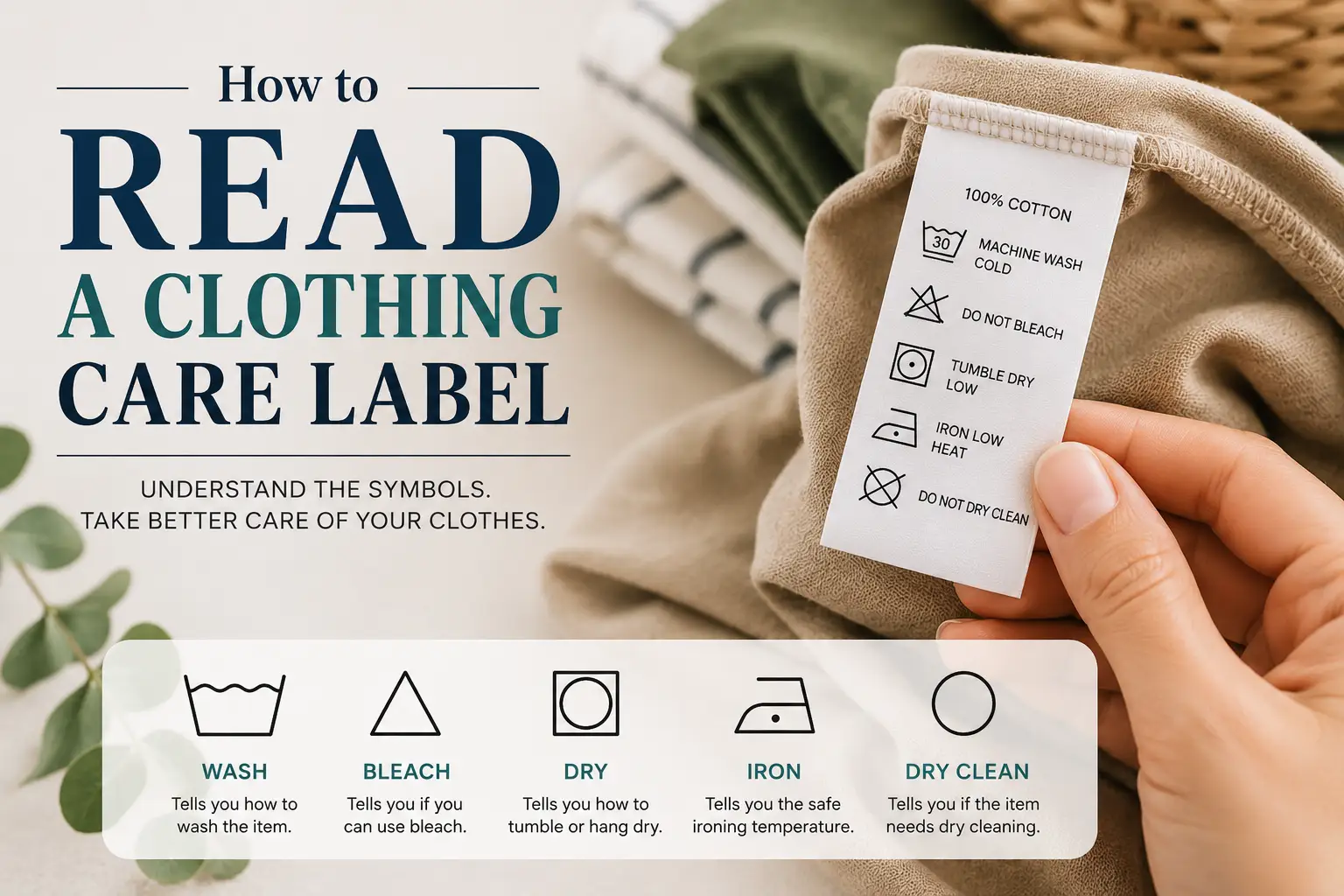
A clothing care label uses five core symbols to explain how to wash, bleach, dry, iron, and dry clean a garment safely. Once you learn these five shapes and their modifiers, any care label becomes easy to decode. This guide breaks down every symbol, what its dots and lines mean, and how to handle labels that are faded or missing entirely.
Why Clothing Care Labels Matter
Care labels aren’t random. They follow an internationally recognized symbol system managed by GINETEX, the International Association for Textile Care Labelling, under ISO 3758. This standardization is why the same five basic shapes appear on garments made anywhere in the world.
In the United States, care labels are also legally required. The Federal Trade Commission’s Care Labeling Rule mandates that most garments include permanent care instructions. That’s real regulatory backing, not just a manufacturer’s suggestion.
Following these symbols correctly matters practically too. The wrong wash temperature can shrink wool by more than one size. The wrong dryer heat can warp synthetic fibers permanently. Reading the label first is simply cheaper than replacing the garment later.
What Do the Symbols on Clothes Labels Mean?
Every care label symbol belongs to one of five shape families, and each shape represents a different care category. Recognizing the shape is the first step to understanding any label.
- A tub shape means washing instructions.
- A triangle shape means bleaching instructions.
- A square shape means drying instructions.
- An iron shape means ironing instructions.
- A circle shape means dry cleaning instructions.
Inside each shape, dots, lines, letters, or an X modifies the base instruction. Dots typically indicate heat level. Lines typically indicate cycle gentleness. An X almost always means “do not.”
What Are the 5 Basic Care Labels?
The five basic care labels are the wash tub, the triangle, the square, the iron, and the circle. Together, they cover every stage of garment care, from washing to professional cleaning.
This five-symbol system exists specifically so instructions can cross language barriers. A shape-based icon communicates the same meaning whether the label is read in Tokyo, Toronto, or Turin.
Washing Symbols Explained
The wash tub symbol shows whether a garment can be machine washed, hand washed, or not washed at all.
A plain tub with no lines underneath means a normal wash cycle. This setting suits sturdy, everyday garments like t-shirts, jeans, and towels. Normal cycles use more agitation, which cleans effectively but isn’t gentle.
A tub with one line underneath means a permanent press cycle. This setting uses warmer water and a slower spin, and it’s typically used for synthetic fabrics like polyester that resist wrinkles.
A tub with two lines underneath means a delicate or gentle cycle. Lower agitation and a slower spin protect fragile fabrics from stress and stretching.
Machine Wash vs. Hand Wash
A tub with a hand drawn inside it means hand wash only. This symbol usually appears on delicate fabrics like silk, cashmere, or fine wool. Hand washing prevents the shrinking and snagging that a machine cycle can cause.
If your washing machine has a dedicated “hand wash” setting, it can often substitute safely. For extra protection, place the garment in a mesh bag or wash it alone, separate from heavier items.
Do Not Wash
A tub with an X through it means the garment should never touch water in a washing machine or a sink. Instead, take it directly to a professional dry cleaner. This symbol usually pairs with a dry-clean-only circle elsewhere on the same label.
What Does 40 Mean on a Laundry Tag?
A number like 40 inside a wash tub symbol refers to the maximum washing temperature in degrees Celsius, which is roughly 104°F. It tells you the hottest safe water temperature for that garment.
Some labels use dots instead of numbers to represent temperature. One dot generally means cold water, between 65°F and 85°F. Two dots mean warm water, up to about 105°F. Three dots mean hot water, up to roughly 120°F.
Higher temperatures clean more effectively but increase the risk of shrinking or fading. Matching the number or dot count exactly protects both the garment’s fit and its color.
Bleaching Symbols Explained
The triangle symbol shows whether bleach is safe to use, and if so, what kind.
An empty, unmarked triangle means any bleach, including chlorine bleach, is safe for that garment. A triangle with diagonal lines inside means only non-chlorine, oxygen-based bleach is allowed. Using chlorine bleach on this symbol can cause yellowing or fiber damage.
A triangle with an X through it means no bleach of any kind should be used. This symbol commonly appears on colored garments or fabrics with dyes that react poorly to bleaching agents.
What Do the Symbols on a Clothing Care Label Mean for Drying?
The square symbol covers drying instructions, and its internal markings tell you exactly how to remove moisture safely.
A square with a circle inside means tumble drying is allowed. Additional dots inside that circle indicate heat level, following the same one-to-three system used for washing: one dot for low heat, two for medium, and three for high heat.
A square with an X through the circle means do not tumble dry. Instead, look for a second symbol indicating the preferred drying method.
A square with a horizontal line inside means dry the item flat, laid out on a towel or drying rack. This method is common for wool, cashmere, and other natural fibers that stretch out of shape when hung wet.
A square with vertical lines inside means line dry, hung on a clothesline or hanger. A square with three vertical lines specifically means drip dry, where the garment finishes drying while still slightly damp.
A twisted rope symbol with an X through it means do not wring. Wringing can stretch or distort fibers, especially in delicate knits, so gently pressing out water is the safer method.
Ironing Symbols Explained
The iron symbol shows whether a garment can be pressed, and at what heat setting.
One dot inside the iron symbol means a low-temperature setting, generally safe for delicate synthetics. Two dots mean a medium setting, suitable for most synthetic blends. Three dots mean a high setting, appropriate for sturdier natural fibers like cotton and linen.
An iron symbol with an X through it means the garment should never be ironed, regardless of temperature. Some labels also include a version with lines beneath the iron, indicating steam should not be used even if pressing is otherwise allowed.
Matching heat to fabric matters more than it seems. Synthetic fibers like polyester can melt or glaze under high heat, while natural fibers like cotton typically tolerate it well.
Dry Cleaning Symbols Explained
A plain circle means the garment should be professionally dry cleaned rather than washed at home.
Letters inside the circle tell the dry cleaner which solvent to use. A “P” typically indicates perchloroethylene or a similar solvent. An “F” indicates a petroleum-based solvent. An “A” means any solvent is acceptable. These letters matter mainly to the cleaner, not the consumer, but recognizing them confirms the garment truly requires professional handling.
Bars underneath the circle indicate the level of precaution the cleaner should take. More bars generally signal a more delicate process, with reduced moisture, heat, or mechanical action during cleaning.
A circle with an X through it means do not dry clean under any circumstances. This is less common but appears on certain specialty fabrics or trims that solvents can damage.
Quick-Reference Care Label Chart
| Symbol Shape | Category | Common Modifiers | Meaning |
|---|---|---|---|
| Tub | Washing | 0/1/2 lines, dots, hand icon | Cycle type, temperature, hand wash |
| Triangle | Bleaching | Diagonal lines, X | Any bleach, non-chlorine only, no bleach |
| Square | Drying | Circle, lines, dots | Tumble dry, line dry, dry flat, heat level |
| Iron | Ironing | 1–3 dots, X, lines | Low/medium/high heat, no iron, no steam |
| Circle | Dry Cleaning | Letters (P/F/A), bars, X | Solvent type, precaution level, no dry clean |
This single chart consolidates every category covered above. Keep it handy for a quick check before starting laundry, so you don’t need to search each symbol individually.
What to Do When a Care Label Is Missing or Faded
Faded or missing labels are more common than most people realize, especially on older or frequently washed garments. A few practical steps can fill the gap safely.
First, check the manufacturer’s website. Most brands list full care instructions for current and past product lines, searchable by item name or style number.
Second, default to fabric-based care when no label information is available. Cotton and linen generally tolerate machine washing and higher heat. Silk, wool, and cashmere are safer with hand washing or a delicate cycle and air drying.
Third, spot-test before committing to a full wash. Dampen a small, hidden area, such as an inside seam, to check for color bleeding or texture changes before washing the entire garment.
When in doubt, especially with expensive or sentimental items, a professional cleaner can assess the fabric and recommend safe handling, even without a legible label.
Bottom Line: Reading Care Labels with Confidence
Every clothing care label follows the same five-symbol logic: tub for washing, triangle for bleaching, square for drying, iron for ironing, and circle for dry cleaning. Dots signal heat, lines signal gentleness, and an X always means don’t.
Once these patterns are familiar, decoding any label takes seconds rather than guesswork. Matching the right care method to each garment protects its shape, color, and lifespan for years of wear.

