
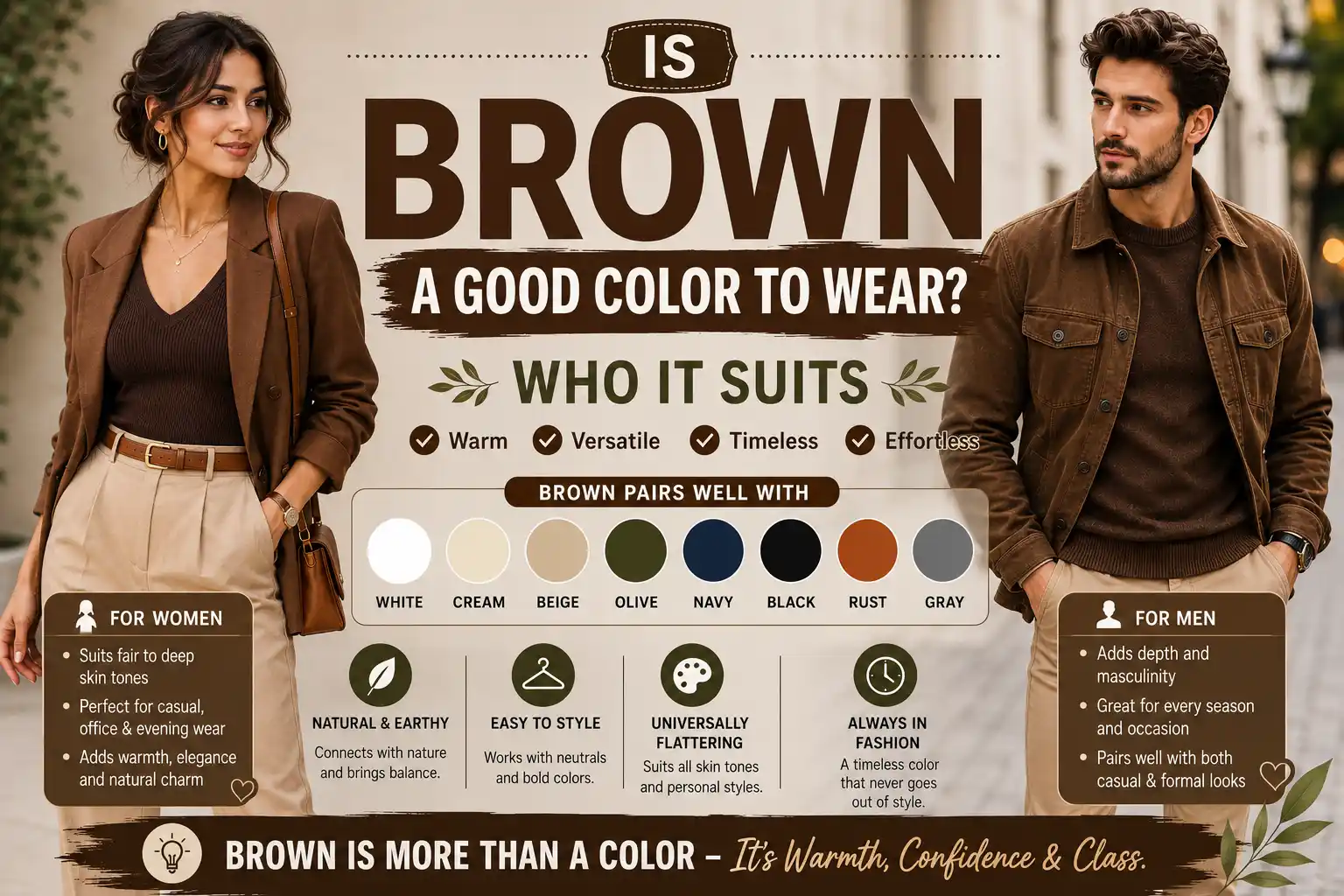
Brown is a good color to wear for almost everyone. It works as a warm, versatile neutral that softens an outfit instead of dominating it. The right shade depends on your skin undertone, your hair contrast, and the setting you’re dressing for. Get those three factors right, and brown moves from “safe default” to a genuinely flattering, on-trend choice in 2026.
If you’ve been wondering whether brown is a good color to wear for your skin tone specifically, the answer comes down to matching warmth to warmth and coolness to coolness.
Who Suits Wearing Brown?
Brown suits nearly every skin tone. The shade you choose is what changes, not whether brown works for you at all.
Warm undertones suit rich, saturated browns. Golden, peachy, or olive skin pairs well with cognac, rust, caramel, and chestnut. These shades echo the same warmth already present in the skin. If you’re unsure which undertone you have, our guide to the best colors for cool skin tones walks through the same undertone logic in more depth.
Cool undertones suit muted, gray-based browns. Pink or rosy skin with blue-toned veins looks best in taupe, mushroom, or deep espresso. These grayed-out shades avoid clashing with pink undertones.
Deep skin tones suit bold, saturated browns. Coffee, dark chocolate, and mahogany read as rich rather than heavy on medium-to-deep complexions.
Fair skin suits soft, lighter browns. Camel, tan, and sand keep the outfit balanced instead of overwhelming a pale complexion.
How to Find Your Undertone in 30 Seconds
Three quick tests reveal your undertone before you buy anything brown.
- Vein test. Green veins signal a warm undertone. Blue or purple veins signal cool.
- White-paper test. Hold white paper next to your face. Yellow reflection means warm; pink or blue reflection means cool.
- Jewelry test. Gold jewelry flattering you more than silver usually points to a warm undertone, and vice versa.
Undertone determines shade. Shade determines which pairing colors look intentional. That single relationship drives almost every styling decision in this guide. It’s also the same framework used in seasonal color analysis — our Deep Autumn color palette guide applies this exact logic to a specific warm-toned season.
Is Brown a Good Color to Wear With Other Colors?
Brown is a neutral, but it has more personality than gray or black. It pairs actively with at least four other colors.
Brown and blue work together because brown often carries a hidden orange tone. Orange and blue sit opposite each other on the color wheel, which makes this a naturally complementary pairing.
Brown and green feel intuitive because both colors appear together constantly in nature — bark, soil, and leaves.
Brown and cream or white create clean contrast. A crisp white shirt under a brown jacket looks classic rather than plain.
Brown and jewel tones — emerald, sapphire, burgundy, ruby — look more expensive next to brown because brown grounds their intensity instead of competing with it.
What Colors Don’t Go Well With Brown?
Two combinations to avoid: near-identical mid-tone browns worn together, and brown paired with black in very similar depths. Both read as muddy rather than deliberate. The fix is contrast — light against dark, warm against cool.
Is Brown a Good Color to Wear at Every Formality Level?
Brown scales across formality levels more easily than most colors, from weekend casual to business formal.
Casual wear relies on brown through khakis, chinos, and brown knitwear. These pieces match almost anything already in a closet.
Business casual brings in brown through tweed or houndstooth jackets, suede shoes, and leather accessories. Tobacco brown, specifically, shows up often in lightweight summer fabrics.
Formal business wear now includes charcoal-brown and chocolate suits as real alternatives to navy or gray. A brown knit tie or grenadine tie adds warmth without breaking dress-code rules. The one clear exception is black-tie or white-tie dress, where brown has no place at all.
Outerwear in brown or camel — coats, hats, gloves — stands out precisely because most outerwear defaults to black or gray.
Brown for Women: Fashion and Makeup Pairing
Brown works the same undertone logic in womenswear, plus one extra layer: makeup and metal-tone pairing.
Warm-undertone women generally suit warm brown lipsticks — terracotta, cinnamon, or caramel-based shades — alongside gold jewelry. Cool-undertone women suit mauve-brown or taupe-based lipsticks, paired with silver or platinum jewelry. This mirrors the same warm-to-warm, cool-to-cool matching rule used for clothing.
Brown blazers, midi skirts, and knit dresses follow the same formality scale already covered above: camel for daytime and softer settings, chocolate or espresso for evening and formal occasions.
Is Brown an Attractive Color to Wear?
Brown is not a high-arousal color the way red or black are. It doesn’t grab attention in the first second of a glance. That’s a measurable finding in color-perception research, not just an opinion — the American Psychological Association’s overview of color and emotion touches on why muted, low-saturation colors read as calming rather than commanding.
What brown does instead is build a slower, steadier kind of appeal. Color psychology research consistently links brown with reliability, stability, and warmth — three traits tied to trust rather than instant attraction.
When Brown Stands Out vs. When It Fades
Context decides which way brown swings. In a quiet, professional, or relaxed setting, brown reads as composed and put-together. In a loud, high-energy setting, the same brown outfit can fade into the background.
The fix, when brown needs to stand out more, isn’t avoiding it. Add contrast instead — a brighter layer underneath, a textured fabric like suede or tweed, or one bold accessory.
Is Brown Still in Fashion in 2026?
Yes. Brown has shed its old “boring neutral” reputation over the past few seasons. Designers have leaned into rich chocolate and earthy tones repeatedly across recent collections, positioning brown as a warmer alternative to years of minimalist gray. It’s increasingly described as a “quiet luxury” color — understated, but expensive-looking when styled with the right contrast.
Frequently Asked Questions
Who suits wearing brown? Almost everyone, in some shade. Warm undertones suit rich browns like cognac and rust. Cool undertones suit muted browns like taupe and espresso. Deep skin tones handle bold, saturated browns. Fair skin suits lighter shades like camel and sand.
Is brown still in fashion in 2026? Yes. Brown has moved from a background neutral to a featured color in recent designer collections, especially rich chocolate and earthy tones.
What colors don’t go well with brown? Two similar mid-tone browns worn together, and brown paired too closely with black. Both lack contrast and read as muddy instead of intentional.
Is brown an attractive color to wear? Brown isn’t a high-arousal color, so it doesn’t grab instant attention like red or black. It builds a steadier impression instead, tied to reliability and warmth rather than boldness.
The Bottom Line
Brown is a good color to wear for nearly any wardrobe, as long as the shade matches your undertone. Match warm undertones to rich browns and cool undertones to muted browns first. Let brown pair with blue, green, and jewel tones instead of fighting them. Add contrast when you want it to stand out more. Handled that way, brown stops being a default and becomes a deliberate choice.

