
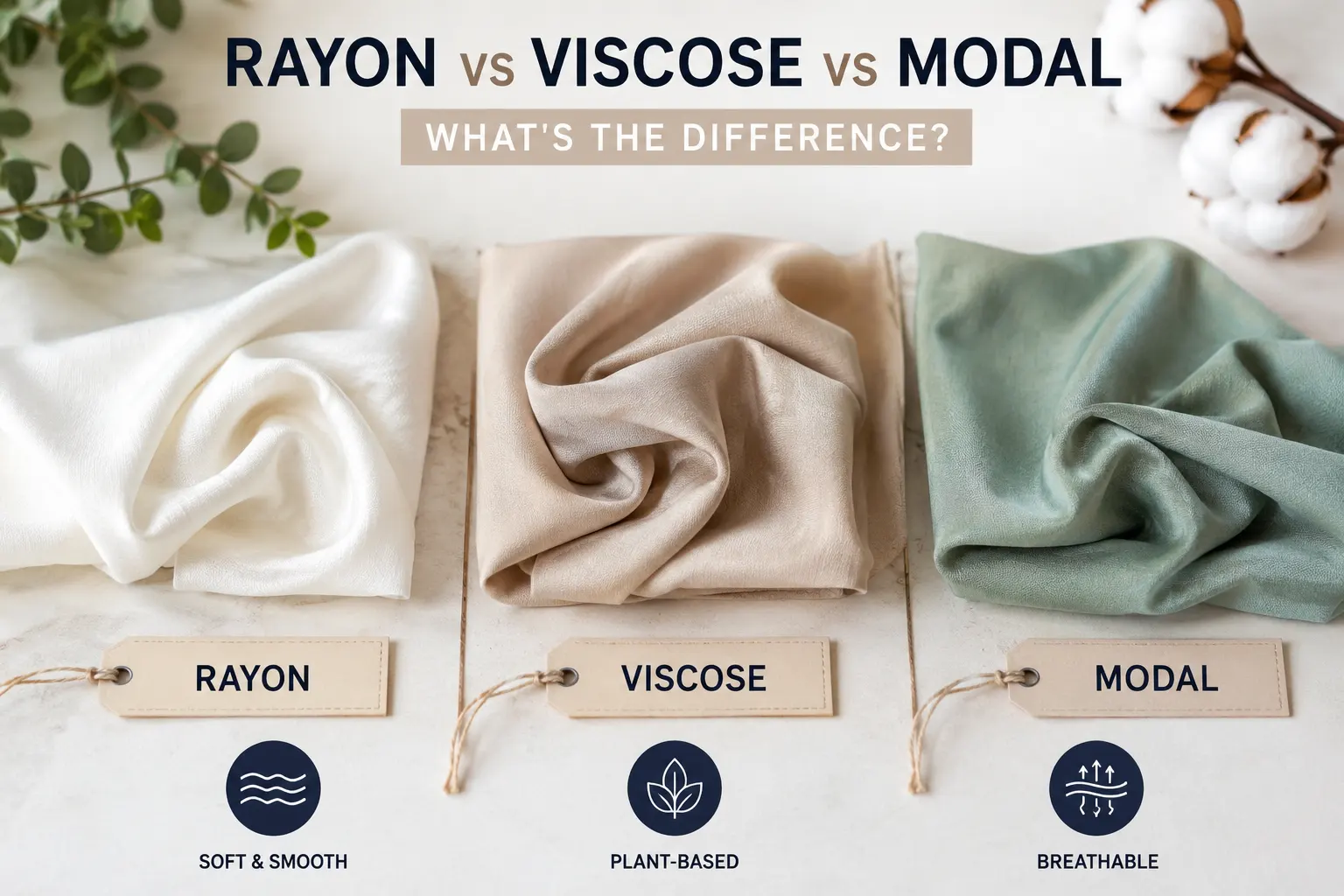
Rayon is the broad fabric family. Viscose and modal are two types within that family, not separate competitors to it. All three come from plant cellulose, but they differ in how that cellulose is processed and how the finished fabric performs on your body.
If you’ve stared at a clothing label wondering why one shirt says “rayon” and a nearly identical one says “viscose,” you’re reading two names for overlapping fabrics. This guide breaks down what each term actually means, how they compare, and which one fits your specific use case.
Rayon vs Viscose vs Modal at a Glance
| Fabric | What It Is | Feel | Wet Strength | Best For |
|---|---|---|---|---|
| Rayon | Umbrella term for regenerated cellulose fibers | Soft, fluid, varies by type | Generally weak | Dresses, blouses, linings |
| Viscose | The original, most common type of rayon | Soft, silky drape | Weak — loses strength when wet | Flowy garments, silk-style pieces |
| Modal | Upgraded rayon made from beech tree pulp | Soft, smooth, slightly denser | Stronger — holds up to washing | Underwear, activewear, everyday basics |
Rayon sits at the top of this hierarchy. Viscose and modal both belong to it. Understanding that relationship makes every other comparison on this page easier to follow.
What Is Rayon?
Rayon is a regenerated cellulose fiber. Manufacturers extract cellulose from wood pulp, dissolve it chemically, then reform it into fiber strands. That reforming step is why rayon counts as semi-synthetic rather than fully natural or fully synthetic.
The fabric dates back to the late 1800s, when chemists in France developed it as a cheaper alternative to silk. Early rayon was even marketed as “artificial silk” before the industry settled on the name we use today.
Rayon fabrics drape well and feel lightweight against the skin. That’s why designers favor rayon for blouses, dresses, and linings that need to move fluidly.
The tradeoff shows up in the laundry room. Rayon loses much of its strength when wet, so it can stretch, shrink unevenly, or wrinkle if machine washed. Most rayon garments carry hand-wash or dry-clean-only instructions for this reason.
What Is Viscose?
Viscose is the original and still the most widely produced type of rayon. In fact, “viscose” and “rayon” get used interchangeably so often that many shoppers don’t realize viscose is technically the more specific term.
Production starts with wood pulp, commonly sourced from eucalyptus, beech, or pine trees. Chemical processing turns that pulp into a viscous solution — hence the name — which is then extruded into fine fibers and spun into yarn.
The resulting fabric feels soft and breathable, with a fluid drape that mimics silk at a fraction of the cost. That combination explains why viscose shows up so often in summer dresses, linings, and blouses.
Is Viscose the Same as Rayon?
Not exactly, though the difference is mostly one of classification. Rayon is the broader fiber family. Viscose is a specific, common process within that family. Every viscose fabric is rayon, but not every rayon fabric is viscose.
Viscose shares rayon’s core weakness: it loses strength when wet and wrinkles easily. Gentle washing or dry cleaning typically keeps it looking its best.
What Is Modal?
Modal is a second-generation rayon fiber made specifically from beech tree pulp. Manufacturers put modal through an additional stretching process during production, which changes how the finished fiber behaves.
That extra step produces a fabric that retains roughly 50% more wet strength than standard viscose, based on textile industry testing of comparable regenerated cellulose fibers. In practical terms, modal garments hold their shape through repeated machine washing far better than plain viscose does.
Modal also resists pilling more effectively than viscose, which matters for garments worn and washed frequently. That durability is why modal turns up so often in underwear, base layers, and everyday t-shirts rather than special-occasion dresses.
Is Modal the Same as Rayon?
Modal is a type of rayon, but the two terms aren’t interchangeable. Rayon is the family name. Modal is one specific, higher-performance member of that family, distinguished by its beech-pulp origin and added processing step.
What Is Better, Modal or Rayon?
This comparison is really modal versus other types of rayon, since modal already falls under the rayon umbrella. For anything washed often — underwear, activewear, daily basics — modal typically outperforms standard rayon on durability and shrink resistance.
Modal vs Viscose: Which Is Better?
Neither fabric wins outright. The better choice depends on how you’ll wear and wash the garment.
Modal handles frequent machine washing well, resists pilling, and keeps its shape over time. Viscose costs less to produce, drapes with a softer fluidity, and works well for pieces you’ll wash occasionally rather than weekly.
For underwear, activewear, or daily t-shirts, modal is usually the more practical pick. For flowy dresses or special-occasion pieces, viscose’s drape often matters more than its wash durability.
What Is Better, Modal or Viscose?
If wash frequency and shape retention matter most, choose modal. If softness and silk-like drape matter more than washing durability, viscose remains a strong, budget-friendly option.
Is Viscose Rayon Good or Bad?
Viscose is neither good nor bad on its own — it’s a fabric with clear tradeoffs. It’s breathable, affordable, and drapes beautifully, making it a popular silk substitute. It’s also fragile when wet and typically requires gentler care than cotton or modal.
Whether viscose works for you depends on the garment’s purpose and your willingness to follow its care instructions.
What Is the Downside of Modal Fabric?
Modal isn’t without drawbacks. It costs more than standard viscose to produce, which shows up in retail price. Without an elastane blend, modal can stretch out slightly under heavy, repeated wear.
Environmental processing is the other consideration. Turning wood pulp into modal fiber traditionally involves carbon disulfide, a chemical that has drawn criticism over worker safety and environmental runoff. Some manufacturers now use closed-loop systems that capture and reuse these chemicals rather than releasing them, which significantly reduces environmental impact. Lenzing’s TENCEL Modal is a widely cited example of this closed-loop approach.
Where Lyocell Fits In
Most comparisons stop at rayon, viscose, and modal, but a fourth fiber belongs in this conversation: lyocell, often sold under the brand name TENCEL.
Lyocell is also a regenerated cellulose fiber, but it’s produced using a closed-loop solvent process from the start, rather than the older viscose-style method. That makes lyocell one of the more sustainably produced options in this fiber family, alongside newer modal variants.
If eco-conscious sourcing matters to you, look for OEKO-TEX or FSC-certified labeling on rayon, viscose, modal, or lyocell garments. These certifications indicate the raw wood pulp and finished fabric met independent safety and sourcing standards.
How to Read a Fabric Label With Confidence
The fiber name on a label is a starting point, not the full picture. A few habits make label-reading more useful:
- Check the full composition, not just the first word. A garment might be 95% modal and 5% elastane, and that 5% changes how it stretches and recovers.
- Match the fabric to how you’ll use it. A viscose dress worn a few times a year has different needs than a modal t-shirt washed weekly.
- Follow the specific care label. Blended fabrics and construction details can change recommended care, even between two modal garments.
The Difference, Simplified
Three points sum up the relationship:
Rayon is the broad regenerated-cellulose fiber family. Viscose is the original, most common type within that family. Modal is a stronger, beech-pulp-based type built for frequent washing and daily wear.
The fiber name tells you where a fabric sits in that family tree. The blend, construction, and care label tell you how it will actually perform.
FAQ
Can rayon, viscose, and modal be blended with other fibers? Yes. Elastane is a common addition for stretch, and blends with cotton or polyamide are also widely used to adjust durability, texture, or cost.
Which shrinks the least in the wash? Modal generally shrinks less than standard viscose, thanks to its added wet strength, though results still depend on the specific blend and care instructions.
Is modal a natural or synthetic fabric? Neither, strictly speaking. Modal starts from natural plant cellulose but undergoes significant chemical processing, which is why it’s classified as semi-synthetic.
Are these fabrics biodegradable? Regenerated cellulose fibers like rayon, viscose, and modal are generally biodegradable, since they originate from plant material, though finishing treatments and fiber blends can affect breakdown time.
Why do some labels say rayon and others say viscose? Rayon is the umbrella term, while viscose names a specific process within it. Labeling conventions vary by manufacturer and region, which is why both terms appear even on similar fabrics.

