
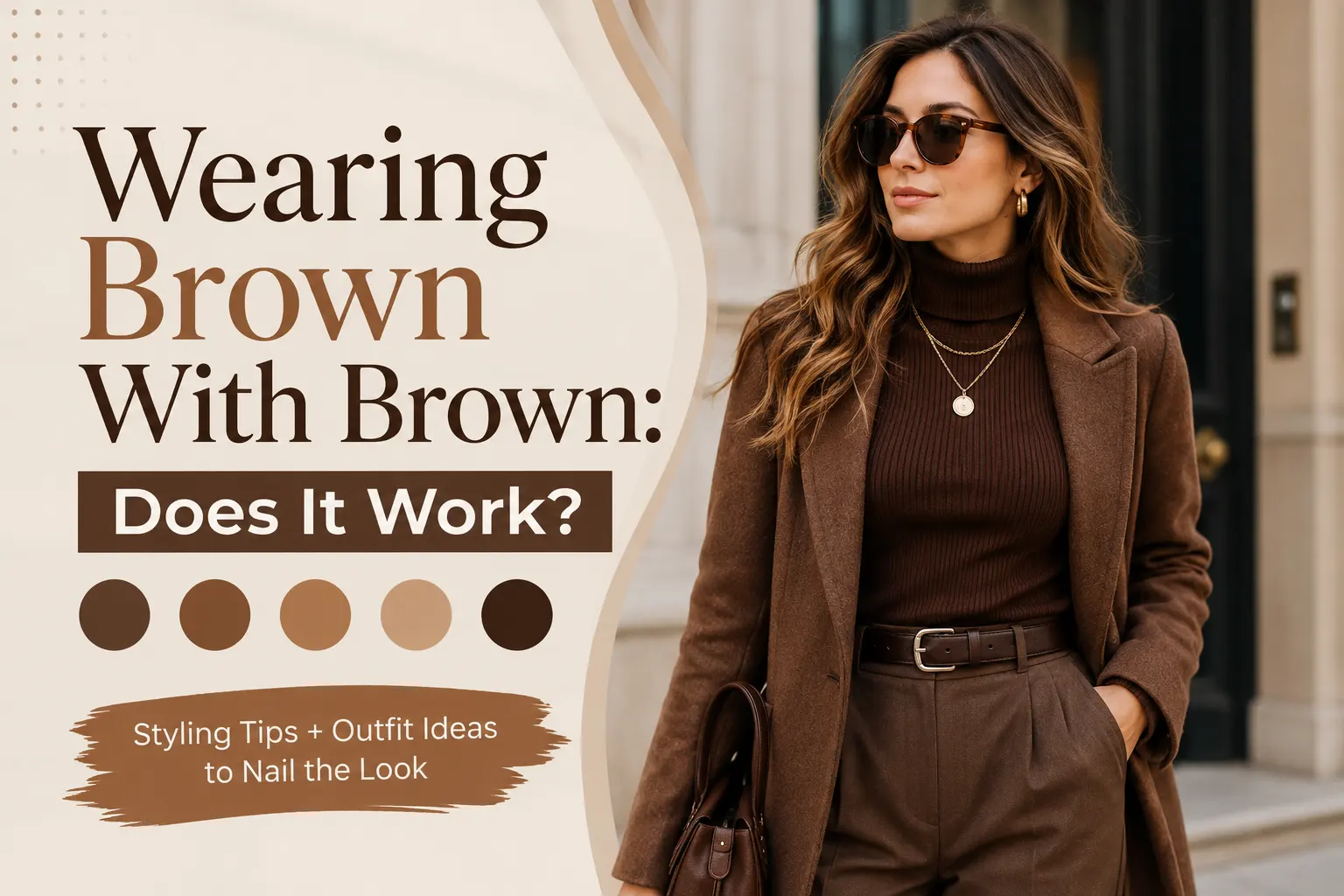
Wearing brown and brown together works well when you build in shade contrast and texture. This tonal approach turns two similar browns into one coordinated outfit instead of a flat block of color. The key is balancing light and dark browns, mixing fabrics, and creating structure so nothing looks flat. Done right, it is one of the simplest ways to look styled without adding a single new color.
Is Wearing Brown and Brown Together Okay?
Wearing brown and brown together is not just okay — it is a proven styling technique. Stylists call it tonal dressing. It means building an outfit from one color family instead of mixing several. The result feels intentional, not accidental, as long as each piece stands apart in shade or texture. For a deeper look at how shades relate to one another, the Adobe Color Wheel is a useful reference for understanding tone and contrast.
What Is Tonal Brown Dressing?
Tonal dressing uses multiple shades of the same color in one outfit. Brown works especially well for this because it spans a wide range, from pale beige to near-black espresso. Instead of adding new colors, you create interest within the brown family itself. This keeps the outfit cohesive while still holding visual depth.
Can You Wear Two Shades of Brown Together?
Yes, and this is where most brown-on-brown outfits succeed or fail. Pairing two shades of brown works when the shades sit far enough apart to read as distinct. A light camel top with dark chocolate trousers reads as styled. Two nearly identical mid-browns tend to blur into a flat block instead.
Core Rules for Wearing Brown and Brown Together
Four rules separate a flat brown outfit from a sharp one. Each rule solves a different problem: sameness, texture, shape, or balance.
Create Shade Contrast
Pair a light brown with a dark brown in the same outfit. Camel with espresso, tan with chocolate, or beige with walnut all work. This contrast is the single biggest factor in making the look deliberate.
Mix Textures
Combine different fabrics even when the color stays the same. Leather, suede, wool, and knit each catch light differently. That difference adds dimension a single flat fabric cannot provide on its own.
Break Up the Outfit
Use a belt, jacket, or layered piece to divide the look visually. Without a break point, the outfit risks reading as one solid shape. A defined waistline or open layer solves this instantly.
Keep One Anchor Piece
Choose one item, often trousers or a jacket, to ground the outfit. Every other piece should support that anchor rather than compete with it. This keeps the overall look structured instead of scattered.
Brown Shade Pairing Guide
| Base Shade | Best Pairing | Result |
|---|---|---|
| Light Beige | Chocolate Brown | Clean, high contrast |
| Camel | Espresso | Sharp and structured |
| Tan | Chestnut | Soft, everyday wearable |
| Caramel | Dark Walnut | Rich, layered depth |
| Taupe | Deep Brown | Balanced, neutral finish |
A simple rule of thumb: lighter shades on top, darker tones below. It creates a grounded, naturally balanced silhouette.
What Color Is Best to Wear With Brown?
Brown pairs well beyond its own family too. Cream and white soften it. Navy adds a crisp, modern contrast. Olive and forest green bring out its warmth. Burnt orange and mustard intensify its richness. Each option changes the mood, from relaxed to bold.
Outfit Ideas for Wearing Brown and Brown Together
Outfit examples make the rules easier to apply. These three settings cover most everyday needs.
Casual Looks
A light brown tee with dark brown chinos keeps things simple and wearable. A tan hoodie with chocolate joggers works well for a relaxed, off-duty outfit.
Smart Casual Looks
A camel shirt with deep brown trousers reads clean and put-together. A brown knit paired with tailored brown pants balances comfort with structure.
Formal and Workwear Looks
A dark brown blazer over lighter trousers creates sharp, deliberate contrast. A monochrome brown suit with a tonal shirt gives a sleek, coordinated finish for the office.
Texture Combinations That Make Brown-on-Brown Work
Texture often matters more than shade when colors are this close. It breaks visual monotony and keeps even similar tones from blending together.
| Texture Pairing | Effect |
|---|---|
| Leather + Cotton | Structured meets soft |
| Wool + Denim | Relaxed yet defined |
| Suede + Knitwear | Warm and cozy |
| Linen + Structured Fabric | Light, clean, breathable |
Brown and Metallics: Gold or Silver?
Gold hardware and jewelry generally suit brown better than silver. Brown’s warm undertone pairs naturally with warm metals like gold, bronze, and brass. Silver can still work, but it needs a cooler-toned brown, like taupe or ash brown, to avoid clashing. This small detail often decides whether an outfit feels finished or slightly off.
Keep Brown Away From the Face
Brown does not flatter every skin tone equally, especially near the face. If a brown top or scarf feels dull against your complexion, shift the brown lower in the outfit instead. Pair brown trousers or shoes with a brighter top in a shade that suits your undertone. You still get the richness of brown without it working against your coloring. For related guidance, see our hair color guide for cool skin tones (replace with your actual internal article link).
What Two Colors Should Not Be Worn Together?
There is no strict rule against any two colors, but some pairings need more care than others. Brown next to a similarly muddy, low-contrast color, like olive drab or dull gray-green, can look heavy rather than styled. The fix is the same one used when wearing brown and brown together: contrast in lightness, even when the palette stays close.
Common Mistakes to Avoid
Wearing brown and brown together the wrong way can look flat instead of styled. A few small errors are responsible for most of these outfits going wrong.
- Wearing the exact same shade of brown head to toe
- Ignoring fabric texture and using flat materials throughout
- Overloading the outfit with too many dark browns
- Pairing brown with the wrong-toned footwear
Final Thoughts
Wearing brown and brown together works because it rewards small, deliberate choices. Contrast the shades, vary the textures, and anchor the outfit with one strong piece. Do that consistently, and brown stops being a safe, boring neutral. It becomes one of the simplest ways to build an outfit that looks put-together every time.

