
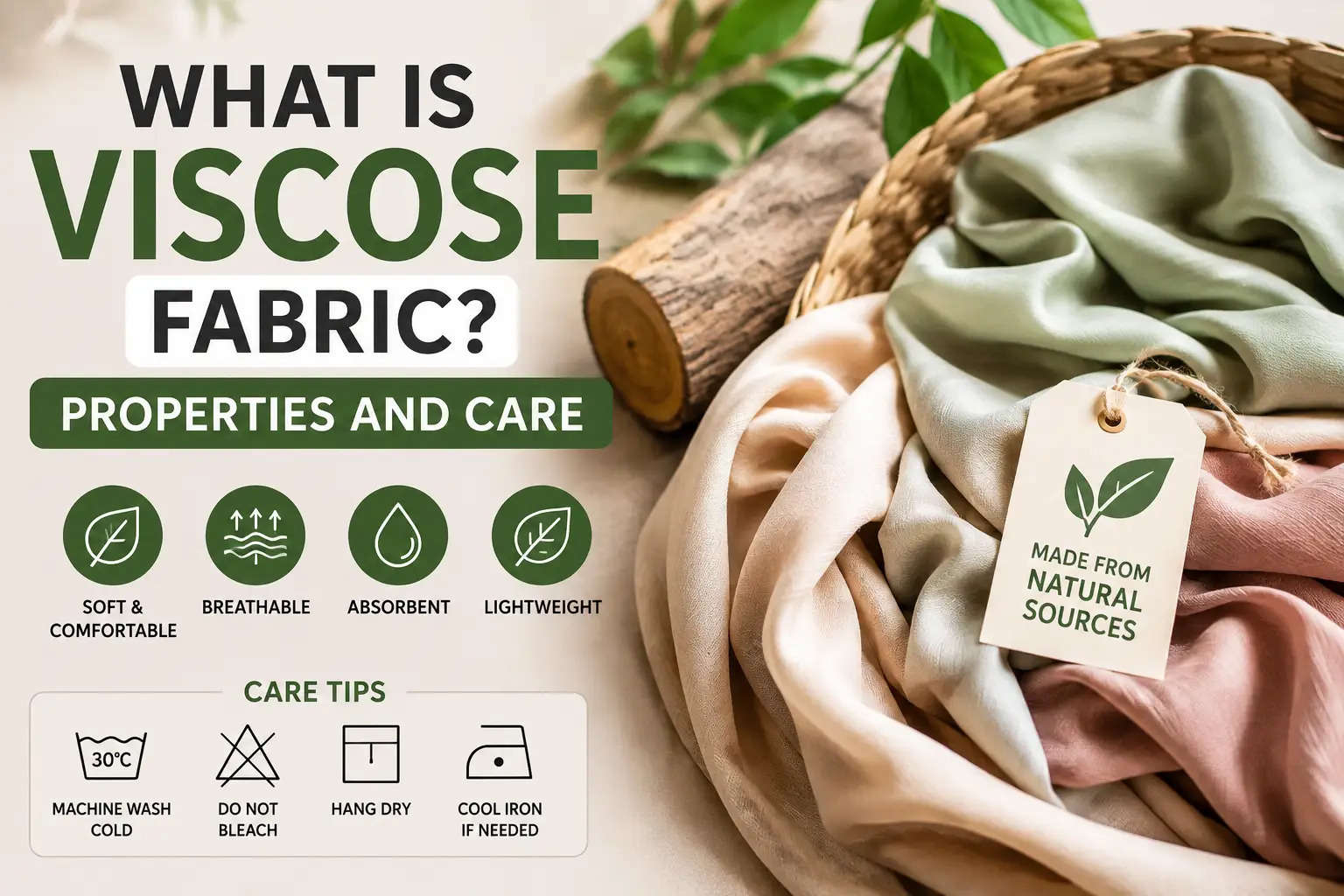
Viscose is a semi-synthetic fabric that offers silk-like softness, fluid drape, and breathability at a much lower price than silk. It feels cool against the skin and takes dye well, but it also requires more careful handling than cotton or polyester. A hot wash, harsh detergent, or tumble dryer can quickly cause shrinkage, stretching, or tearing.
This guide explains what viscose is, how it is made, where it is used, how to care for it safely, and what to look for if you want a more sustainable option. You will also learn how viscose compares with cotton, polyester, silk, modal, and lyocell.
What Is Viscose Fabric?
Viscose, also called viscose rayon, is a semi-synthetic fibre made from regenerated wood pulp cellulose. It belongs to the rayon family, along with modal and lyocell. All three fibres start as plant cellulose, but viscose undergoes a chemical process that turns solid wood into a soft, silky fibre.
Viscose is often described as “artificial silk” because it mimics the drape, softness, and subtle sheen of silk. It is cheaper to produce than silk and much easier to dye into rich, lasting colours.
A brief history of viscose
The first artificial silk was patented by French chemist Hilaire de Chardonnet in 1885. That early fibre was made from nitrocellulose and looked beautiful, but it was highly flammable and commercially limited.
The modern viscose process was developed by British chemists Charles Frederick Cross, Edward John Bevan, and Clayton Beadle. They patented the process in 1892. Their method dissolved cellulose into a thick, viscous solution that could be regenerated into fibre, which is where the name “viscose” comes from.
Commercial viscose rayon production began in the early 1900s, mainly through the British company Courtaulds. By the 1920s, viscose was widely used in clothing, linings, and household textiles.
How to recognise viscose
If you are unsure whether a garment is viscose, check the fibre content label. Viscose feels soft and cool, but it is not as slippery as polyester. When you squeeze a handful of viscose fabric, it tends to crease more than polyester and feels smoother than linen. Silk is usually finer and more expensive, and its label will normally say “100% silk” if it is silk.
How Is Viscose Fabric Made?
Viscose production turns solid wood or bamboo into soft, spinnable fibres. The process is chemical, which is why viscose is called semi-synthetic rather than fully natural.
The main production steps are:
- Wood preparation: Trees such as eucalyptus, beech, pine, or bamboo are chipped into wood pulp. The pulp must contain a high proportion of cellulose.
- Alkali treatment: The cellulose pulp is treated with sodium hydroxide to form alkali cellulose. This step swells the fibres and removes impurities. It does not dissolve the cellulose.
- Shredding and ageing: The alkali cellulose is shredded and left to age under controlled conditions. This shortens the cellulose molecules so the solution becomes easier to spin.
- Xanthation: Carbon disulfide is added to the alkali cellulose. This turns the mixture into a sticky orange-yellow substance called cellulose xanthate.
- Dissolving and ripening: The cellulose xanthate dissolves in dilute sodium hydroxide. Over several hours, it ripens into a thick, honey-like liquid called viscose.
- Extrusion: The viscose solution is forced through a spinneret, which is a showerhead-like device with many tiny holes.
- Acid bath and regeneration: The thin streams of viscose enter a bath containing sulfuric acid. The acid converts the cellulose xanthate back into solid cellulose filaments.
Workers then wash, draw, and spin those filaments into yarn. Mills weave or knit the yarn into viscose fabric.
Viscose Fabric Properties
Viscose has a useful combination of comfort and affordability, but it also has clear weaknesses. Understanding both sides helps you choose and care for the fabric wisely.
Key benefits
- Soft and smooth: Viscose feels gentle on the skin and resembles cotton or silk.
- Breathable: Air moves through viscose easily, which helps keep you cool in warm weather.
- Absorbent: At standard conditions of 65% relative humidity and 20°C, viscose absorbs about 13% of its weight in moisture. That is higher than cotton.
- Excellent drape: Viscose hangs in a fluid, elegant way. It is especially suited to dresses, blouses, and skirts.
- Colour-rich: Viscose absorbs dye well, so colours tend to stay bright and deep.
- Affordable: Viscose costs far less than silk while offering a similar look and feel.
Disadvantages and what they mean in practice
- Weak when wet: Wet viscose can lose roughly 40–50% of its strength. That is why you should never soak, scrub, or wring viscose.
- Prone to shrinking: Shrinkage of 3–5% after the first wash is common, and it can be worse with hot water or a tumble dryer.
- Wrinkles quickly: Viscose creases after normal wear. You will usually need to steam or iron it.
- Pills over time: Friction from bag straps, seat belts, or underarm movement can create small fibre balls.
- Low stretch: Pure viscose has little elasticity. Blends with elastane or spandex add stretch.
These drawbacks explain why many viscose garments carry a “dry clean only” label. However, many simple, unlined viscose pieces can be hand washed safely if you follow the rules below.
Common Uses of Viscose Fabric
Viscose is used across a wide range of clothing and home textiles.
- Dresses, blouses, and skirts. Viscose gives soft movement and a fluid silhouette.
- Linings. It is smooth, breathable, and less static-prone than polyester linings.
- Trousers and palazzo pants. Lightweight viscose trousers drape well in warm weather.
- Loungewear and soft shirts. The smooth surface feels comfortable against the skin.
- Scarves and ties. Viscose takes colour well and knots elegantly.
- Home textiles. Curtains and some bedsheets or cushion covers use viscose or viscose blends.
How blends change the fabric
Many garments are not 100% viscose. Blend content affects both performance and care.
- Viscose–elastane/spandex. Adds stretch but makes the fabric more heat-sensitive. Avoid high ironing temperatures and tumble drying.
- Viscose–cotton. Feels breathable and slightly stronger, but it can still shrink. Wash in cold water.
- Viscose–polyester. More durable and less prone to shrinking, but less breathable and more likely to pill.
- Viscose–linen. Very breathable and airy, but wrinkles even more than pure viscose.
Always check the full fibre content label before washing. The blend ratio can change the best care method.
Viscose Fabric Care
Viscose care comes down to three principles: cold, gentle, and flat. Heat and agitation are the main causes of damage.
Before you wash
- Read the label. If the garment says “dry clean only” and has a lining, interfacing, pleats, beading, or structure, dry clean it. Hand washing may cause shrinkage, distortion, or dye bleeding.
- Test colourfastness. Dampen a hidden seam with cold water, then press a white cloth against it. If dye transfers, wash the garment alone or have it dry cleaned.
- Do not soak viscose. Because wet viscose is much weaker than dry viscose, prolonged soaking increases the risk of tearing and stretching.
- Avoid chlorine bleach and harsh stain removers. These can weaken or discolour the fibre.
Hand washing viscose
Hand washing is the safest method for simple, unlined viscose garments.
- Fill a clean basin with cold or lukewarm water, no warmer than about 30°C / 86°F.
- Add a small amount of mild liquid detergent for delicates, or use a gentle baby shampoo.
- Submerge the garment completely.
- Swish it gently with your fingertips for a few minutes. Do not scrub, twist, or wring.
- Rinse with cold water until the water runs clear.
- Press the garment gently against the side of the basin to remove excess water.
- Lay the garment flat on a clean, dry towel and roll it up gently to absorb more water.
Can you machine wash viscose?
You can machine wash viscose only if the care label allows it and the garment is simple and unlined.
Use these precautions:
- Place the garment inside a mesh laundry bag.
- Choose the delicate or gentle cycle.
- Use cold water only.
- Use a mild liquid detergent.
- Skip the spin cycle if possible, or use the lowest spin setting.
- Wash with similar colours and avoid washing with zippers, hooks, or rough fabrics.
Even with these precautions, hand washing is usually safer.
How to dry viscose
Drying mistakes cause more viscose damage than washing mistakes.
- Lay flat to dry. Place the garment on a clean towel or a mesh drying rack.
- Reshape gently while damp. This helps prevent distortion.
- Do not hang wet viscose. Hanging stretches the fabric out of shape.
- Keep it away from direct sunlight and direct heat. Strong sunlight can fade viscose colours.
- Never tumble dry. Dryer heat and tumbling shrink viscose badly.
To speed up drying, roll the wet garment in a dry towel and press gently. Repeat with a second dry towel if needed.
Ironing and steaming viscose
Viscose wrinkles easily, but it can be smoothed safely.
- Iron while slightly damp. If the garment is already dry, mist it lightly with water first.
- Use a low heat setting. Choose the synthetic or rayon setting on your iron. High heat can scorch or yellow the fabric.
- Iron on the reverse side. This protects the surface from shine and scorch marks.
- Use a press cloth if needed. A thin cotton cloth between the iron and the garment adds extra protection.
- A garment steamer is the best option. Steam relaxes the fibres without direct contact. Hold the steamer slightly away from the fabric and avoid pulling the garment.
Storage tips
- Fold viscose instead of hanging. Heavy or long garments stretch on hangers.
- Use padded hangers if you must hang. They reduce shoulder stress.
- Store in a cool, dry place. Damp storage can lead to mildew.
- Keep garments clean before storing. Soil and perspiration can attract insects. Clothes moths prefer wool and other protein fibres, but silverfish and some other pests may damage soiled cellulose fabrics.
- Use a breathable garment bag. Avoid sealing viscose in plastic for long periods.
Troubleshooting common problems
- Shrinkage. Mild shrinkage may be partially reversed by soaking the garment in lukewarm water with a small amount of hair conditioner or baby shampoo for 10–15 minutes, then gently stretching it back into shape and laying it flat to dry. Severe shrinkage is often permanent.
- Stiffness after air drying. Air-dried viscose can feel stiff. Lightly steam the fabric to relax it. You can also add a small amount of fabric softener to the rinse water, but avoid heavy softeners because they coat the fibres and reduce breathability.
- Wrinkles. Use steam or a low-heat iron while the garment is slightly damp.
- Pilling. Remove pills carefully with a fabric shaver or a sweater comb. To reduce pilling, wash the garment inside out in a mesh bag and avoid rough friction.
Viscose vs. Cotton
Neither viscose nor cotton is unhealthy in finished form. Both are safe for skin contact, and both are breathable.
Cotton is fully natural, stronger when wet, and usually easier to wash. Viscose is semi-synthetic, softer in drape, and richer in colour, but it is weaker when wet and requires more careful laundering. If you want low-maintenance clothing, cotton is more forgiving. If you want a silk-like flow at a lower price, viscose is a better aesthetic match.
Viscose vs. Polyester
Viscose is much better than polyester for hot weather. It is breathable and absorbent, so it lets air flow and absorbs moisture. Polyester is less breathable and tends to trap heat and sweat against the skin.
Polyester is stronger, more wrinkle-resistant, and often more durable, but it cannot match viscose for warm-weather comfort. For summer dresses, blouses, and loose trousers, viscose is usually the better choice.
Viscose vs. Silk
Viscose is often marketed as a budget alternative to silk. Both fabrics drape well and feel soft, but they are very different in origin and performance.
| Feature | Viscose | Silk |
|---|---|---|
| Origin | Semi-synthetic wood cellulose | Natural protein fibre from silkworms |
| Drape | Soft and fluid | Soft and fluid |
| Breathability | High | High |
| Moisture absorption | Around 13% at standard conditions | Similar to viscose |
| Durability | Medium, weak when wet | Higher, especially when dry |
| Wrinkle resistance | Low | Medium |
| Price | Low | High |
| Care | Gentle hand wash or dry clean | Usually gentle hand wash or dry clean |
Silk is stronger, more luxurious, and temperature-regulating, but it is expensive and often more delicate in practice. Viscose offers a similar look for a fraction of the cost, but it will not last as long.
Viscose vs. modal and lyocell
Modal and lyocell are also part of the rayon family.
- Modal is stronger than viscose, especially when wet. It shrinks less and pills less. It is commonly used in underwear, base layers, and soft loungewear.
- Lyocell, often sold under the brand name TENCEL, is made using a closed-loop solvent process. It is stronger than viscose, less prone to shrinkage, and more environmentally friendly.
- Viscose is the cheapest of the three and often offers the closest silk-like appearance for the price.
Viscose vs. Cotton vs. Polyester at a Glance
| Feature | Viscose | Cotton | Polyester |
|---|---|---|---|
| Breathability | High | High | Low |
| Moisture absorption | High | High | Low |
| Durability | Medium | High | High |
| Wet strength | Low | Medium–High | High |
| Wrinkle resistance | Low | Low | High |
| Stretch | Low | Low | Medium |
| Price | Low | Medium | Low |
| Environmental impact | Depends on sourcing and production | High water use | Fossil-fuel-based, microplastics |
Viscose combines the breathability of cotton with a more fluid drape. Polyester offers durability but traps heat and is less comfortable in warm weather.
Is Viscose Fabric Sustainable? Environmental Impact
Viscose starts from a renewable resource: trees or bamboo. The finished fabric is biodegradable, and unlike polyester, viscose does not shed microplastics.
However, traditional viscose production has serious environmental problems.
Main concerns
- Toxic chemicals. Production uses sodium hydroxide, carbon disulfide, and sulfuric acid. Without proper controls, these chemicals can pollute air and water and harm workers.
- Deforestation. Some viscose has been linked to ancient and endangered forests. Wood sourcing matters.
- Water and chemical waste. Conventional mills use large amounts of water and can create contaminated runoff.
- Fibre yield. Traditional processes convert only part of the tree into finished fibre. Exact losses vary by mill, but waste is significant if by-products are not recovered.
More sustainable options
The viscose industry has started to improve. When shopping, look for these labels and certifications.
- FSC certification. Ensures wood comes from responsibly managed forests.
- PEFC certification. Another recognised forest-management certification.
- OEKO-TEX Standard 100. Confirms the finished fabric has been tested for harmful substances.
- CanopyStyle. An initiative working to keep ancient and endangered forests out of viscose supply chains.
Brands and technologies to know
- Lenzing ECOVERO. According to Lenzing, ECOVERO fibres are produced with about 50% lower water use and about 50% lower CO₂ emissions compared with generic viscose.
- TENCEL Lyocell. A branded lyocell made in a closed-loop process that recovers and reuses more than 99% of the solvent. Traditional viscose mills can also recover much of the carbon disulfide they use, but recovery rates vary.
- Birla Livaeco. A traceable viscose from Birla Cellulose made from FSC-certified wood. It is promoted as a lower-impact alternative to conventional viscose.
- Circulose and recycled viscose. Emerging circular materials made from recovered cotton and viscose waste.
If sustainability is a priority, look for viscose labelled as ECOVERO, Livaeco, FSC-certified, or OEKO-TEX certified. Keep in mind that bamboo viscose is chemically similar to wood-based viscose. It is not the same as mechanically processed bamboo linen.
Viscose Care Cheat Sheet
| Do | Don’t |
|---|---|
| Hand wash in cold or lukewarm water | Use hot water |
| Use a mild liquid detergent | Soak viscose |
| Swish gently and rinse well | Scrub, twist, or wring |
| Press water out gently | Use chlorine bleach or strong stain removers |
| Lay flat to dry | Tumble dry |
| Reshape while damp | Hang while wet |
| Iron on low while damp | Iron on high heat |
| Steam to remove wrinkles | Rub hard |
| Fold for storage | Hang heavy garments |
| Check fibre content and care label | Ignore “dry clean only” on structured garments |
| Look for FSC, ECOVERO, Livaeco, or OEKO-TEX | Assume all viscose is equally sustainable |
Conclusion
Viscose is a semi-synthetic rayon made from wood pulp. It mimics the softness, drape, and colour richness of silk at a much lower cost. The fabric is breathable and absorbent, which makes it comfortable in warm weather.
Its main weaknesses are wet strength, shrinkage, wrinkling, and pilling. Viscose needs cold water, gentle handling, flat drying, and low-heat ironing. Avoid soaking, wringing, and tumble drying. If a garment is lined, structured, or labelled dry clean only, professional dry cleaning is the safest choice.
Viscose is not a low-maintenance fabric. But with the correct care, it rewards you with soft, flowing comfort and beautiful colour. If sustainability matters to you, choose certified options such as FSC-certified viscose, Lenzing ECOVERO, or Birla Livaeco.

