

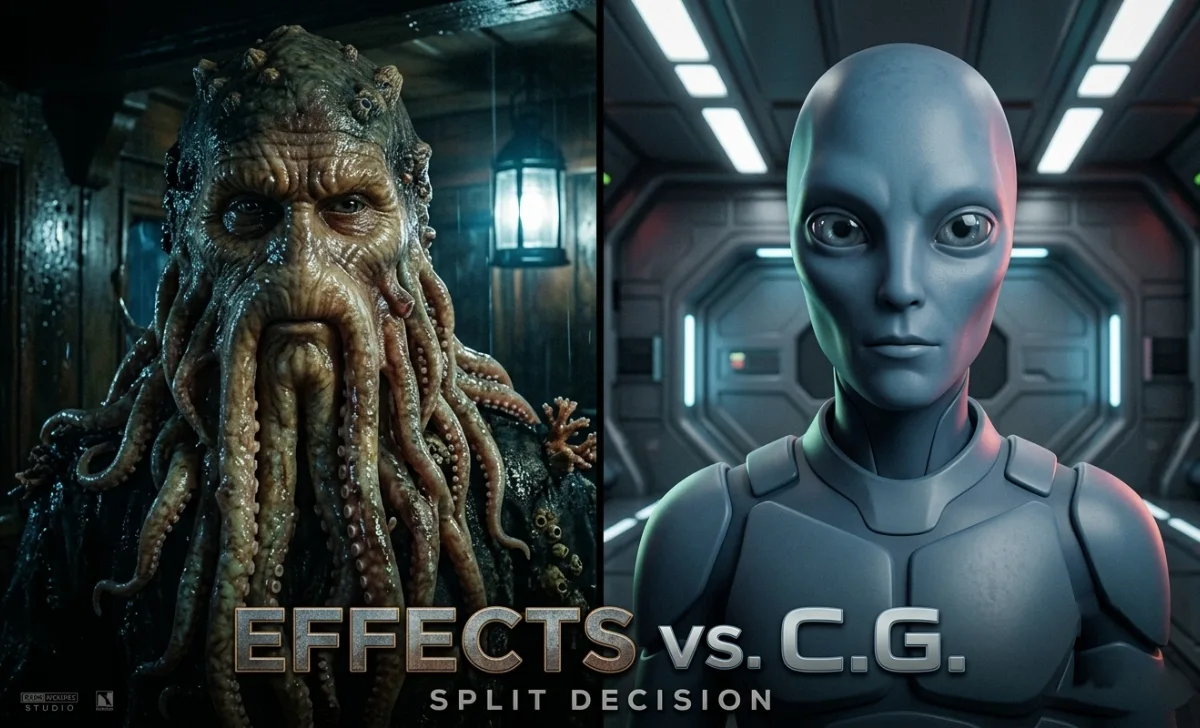
If you’ve watched a major blockbuster recently and felt like something looked “off,” you’re not alone. Audiences have been complaining for at least a decade about the quality of computer graphics in movies—even as budgets have ballooned. Films from the late 1990s and early 2000s, like Jurassic Park and The Lord of the Rings, often feel more convincing than today’s $200 million spectacles.
So what happened? According to Pirates of the Caribbean director Gore Verbinski, the answer may be simpler than you think—and it starts with video games.
Why Audiences Feel Something Is Wrong
Modern CGI is more technically sophisticated than ever. Artists can craft photorealistic humans, alien creatures, and entire digital worlds. Yet audiences increasingly complain that it looks worse. The disconnect isn’t in your head—it’s the result of several fundamental shifts in how Hollywood makes movies.
The Surprising Truth About CGI Quality
When CGI works, nobody notices. Invisible VFX—removing camera rigs, enhancing backgrounds, extending sets—goes completely undetected. Films praised for “practical effects” often use substantial CGI that viewers never spot.
But when CGI fails, it fails spectacularly. A single awkward shot can break immersion and dominate the conversation. That’s why films with hundreds of successful VFX shots can still be remembered for one bad one.
Why It’s More Than Just “Old Movies Were Better”
It’s easy to chalk complaints up to nostalgia. But there’s real evidence that something has shifted. Compare Davy Jones from Pirates of the Caribbean: Dead Man’s Chest (2006) with a modern CGI character. The nearly 20-year-old creation still holds up—and as Verbinski argues, that’s not an accident.
Technical Factors That Break CGI Realism
Lighting and Subsurface Scattering
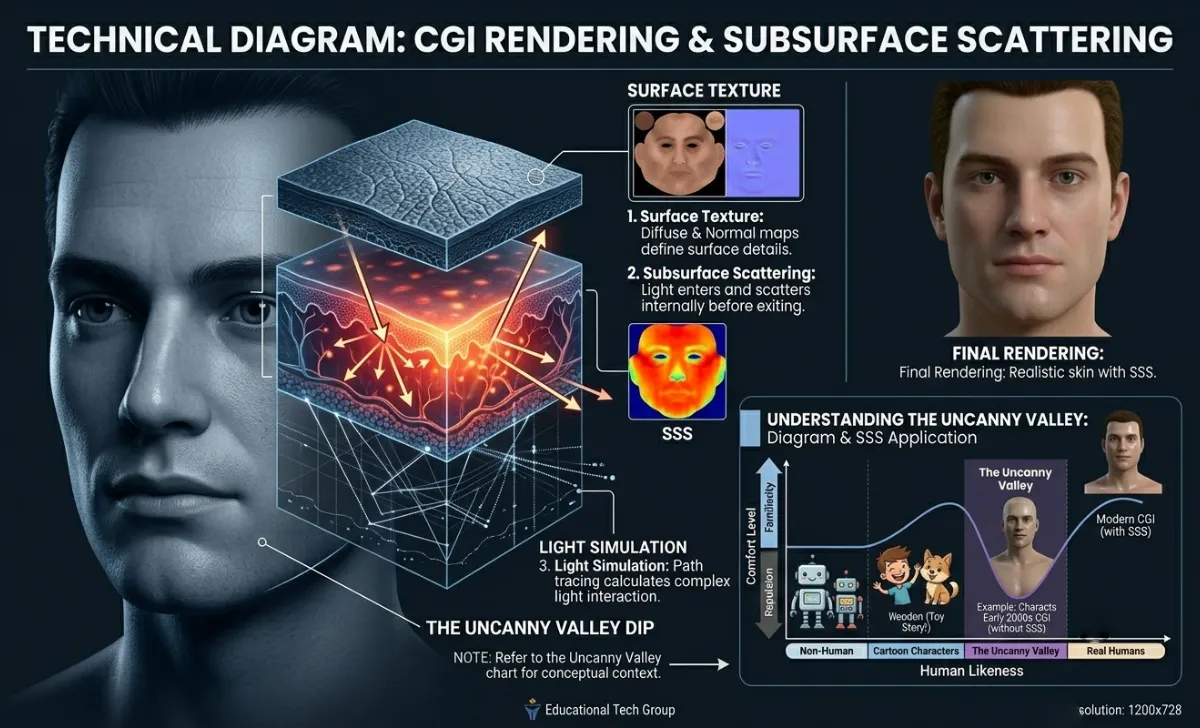
The biggest technical challenge in CGI isn’t modeling or texturing—it’s light. Human skin doesn’t simply reflect light; it absorbs, scatters, and emits it. This phenomenon, called subsurface scattering, is incredibly difficult to simulate.
“I just don’t think [Unreal Engine] takes light the same way; I don’t think it fundamentally reacts to subsurface scattering, and how light hits skin and reflects in the same way,” Verbinski explained.
When CGI characters look “plastic” or “waxy,” the culprit is almost always lighting. Different rendering engines handle this differently—and the choice of tools makes a visible difference.
The Uncanny Valley Problem
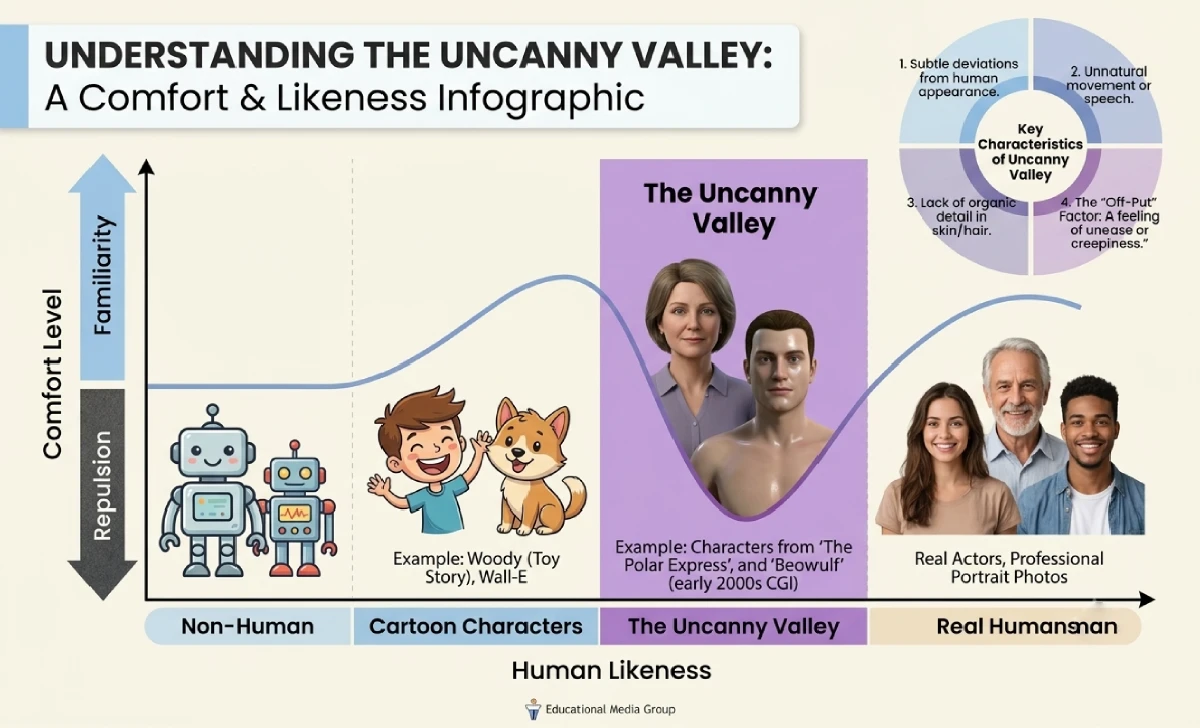
What is the Uncanny Valley?
The Uncanny Valley is the unsettling feeling people experience when something looks almost—but not quite—human. In CGI, it occurs when digital recreations approach realism but fall short. The problem is typically in the eyes, lip movement, and subtle facial cues that human brains process unconsciously.
This psychological phenomenon is explored in films that rely on audience discomfort, similar to the tension found in the best psychological horror movies that also play with perception and unease. Much like how CGI can trigger discomfort through near-human characters, horror films use the Psychology of Jump Scares Horror Movies to manipulate audience expectations and create unease.
Verbinski points out that modern CGI often falls directly into the valley because “in-betweening is done for speed instead of being done by hand.” When animators don’t have time to refine every frame, the result is mechanical, lifeless movement.
Animation and Motion Quality
“You can make a very real helicopter. But as soon as it flies wrong, your brain knows it’s not real,” Verbinski notes. “It has to earn every turn; it has to move right. It’s still animation, sometimes it’s not just the lighting and the photography, sometimes it’s the motion.”
Even a perfectly rendered object will look fake if its motion is wrong. The rise of game-engine workflows has accelerated animation at the expense of handcrafted quality.
Industry Factors Affecting CGI Quality
Time and Budget Constraints
Money doesn’t automatically buy good CGI—time does. And modern productions are increasingly rushed. When a director changes a character design late in production, VFX artists must redo months of work in weeks. The result is expensive, cheap-looking CGI.
As one VFX artist observed, “It’s cheaper to throw everything on green screen and have all of the costumes be CG than to plan for months and get costumes and sets made.” But that approach backfires when the execution is rushed.
VFX Artist Workload and Working Conditions
VFX artists face crushing workloads, tight deadlines, and last-minute changes. “Scripts are being written quickly… and then when the test screening doesn’t meet expectations… they change the script and expect the VFX studio to redo tons of CGI without enough time to make it look good.”
Directors who give VFX artists time to do their jobs properly get better results. James Gunn has emphasized this, noting that his films succeed because he treats VFX artists as collaborators and gives them adequate time.
The “Fix It in Post” Mentality
When studios rely on “fixing it in post,” they’re gambling that VFX artists can perform miracles on compressed timelines. Often, they can’t. The result is CGI that feels rushed, unconvincing, and disconnected from the physical reality actors experienced on set.
Unreal Engine vs. Traditional Rendering
Gore Verbinski’s Critique of Unreal Engine
Gore Verbinski has pointed the finger at a specific culprit: the Unreal Engine. Originally designed for video games in 1998, Unreal has increasingly been used for movie visual effects, particularly with virtual production technologies used in The Mandalorian, Westworld, and Fallout.
“I think the simplest answer is you’ve seen the Unreal gaming engine enter the visual effects landscape. So it used to be a divide, with Unreal Engine being very good at video games, but then people started thinking maybe movies can also use Unreal for finished visual effects. So you have this sort of gaming aesthetic entering the world of cinema.”
Verbinski’s key criticism: Unreal doesn’t handle light the way traditional animation tools like Maya do. “I think that Unreal Engine coming in and replacing Maya as a sort of fundamental is the greatest slip backwards.”
He notes that the gaming aesthetic “works with Marvel movies where you kind of know you’re in a heightened, unrealistic reality” but “doesn’t work from a strictly photo-real standpoint.”
The Counterargument: Artists, Not Tools
Not everyone agrees with Verbinski. Epic Games’ VFX Supervisor Pat Tubach responded directly:
“It’s inaccurate for anyone in the industry to claim that one tool is to blame for some erroneously perceived issues with the state of VFX and CGI. It’s true that there are a lot more people making computer graphics than ever before, and with that scale comes a range of successes and failures—but aesthetic and craft comes from artists, not software.”
The middle ground: The tool matters, but timelines matter more. Unreal can produce stunning results when artists have adequate time. The deeper problem is likely studios demanding finished shots in weeks instead of months.
CGI vs Practical Effects: What Actually Works
What Makes Practical Effects Convincing
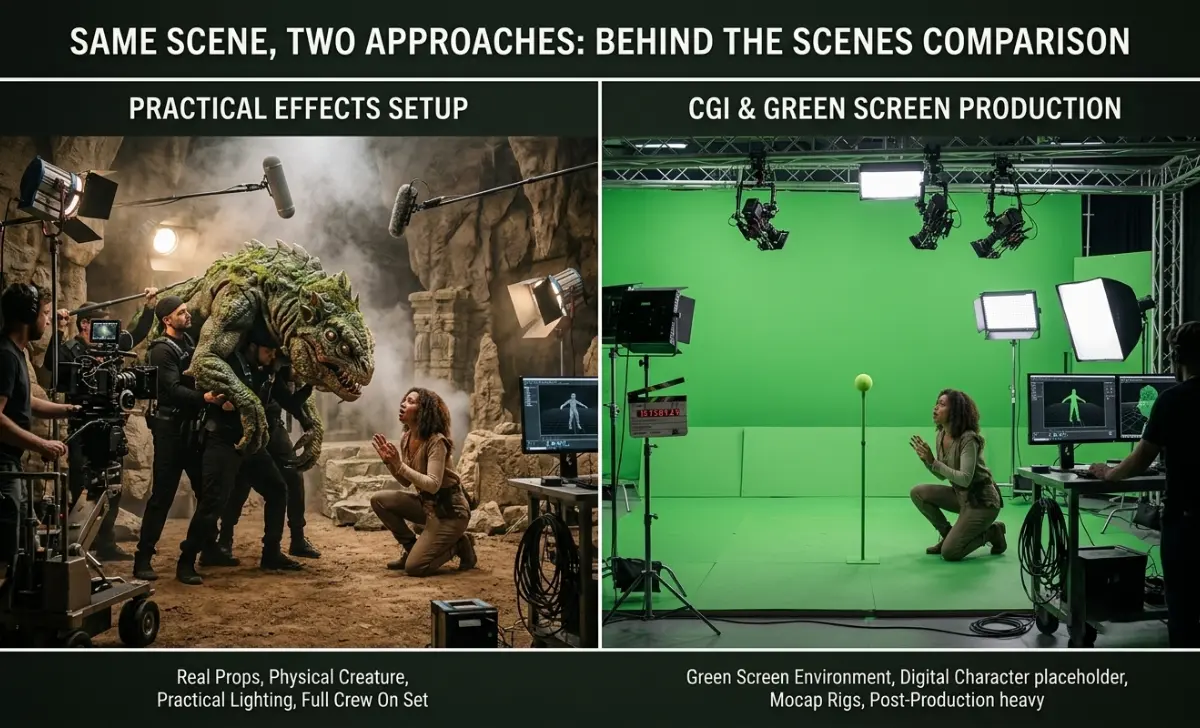
Practical effects—explosions, prosthetics, animatronics, miniature sets—feel real because they are real. They exist in the same light as actors, respond to physics naturally, and interact with the environment in ways that computers still struggle to simulate.
Verbinski’s rule for his own films: at least half of every frame must be photographic. Physical props, partial sets, real costume elements. The CGI supplements reality rather than replacing it entirely.
Key advantages of practical effects:
- Real physics and lighting interactions
- Actors can interact with physical objects
- Immediate feedback during filming
- No risk of rendering failures
- Authentic texture and weight
Where CGI Excels
CGI excels at things that are impossible or too dangerous to film practically. Entire fantasy worlds, massive creatures, and dangerous stunts require CGI. The sandworms in Dune, the cities in Avatar, and the creatures in The Lord of the Rings all required digital creation.
Where CGI works best:
- Fantasy environments and impossible worlds
- Dangerous stunts and explosions
- Creatures and characters that don’t exist
- Set extensions and background modifications
- Crowd duplication and large-scale scenes
The Hybrid Approach: Best of Both Worlds
The most successful effects use both practical and digital elements in concert. The first Pirates of the Caribbean film relied extensively on real ships and on-location ocean shoots, grounding its visuals in reality. When Davy Jones reached out his tentacle hand, you believed it because it existed in the same light as everything else.
The Lord of the Rings orcs had weight and presence because they were real costumes and makeup, enhanced by CGI. The formula for success: use practical effects wherever possible, then enhance with CGI to create the extraordinary.
In recent years, virtual production has taken the hybrid approach further. The Mandalorian used StageCraft—massive LED screens displaying real-time CGI environments—so actors could see and react to digital worlds during filming. The results speak for themselves: the series looks more grounded than many green-screen blockbusters. This technique is now being adopted across the industry, from House of the Dragon to The Batman.
Why Some CGI Still Looks Great
Films That Get CGI Right

Despite widespread complaints, exceptional CGI exists. Films like Dune, Avatar: The Way of Water, and The Creator demonstrate that modern CGI can be breathtaking when given proper time and planning.
What sets them apart:
- Hybrid practical/CGI approach
- Adequate production timelines
- Clear directorial vision
- Respect for VFX artists as collaborators
Notable examples of CGI excellence:
- The Lord of the Rings trilogy — Weta Digital’s Gollum and battle sequences still hold up two decades later
- District 9 — A modest $30 million budget delivered Oscar-nominated VFX through smart planning
- Mad Max: Fury Road — A masterclass in practical effects with CGI used only for enhancement
- Avatar: The Way of Water — Years of development on underwater rendering set new standards
What Sets Quality CGI Apart
How to evaluate CGI quality as a viewer:
- Lighting consistency — Does the CGI element share the same light quality and direction as the scene?
- Motion realism — Does movement follow physics naturally?
- Texture and detail — Is the surface detail convincing, or does it look waxy?
- Integration — Does the element feel part of the environment or pasted in?
- Actor interaction — Do actors seem to interact with real objects?
When CGI fails, at least one of these is wrong. When it succeeds, none of them are.
Conclusion
Modern CGI looks fake for a combination of reasons: rushed production timelines, questionable tool choices, over-reliance on digital creation, and inadequate planning. The problem isn’t lazy VFX artists—it’s a production culture that treats post-production as a fix-it shop rather than an integral part of storytelling.
What to watch for:
- Lighting quality — If CGI characters don’t share the same light, they’ll look inserted
- Motion realism — Movement that’s even slightly off breaks the illusion
- Integration — Good CGI blends with the environment, bad CGI stands out
- Practical foundations — Films that use practical effects as a base tend to age better
The best visual effects are the ones you don’t notice. When you do notice CGI—and when it pulls you out of the film—it’s usually because something went wrong in the pipeline. Knowing what to look for helps you appreciate the craft that goes into great effects and understand why sometimes, despite massive budgets, the magic just doesn’t work.
As the industry evolves, the pendulum is swinging back toward hybrid approaches. The future of visual effects isn’t CGI versus practical—it’s CGI and practical, working together, with artists given the time they need to create the real magic audiences crave.
FAQs
Why does modern CGI look fake compared to old movies?
Modern CGI often looks fake because of rushed production timelines, reliance on game-engine rendering tools that handle light differently than traditional animation software, and a tendency to create entirely digital environments rather than hybrid practical/CGI sets. When studios give VFX artists inadequate time, quality suffers regardless of budget. Classic films like Jurassic Park succeeded because they used practical effects as the foundation and CGI as enhancement.
Why do Marvel movies have such bad CGI?
Marvel films face overlapping productions, constant script changes, and inflexible release dates. VFX artists often redo months of work in weeks when late changes occur. The Marvel house style—colorful, heightened, video-game-like—also aligns with the “gaming aesthetic” Verbinski critiques. Recent films like Ant-Man and the Wasp: Quantumania and The Flash have been particularly criticized for rushed, unconvincing visuals.
What is the Uncanny Valley in movies?
The Uncanny Valley is the unsettling feeling when something looks almost—but not quite—human. Digital recreations fall into this valley when imperfections in eyes, lip movement, and subtle facial cues trigger discomfort in viewers. CGI characters that try for photorealism but miss the mark often land here. This discomfort is similar to what audiences experience in psychological horror films that play with perception and reality—filmmakers use similar techniques to create unease, as explored in analyses of the Psychology of Jump Scares Horror Movies.
Is practical effects better than CGI?
Neither is inherently better—they serve different purposes. Practical effects provide authenticity and natural physics. CGI provides flexibility and the ability to create impossible worlds. The most successful films use both. When filmmakers claim “no CGI,” they’re often highlighting practical elements while ignoring substantial digital work.
Why do filmmakers say “no CGI” when there clearly is?
This is often marketing. Even “CGI-free” movies use substantial VFX for clean-up, enhancement, and invisible work. Marketing departments know that “no CGI” appeals to audiences frustrated with bad visual effects. Many of the Best Psychological Horror Movies demonstrate this contrast—films that rely on practical effects frequently earn praise for their authenticity.
Can CGI look completely real?
Yes. CGI can be indistinguishable from reality when artists have sufficient time, resources, and direction. The challenge is that real-world schedules and budgets often force compromises. Many “invisible VFX” shots pass completely unnoticed—those are the successes. The problem isn’t that CGI can’t look real; it’s that production pressures often prevent it from reaching that quality.
What’s the difference between VFX and CGI?
VFX (Visual Effects) covers all post-production digital work, including compositing, background replacement, and scene editing. CGI (Computer-Generated Imagery) specifically refers to 3D digital images and objects created on a computer—characters, creatures, environments. CGI is a subset of VFX.
Which VFX houses consistently deliver quality?
Industrial Light & Magic (ILM), Weta Digital, and DNEG have consistently produced high-quality visual effects. ILM’s work on Pirates of the Caribbean and Jurassic World sets benchmarks. Weta Digital’s creatures in The Lord of the Rings and Avatar remain industry standards. The difference often comes down to time—these studios frequently receive adequate production windows, unlike VFX houses working on rushed blockbusters.

