

You’ve probably seen ads for sheet masks, essences, and 10-step routines promising “glass skin.” Korean skincare (often called K-beauty) has taken off for its focus on gentle care and layered hydration.
But is it really better than other approaches? Not exactly.
It’s simply a different philosophy. K-beauty routines emphasize prevention and long-term skin health through lightweight layers — toner, essence, serum, moisturizer — rather than a quick fix for specific problems. Over time, this builds a stronger skin barrier and better moisture retention, which leads to that bright, glowy look.
Korean brands also favor innovative ingredients in mild formulas. South Korea banned animal testing for cosmetics in 2018, so most K-beauty products are cruelty-free by law. Many formulations also skip heavy fragrances and irritants. K-beauty treats skincare as a daily ritual of nurturing your skin.
K-Beauty’s Core Philosophy
Korean skincare is built on hydration, gentle care, and prevention. Instead of blasting issues like acne or wrinkles with harsh actives, K-beauty builds up your skin’s defenses. The idea is to strengthen the skin barrier — your skin’s natural protective layer — so it stays healthy and plump. Products often contain soothing ingredients such as hyaluronic acid, snail mucin, and botanical extracts that help lock in moisture and calm inflammation.
Over time, this can help skin look smoother and more radiant without drying it out or causing irritation. Research backs this up — K-beauty staples like snail mucin and plant extracts have documented skin-repairing and antioxidant effects.
K-beauty is also highly personalizable. Dermatologists note that the famous “10-step” routine was never meant to be rigid. You can add or skip steps based on what your skin needs each day. Some days might be just double cleansing and a moisturizer; other days might add an extra essence or sheet mask. This flexibility — along with the affordability of many Korean products — is a big reason K-beauty went global.
Science-Backed Ingredients in Korean Skincare
K-beauty stands out for its ingredient choices. Here are a few key ones, backed by research:
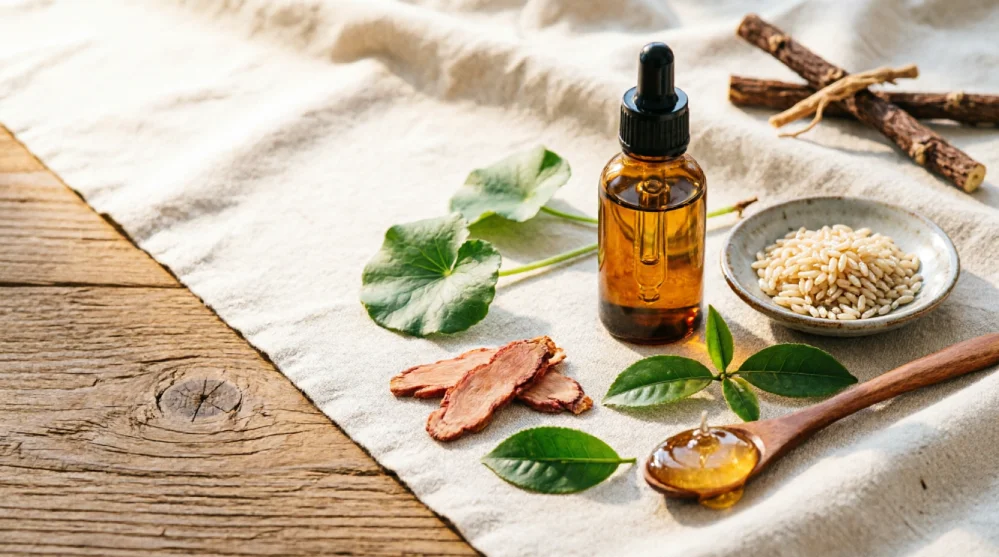
1. Snail Mucin
This sticky snail slime might sound weird, but it’s packed with hyaluronic acid, glycolic acid, and proteins. Research indicates that snail mucin helps heal and hydrate skin, speeding the repair of sun damage and reducing fine lines. In one study, people using snail mucin products for 14 weeks had smoother skin and fewer wrinkles around the eyes compared to a placebo. Snail mucin is also mildly antibacterial and supports wound healing.
(Fact: farms collect snail slime without harming the snails.)
2. Centella Asiatica (Cica)
This plant extract is a K-beauty staple. Cica is clinically shown to calm and hydrate sensitive or acne-prone skin. The Cleveland Clinic explains that Centella Asiatica “does a great job keeping skin hydrated” and helps the barrier hold onto moisture while reducing redness and inflammation. It’s rich in antioxidants that support wound healing. It’s been used to treat burns for centuries, and modern studies confirm it boosts collagen and soothes irritation.
Cica serums and creams can make skin feel plumper and more resilient over time.
3. Ginseng
A popular herb in Korea, ginseng has antioxidant and anti-inflammatory properties. Studies suggest that Korean red ginseng can boost collagen and circulation in the skin. Small trials found that ginseng-containing creams improved elasticity and reduced wrinkles in older women. It may also brighten dull skin by promoting blood flow. Think of ginseng as a natural energizer for your skin cells, helping your complexion look firmer and more youthful.
4. Fermented Rice Extract
Many K-beauty products use rice extracts or fermented rice water. Fermented rice is rich in amino acids, peptides, and antioxidants that help hydrate and nourish skin. Fermentation breaks rice into tiny bioactive compounds, boosting their antioxidant power. Studies note that rice fermentation products can improve skin barrier function, brighten the complexion, and reduce fine lines.
Rice extracts gently moisturize and can help with pigmentation and skin elasticity.
5. Honey & Propolis
Bee-derived ingredients appear often in Korean skincare. Honey is a natural humectant — it attracts and holds moisture. It helps soften skin and prevent water loss, and it’s rich in vitamins and antioxidants. Propolis (“bee glue”) is prized for being antibacterial and anti-inflammatory. It’s loaded with minerals and vitamins, too. Both honey and propolis can calm inflamed skin (like acne or eczema) and support wound healing. You’ll find them in masks and serums for a natural glow boost.
6. Green Tea and Licorice Root
Two more ingredients worth knowing. Green tea extract is a potent antioxidant that protects skin from UV damage and soothes irritation. Licorice root contains compounds (like glabridin) that brighten dark spots and calm redness. They’re staples in K-beauty because they address common skin concerns without irritation.
Benefits and What the Research Shows
When these ingredients and steps come together, the result is long-lasting hydration and a stronger skin barrier. Korean routines typically include multiple hydrating layers (serums, essences, moisturizers), which can significantly boost skin moisture compared to a single product. A well-hydrated barrier means fewer breakouts and less sensitivity. The antioxidant and moisture support in ingredients like centella or fermented rice can help repair sun and pollution damage over time.
The real strength of K-beauty is its preventive focus. As Vogue beauty editors explain, Korean skincare “focuses more on prevention and the idea of skin longevity, as opposed to jeopardizing your barrier with harsh ingredients to ‘fix’ a problem.” Instead of waiting for a wrinkle or spot to appear and then aggressively treating it, you gently maintain your skin’s health every day.
That doesn’t mean K-products lack science. Modern Korean brands invest heavily in skincare R&D. Korean brands use clinically studied ingredients like hyaluronic acid, ceramides (for barrier repair), niacinamide (for pores and tone), and peptides in well-researched formulations.
Comparing Korean, Western, and Japanese Skincare
Every skincare tradition has its angle:
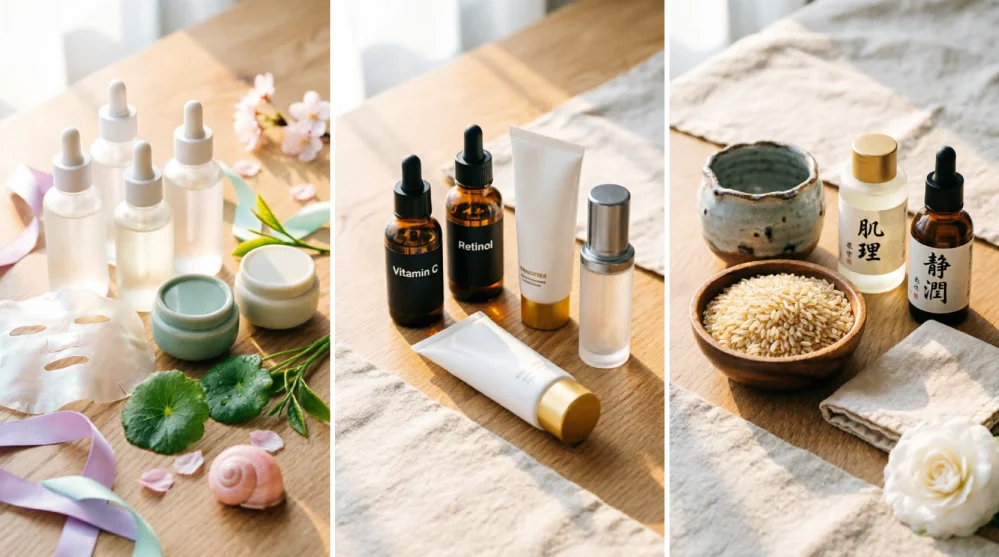
- Western Skincare: In the U.S. and Europe, products often focus on potent active ingredients — retinol, vitamin C, strong acids — to quickly target aging, acne, and pigmentation. The Western approach is: get rid of the problem with powerful treatments. As one doctor put it, Western routines center on “potent active ingredients like retinol and salicylic acid” to address fine lines or pimples. Sunscreen is also emphasized heavily for UV protection.
- Korean Skincare: K-beauty prioritizes hydration and barrier health. Layers of essences, serums, and masks build moisture and protect skin. Korean routines often include brightening and soothing ingredients from nature, and always end with sun protection — the importance of daily SPF was popularized in Asia long before the West. Many people mix both approaches: they’ll use Western actives like vitamin C or retinol alongside K-style hydrators. For example, dermatologist Dr. Hall says she uses retinol at night but always follows it with a rich Korean cream to keep her barrier strong.
- Japanese Skincare: While similar to K-beauty in valuing hydration, Japanese routines tend to be more minimalist. A typical 5–6 step routine targets a soft, supple “mochi” skin, focusing on essentials like gentle cleansing, an essence or lotion, and a good moisturizer. As one skincare guide explains, Japanese skincare rituals emphasize quality over quantity, reinforcing the barrier and avoiding irritation by keeping routines simple.
Real User and Expert Perspectives
User reviews for Korean products are strong, especially from people with dry or sensitive skin. Many report that consistent use of gentle K-beauty routines calms acne and reduces redness. For example, a Reddit user said switching to K-beauty restored her skin barrier. Others note that K-products can be very affordable, getting “more active ingredients for a lower price” than some Western luxury creams.
But both users and experts warn about the hype. The YouTube experiment by Safiya Nygaard (who tried a full 10-step routine for a month) shows that piling on too many new products at once can irritate skin. Dermatologists stress starting slow: begin with a basic 3–4 step routine (cleanse, hydrate, treat, protect) and add products one at a time. That way, you can see how each product affects your skin.
As one UK dermatologist put it, Koreans treat skincare like a ritual — they “like their steps” — but even she combines it with Western science. She uses vitamin C and retinol in the morning and night, but follows them with hydrating serums and creams rich in ceramides to avoid irritation. “It’s a balance of both that really worked,” she said. Many experts encourage this kind of flexibility: keep proven treatments, but pair them with K-beauty’s barrier-boosting habits.
Myths and Misconceptions
- “You need all 10 steps daily.” The famous 10-step routine is not a strict rulebook. Tailor the routine to your needs. If your skin is oily, skip heavy creams or masks. If it’s winter and dry, add an extra hydrating layer. Many Koreans do only 3–5 steps on busy days. The key is consistency, not the number of products.
- “K-Beauty is only for certain skin types.” Not true. While many products are suited for dry or sensitive skin, there are K-beauty lines for oily or acne-prone skin too (green tea and tea tree formulas, for example). Even oily skin types can use water-based hydrating layers without clogging pores. K-brands offer plenty of variety — just pick the right products for your skin.
- “Results are instant.” They’re not. K-beauty emphasizes gradual improvement. Instant plumpness from a sheet mask is temporary — real changes (like fewer wrinkles or clearer tone) come after weeks of regular care, just like any skincare regimen.
- “Natural ingredients are always safe.” Even natural extracts (like cica or honey) can cause reactions in some people. Always patch-test new products. Also, check ingredients: some K-products do contain fragrance or alcohol (though many skip them). Read labels or choose brands formulated for sensitive skin if that’s a concern.
Getting Started: A Simple Korean Skincare Routine
If you want to try K-beauty, start simple and build up:
- Double cleanse (evening): First, an oil-based cleanser, then a gentle water cleanser. This removes makeup and dirt without stripping skin.
- Hydrating toner or essence: After cleansing, apply a watery toner or essence to refresh and begin hydrating. Korean toners are more like light lotions.
- Serum or ampoule: Use a treatment serum for your main concern (brightening, acne, wrinkles). This is where you might use vitamin C, niacinamide, or your chosen active.
- Moisturizer: Seal everything in with a light moisturizer or cream. Ceramide or hyaluronic acid creams are popular choices.
- Sunscreen (day): Never skip SPF in the morning. It prevents sun damage and pigmentation.
You can also add sheet masks or sleeping masks a few times a week for extra hydration. Add one new product at a time and see how your skin reacts — try a mask once or twice a week at first.
FAQs
Do I need to do a 10-step routine every day?
No. The goal is to hydrate and treat, but you don’t need 10 steps. A simple daily routine (cleanser, moisturizer, sunscreen) plus a couple of treatment products can be very effective. Add extra steps like masks or essences as needed.
Can Korean skincare help with oily or acne-prone skin?
Yes. Many Korean products are formulated to be non-greasy. Ingredients like centella, green tea, and tea tree soothe inflammation, and there are lightweight gels and emulsions for oily skin. Always patch-test new products, but K-beauty isn’t just for dry skin.
How long before I see results?
Think in terms of weeks, not days. You may notice softer, plumper skin immediately from hydration, but bigger changes (like brighter skin tone or fewer breakouts) usually take 4–8 weeks of consistent use.
Can I mix Korean products with my routine?
Absolutely. You can use K-beauty cleansers or toners with Western serums, or vice versa. Many people mix and match. Just introduce one new product at a time.
What is “glass skin”?
It’s a term for very clear, luminous skin in K-beauty — skin that’s smooth, even-toned, and dewy, like lightly frosted glass. Achieving it usually takes consistent hydration and gentle exfoliation over time.
Bottom Line
Korean skincare isn’t a magic bullet that’s universally “better” than others. It offers a different approach: layered hydration, gentle formulas, and a focus on prevention. For many people — especially those with dry, sensitive, or combination skin — this can lead to a healthier-looking complexion with regular use. Western skincare provides potent treatments for specific issues and should be part of your toolkit, too.
Ultimately, the “best” routine is the one that you can stick with. Try incorporating Korean-style hydration into your routine alongside any Western favorites. Protect your skin daily with SPF, listen to your skin’s needs, and give any new regimen time to work. With this balanced approach, you’ll get the best of both worlds.

