

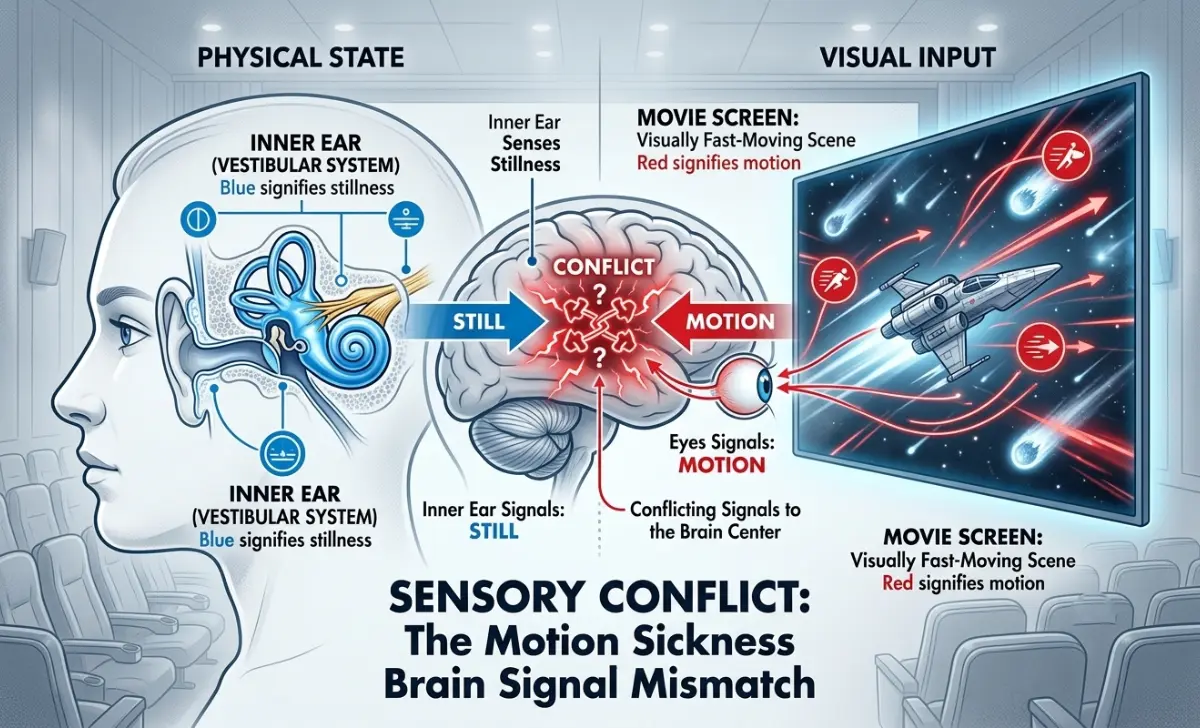
Movies make you feel sick because your eyes and inner ear send conflicting signals to your brain. Your inner ear (vestibular system) senses that you’re sitting still, while your eyes perceive fast, disorienting motion on screen.
This sensory conflict triggers nausea as your brain’s protective response, similar to how it reacts to potential toxins. Around 15% to 20% of people have the inner-ear sensitivity that makes them vulnerable to this effect.
Understanding Your Brain’s Betrayal
Your brain is constantly trying to figure out what your body is doing. Normally, it gets consistent information from your eyes, your inner ear, and your muscles. In a movie theatre, that system breaks down.
Sensory Conflict Theory
The most accepted explanation for movie-induced nausea is something called sensory conflict. Your inner ear (vestibular system) senses motion and tells your brain you’re sitting still. Meanwhile, your eyes are sending signals saying, “We’re moving fast — very fast!” This mismatch confuses your brain.
Professor Bob Cheung of the University of Toronto, who studies motion sickness, explains this as “simulated sickness.” He told the Toronto Star: “This sensory conflict is between what your eyes are visually telling you and what your other sensors that govern orientation are telling you. Some people can resolve this very quickly and some can’t.”
When your brain gets conflicting sensory input, one theory suggests it assumes you’ve ingested a toxin and triggers nausea to “get rid of it” by vomiting. About 15% to 20% of people have the inner-ear sensitivity that makes them vulnerable to this effect.
The Optic Flow Problem
The speed and direction of movement on screen matter immensely. Fast-moving images create what scientists call optic flow — the visual motion pattern perceived by your eyes.
Found-footage films like Cloverfield and The Blair Witch Project are notorious for this. Because these films are shot from a first-person perspective, “the optic flow is coming toward you, making you feel like you are moving forward, when in fact you are sitting in a chair.” The faster the optic flow and the more it fills your field of vision, the more likely you are to feel sick.
Cinematic Weapons: How Directors Induce Nausea
Directors know exactly what they’re doing. These techniques aren’t accidents — they’re carefully chosen tools to create tension, disorientation, and emotional intensity.
The Top 5 Cinematic Techniques That Make You Sick
- Shaky Cam – Handheld camera movements that create instability
- Dolly Zoom – Simultaneous camera movement and zoom that distorts depth
- Frame Rate Manipulation – Unnatural motion blur or excessive smoothness
- Rapid Cutting – Extremely short shots that overwhelm visual processing
- Whip Pan – Fast camera rotations that disorient the viewer
The Shaky Cam Effect
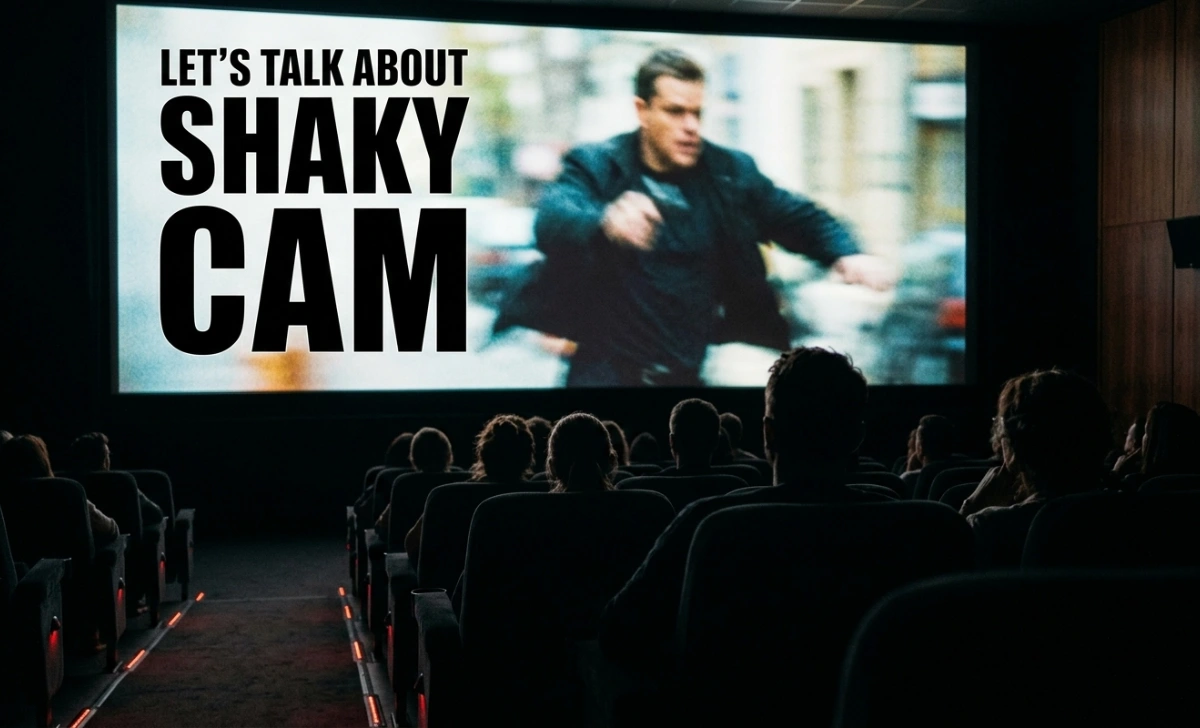
What is the Shaky Cam effect?
The shaky cam effect is a filming technique where the camera is handheld rather than mounted on a tripod or stabiliser, creating a bouncy, unstable visual experience.
Directors like Paul Greengrass (The Bourne Identity) use this to make action feel immediate and urgent. But for your brain, the unpredictable motion is a nightmare to process.
The Blair Witch Project (1999) and Cloverfield (2008) are the two most infamous examples. The New York Post reported waves of upset stomachs and dizziness at screenings of The Blair Witch Project across the country, while Cloverfield prompted widespread reports of motion sickness to the point where the website Movie Hurl named it a “Hall of Shamer” for stomach-churning content.
More recently, Hardcore Henry (2015) took the technique to its extreme by filming entirely in first-person POV, making it one of the most nausea-inducing films ever made.
The same psychological machinery that makes jump scares work also plays into how your body reacts to disorienting visuals. If you want to understand how horror films deliberately exploit your stress response, the psychology of jump scares in horror movies is worth a read.
The Dolly Zoom
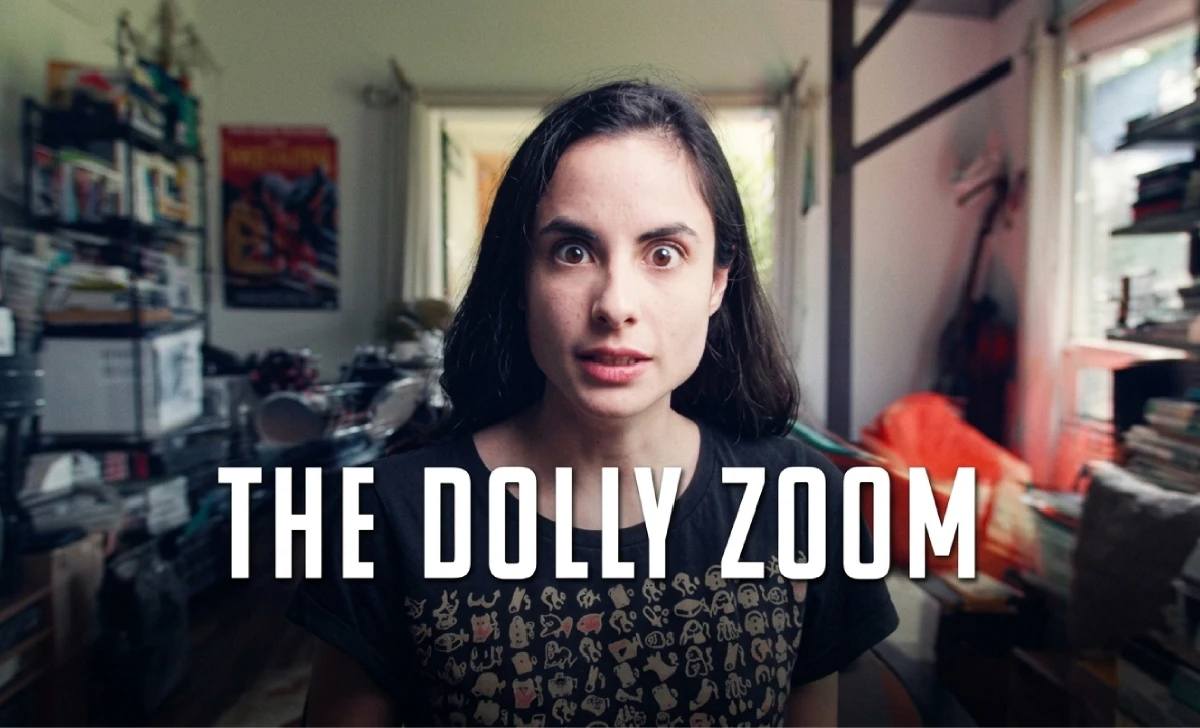
What is the Dolly Zoom?
The dolly zoom is a camera technique where the camera moves toward or away from a subject while simultaneously zooming in the opposite direction, causing the background to stretch while the subject stays the same size.
Alfred Hitchcock pioneered this effect in Vertigo (1958), but Steven Spielberg made it famous in Jaws — remember Sheriff Brody on the beach, staring in horror as the background stretches behind him? The technique creates vertigo and unease by literally messing with your depth perception.
Frame Rate and Motion Blur
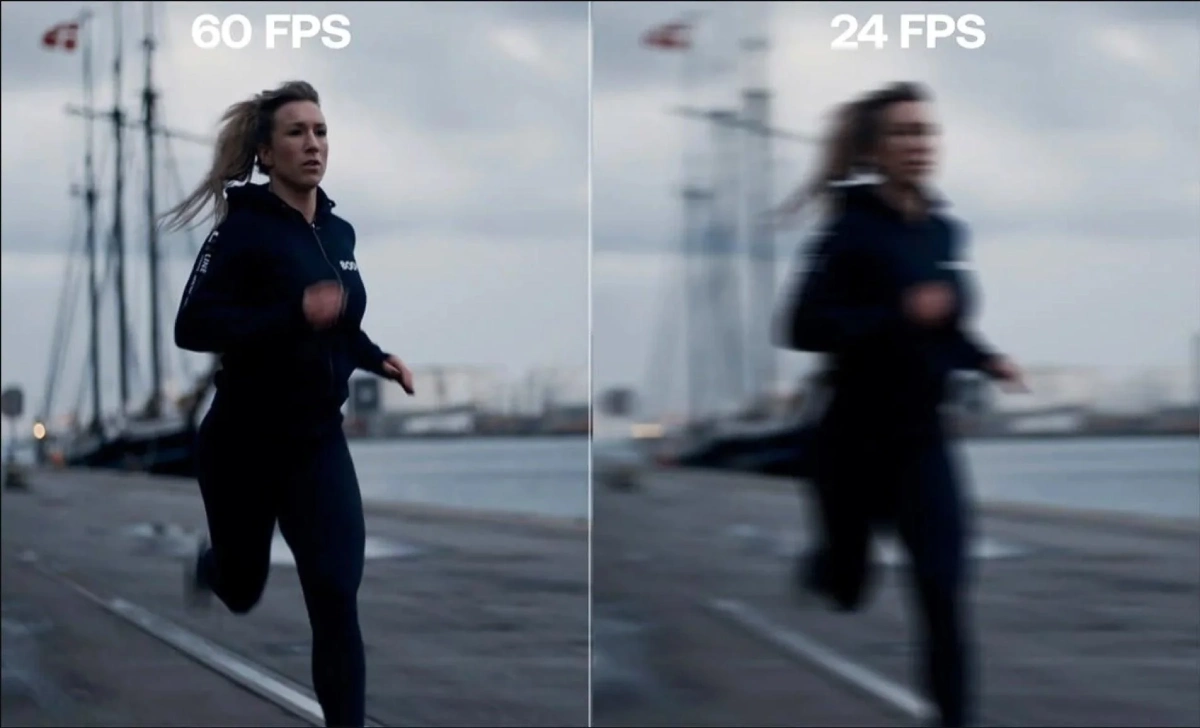
Movies are typically shown at 24 frames per second. This creates a specific kind of motion blur that our brains have learned to accept as “cinematic.” When that changes — like Peter Jackson’s The Hobbit trilogy at 48fps — it can look jarringly smooth, which some viewers found headache-inducing and nauseating.
Low frame rates or poor motion blur can have the opposite problem, making fast action scenes feel choppy and disorienting. James Cameron’s Avatar: The Way of Water (2022) experimented with high frame rates in select scenes, prompting similar complaints from sensitive viewers.
The issue comes down to motion blur: at 24fps, the blur between frames creates a “film look” that our brains process as acceptable. At higher frame rates, the crisp, clear motion looks unnaturally smooth — sometimes called the “soap opera effect” — which can trigger sensory conflict.
Rapid Cutting and The Whip Pan
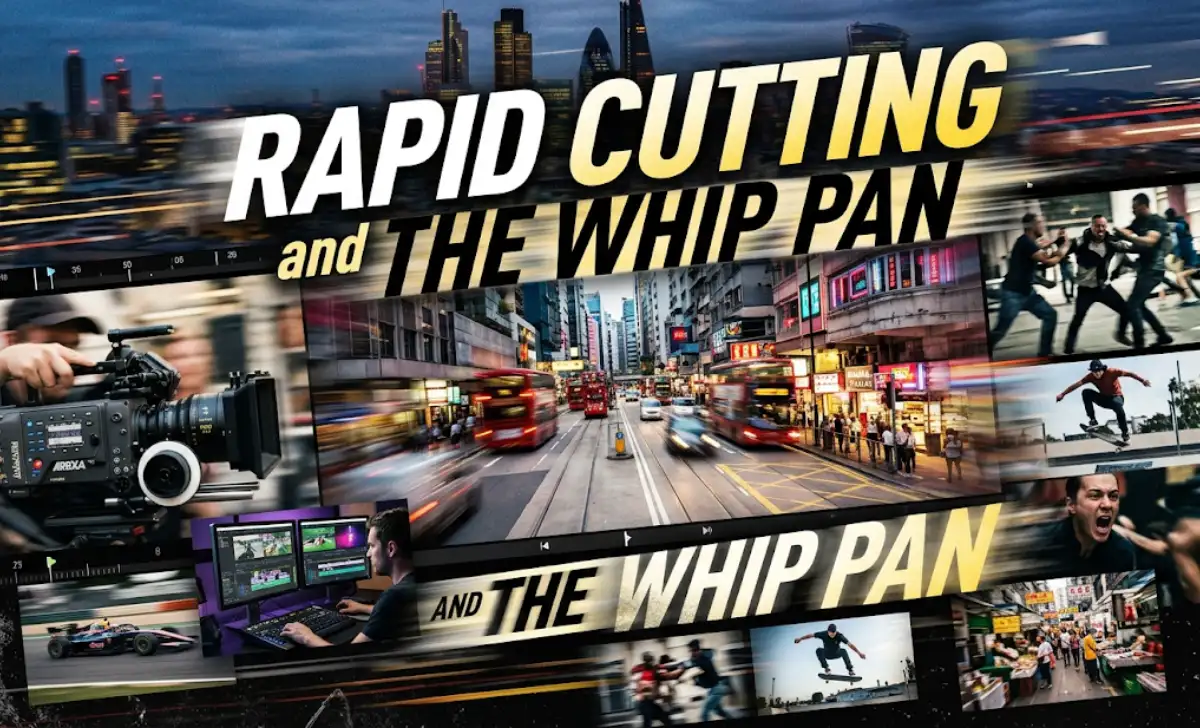
Directors like Michael Bay use rapid cutting — extremely short shots that cut between angles at high speed. This interrupts what scientists call saccadic masking, the brain’s natural ability to filter out visual blurs during eye movement. When editing deliberately disrupts this, your visual processing can’t keep up, and nausea follows.
The whip pan — a fast camera rotation from one subject to another — has a similar disorienting effect. The airport fight scene in Captain America: Civil War (2016) is a modern example of how rapid cutting and camera movement can combine to create an overwhelming sensory experience.
Directors who master these disorienting techniques often apply them most effectively in the psychological horror genre, where unease is the whole point. For a curated list of films that use them to devastating effect, see our guide to the best psychological horror movies worth watching.
Viewing Contexts That Amplify the Nausea
Your environment and the format you’re watching can make a huge difference.
The IMAX vs. Smartphone Factor
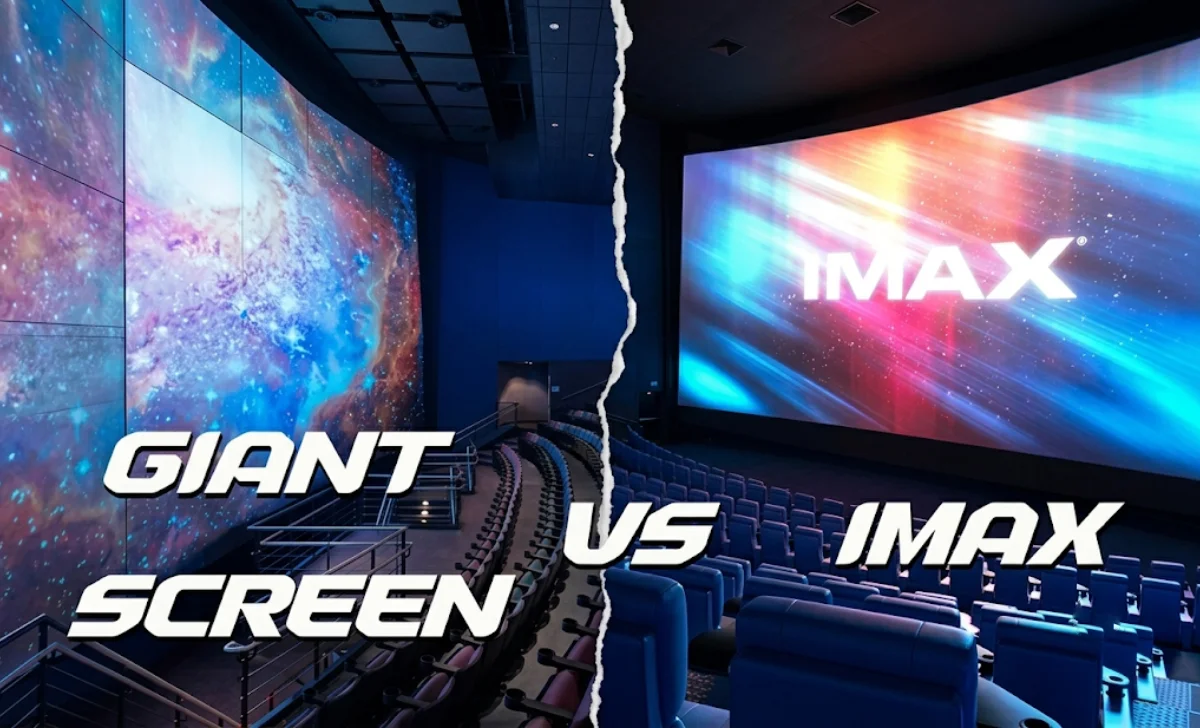
Does screen size matter?
Yes. Larger screens fill more of your peripheral vision, creating stronger optic flow and stronger sensory conflict. Sitting close to an IMAX screen can make the effect much worse.
This is why Cheung recommends sitting as far back in the theatre as possible — it disrupts the optic flow by reducing how much of your visual field the screen occupies. The same principle applies at home: sit further from your TV, and avoid watching on massive screens in the dark.
The 3D Horror
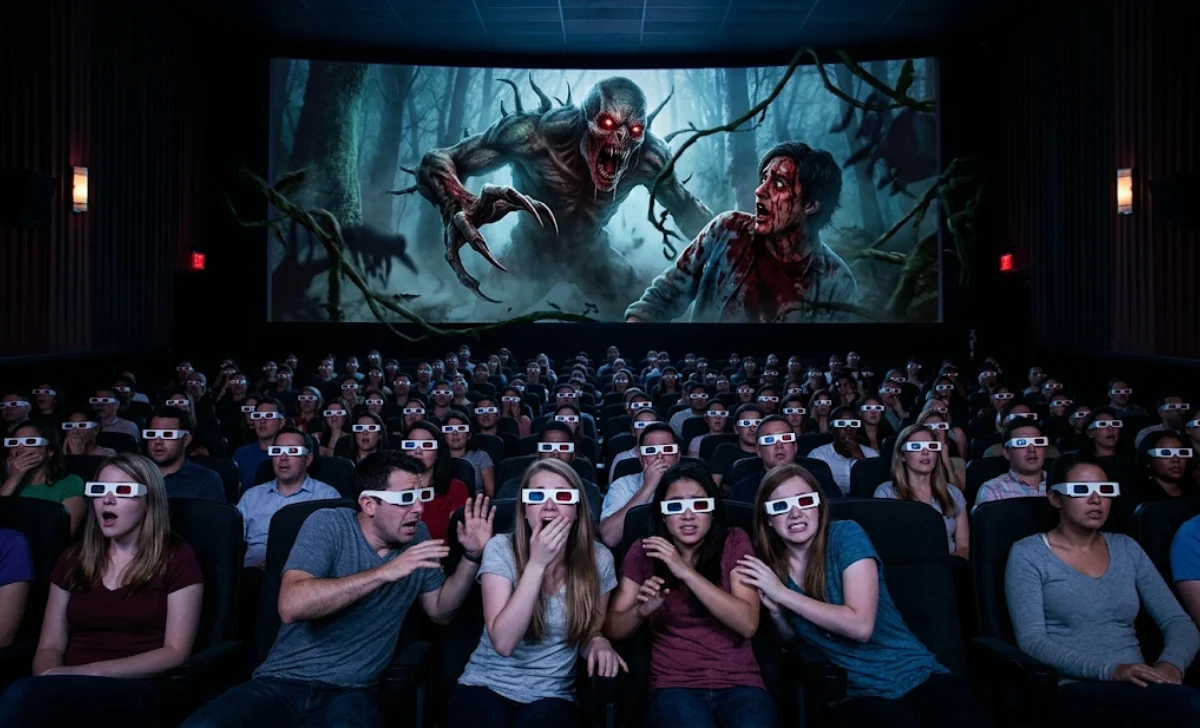
Why do 3D movies give me headaches and nausea?
3D movies are a special case. The problem is called vergence-accommodation conflict.
Normally, when you look at a real object, your eyes rotate inward (convergence), and your lenses adjust focus (accommodation) simultaneously. In a 3D movie, your eyes converge to follow the 3D object flying toward you, but they must maintain a fixed focus on the screen surface. This uncoupling is stressful — and over 85 minutes, it can cause headaches, nausea, and dizziness.
A 2013 study published in PLOS ONE found that 54.8% of viewers reported symptoms of visually induced motion sickness after watching a 3D movie, compared to just 14.1% after a 2D movie. The intensity was 8.8 times higher than baseline after the 3D experience.
How to Watch Without Getting Sick
If you’re susceptible to movie motion sickness, try these strategies:
In the Theatre
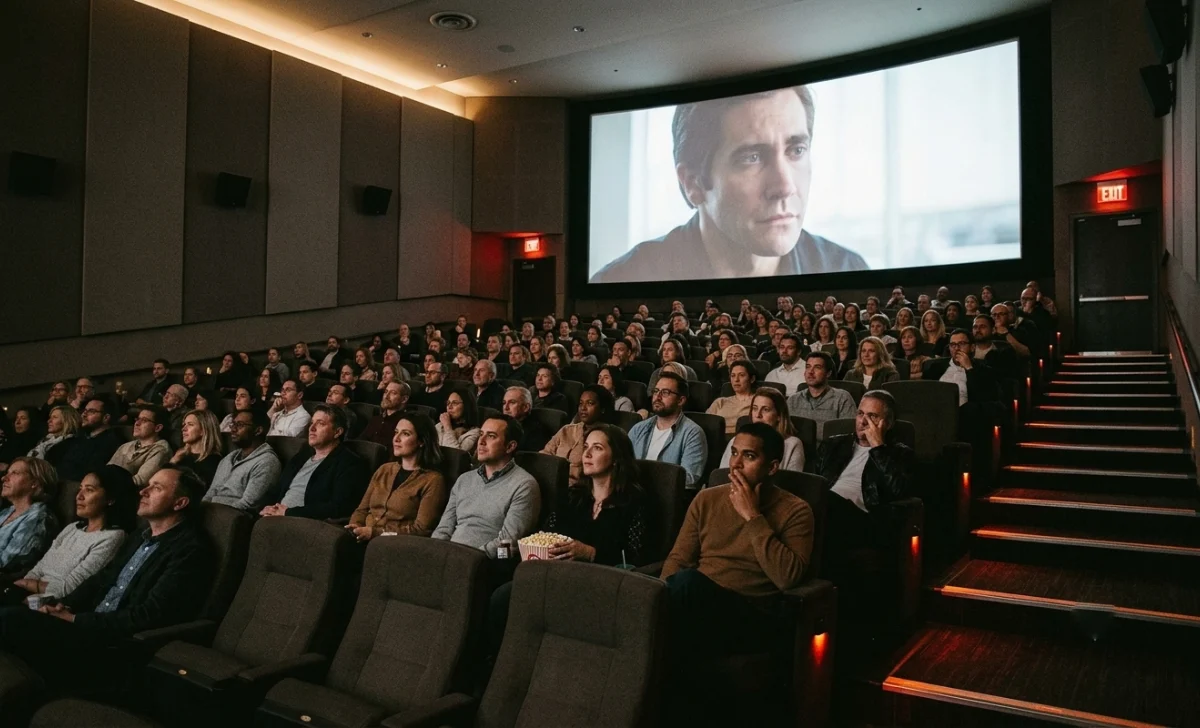
- Sit at the back, in the centre. This reduces the optic flow effect and gives your brain more stable visual reference points.
- Avoid sitting too close to the screen. The larger the image fills your vision, the stronger the conflict.
- If watching 3D, don’t take the glasses off. Constantly adjusting and readjusting makes it worse. And consider keeping both eyes open but concentrating on the parts of the screen that are in focus.
- If you feel symptoms, look away briefly. Focus on the theatre floor or the back wall to reset your visual processing.
If you can handle an intense viewing experience, some of the most gripping films to watch on the big screen are those built around major revelations. Our picks for the best twist movies are a good place to start — just make sure you’re sitting far enough back.
At Home
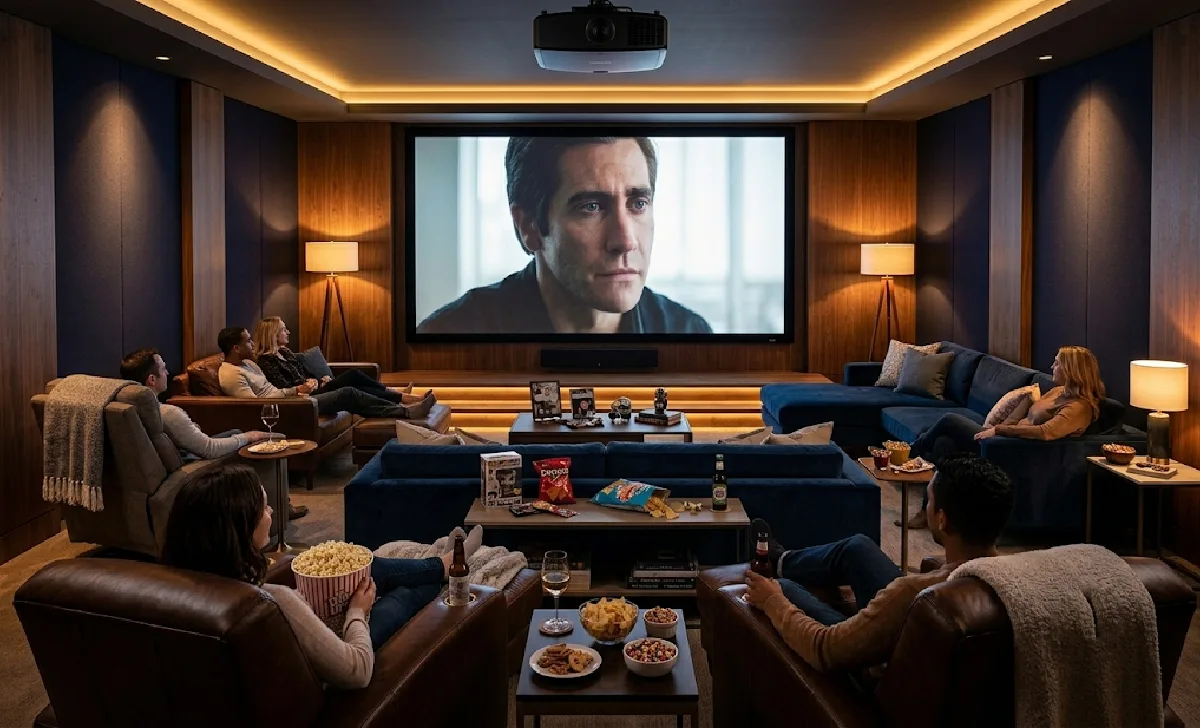
- Sit further from the screen. A larger image isn’t always better — distance helps reduce optic flow.
- Reduce the brightness. Lowering brightness can reduce the intensity of motion perception.
- Add ambient light. Watching in a completely dark room amplifies the immersion — which is bad for your nausea.
- Take regular breaks. Pause the movie for a few minutes to reset your brain’s sensory processing.
- Consider smaller screens. Watching on a phone or tablet can actually help because the image fills less of your visual field.
Conclusion
Your brain is designed to keep you upright and oriented. When a movie deliberately violates that — through shaky cam, dolly zooms, rapid editing, or 3D effects — you experience a sensory conflict that triggers nausea. Directors know these cinematic techniques create urgency and tension, but for the 15–20% of people with vulnerable visual-vestibular systems, the result is motion sickness.
The good news? You can watch smarter: sit at the back, reduce screen immersion, and remember that it’s not you — it’s your brain doing exactly what it evolved to do. Whether you’re watching a found-footage horror film, a high-octane action sequence, or a 3D blockbuster, knowing why it happens is the first step to staying comfortable.
FAQs
What is the most nausea-inducing movie ever made?
While Cloverfield and The Blair Witch Project are famous offenders, Movie Hurl ranks The Blair Witch Project as the worst for motion sickness. Gaspar Noé’s Irréversible (2002) is also notorious — it used low-frequency sounds to intentionally induce nausea in audiences. For a more recent example, Hardcore Henry (2015) is widely considered one of the most disorienting theatrical experiences ever filmed.
Why do some people get sick while others don’t?
Individual susceptibility varies widely. Research suggests 15% to 20% of people have heightened sensitivity due to variations in inner-ear function and how their brains process conflicting sensory signals. Factors like age, medications, and even how tired you are can also affect your susceptibility.
Can I build a tolerance to movie motion sickness?
Some people can over time, but there’s no guarantee. If you’re in the susceptible population, you may always be vulnerable. However, regular exposure to mild motion stimuli — like playing first-person video games in short bursts — might help some people adapt. If you have a history of severe migraines or vertigo, consult a healthcare provider.
Is it dangerous to feel nauseous watching a movie?
No. It’s uncomfortable but not harmful. The nausea typically passes quickly once the movie ends. However, if you experience severe or persistent symptoms, or you have a history of seizures or severe migraines, consult a doctor.
Does the director want me to feel sick?
Not exactly. Directors use these techniques to create tension, realism, or immersion — not specifically to make you vomit. The nausea is an unintended side effect that some viewers experience more than others. Christopher Nolan, for example, often uses IMAX cameras and practical effects, which can be intense for some viewers, but his goal is immersion rather than discomfort.
Where can I watch these movies?
Most of the films mentioned are available on major streaming platforms. The Blair Witch Project, Cloverfield, The Bourne Identity, and Jaws are frequently available on services like Netflix, Amazon Prime, or MAX, though availability changes regularly. If you’re prone to nausea, check the platform’s content warnings — some include motion sickness advisories for particularly intense content.

