

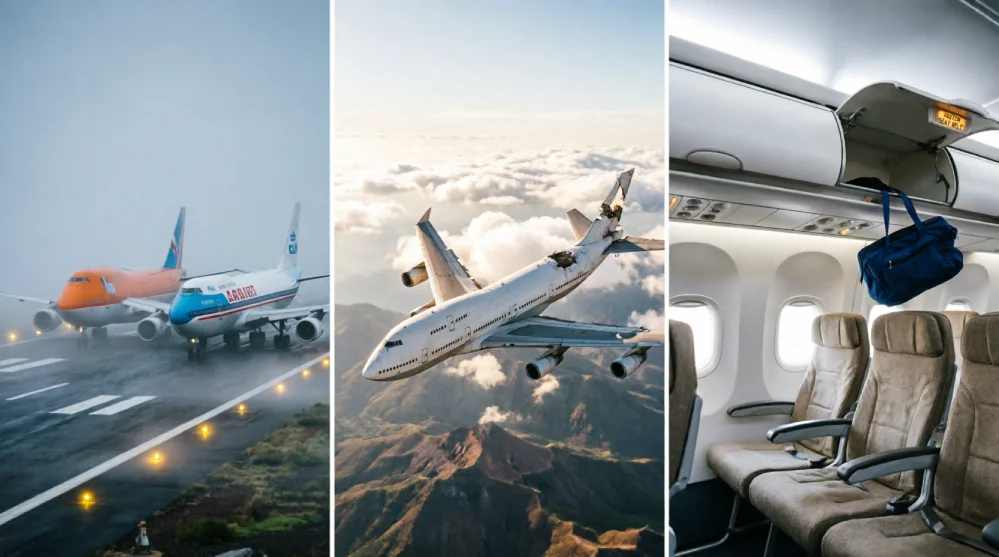
Most people picture a “Deadliest Airplane Incidents” as a grainy cockpit recording. But some of aviation’s most significant events didn’t look catastrophic — until they were. A runway collision in fog. A 747 flying with no tail. A jet was shaking so violently over the Pacific that 25 people were hospitalized. These incidents reveal how aviation breaks down, recovers, and what you can do at 38,000 feet.
By the end, you’ll understand what the data says about safety and board your next flight with sharper awareness.
What Actually Makes an Airplane Incident One of the “Deadliest”?
Defining “Deadliest” — Fatalities vs. Near-Misses vs. Systemic Failures
Not every incident on this list ended with mass casualties. Some came within seconds of it. Others changed the rules so dramatically that future death tolls dropped in measurable ways.
“Deadliest” here covers three things: lives lost or at serious risk, the scale of what could have happened, and the lasting mark the event left on aviation safety practice. A ground collision that destroys two aircraft and injures the crew is significant. A turbulence event that hospitalizes 25 passengers on a packed wide-body jet is significant. A cockpit door deliberately locked from the inside, killing all 150 people aboard — that’s devastating in a way that rewrote international aviation safety rules.
These incidents matter because aviation learns from them, one hard lesson at a time. Here are ten that changed the way the world flies.
Tenerife Airport Disaster (1977): How Did Two Planes Collide on a Runway?
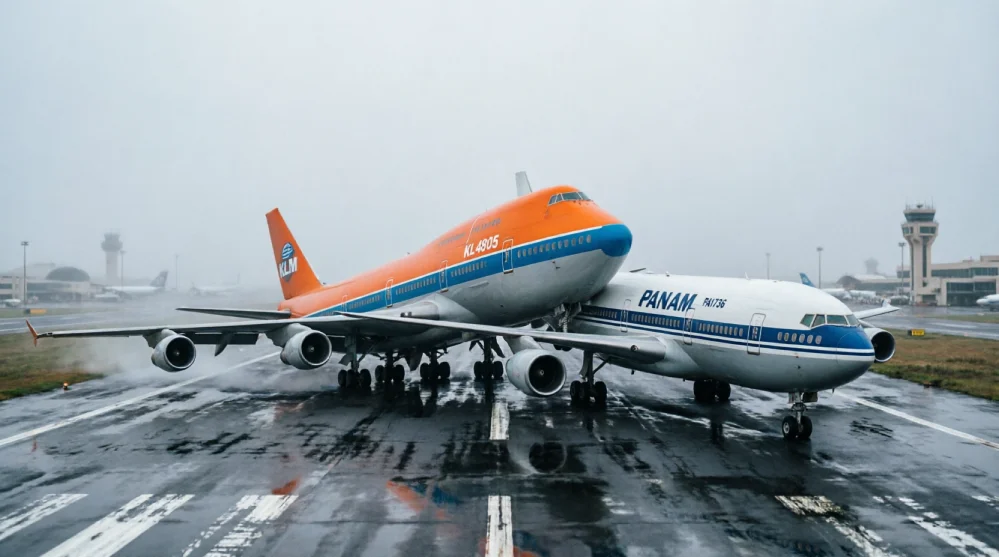
On March 27, 1977, a foggy runway at Los Rodeos Airport in Tenerife set the stage for a chain of miscommunications. Two Boeing 747s — KLM Flight 4805 and Pan Am Flight 1736 — collided on the runway. Neither plane was supposed to be there; both had diverted from Gran Canaria after a terrorist bombing at Las Palmas Airport.
The KLM aircraft began takeoff while the Pan Am jet was still on the same runway, taxiing in the opposite direction. Dense fog reduced visibility to near zero. Radio-frequency overlap and a misunderstanding about takeoff clearance left both crews unaware of each other.
A total of 583 people died. It remains the deadliest accident in aviation history, and no mechanical failure occurred — both aircraft were in perfect working order.
As a direct result, Tenerife triggered immediate reforms: standardized aviation English worldwide, mandatory readback of clearances, and explicit ATC confirmation before any aircraft enters a runway.
Passenger Takeaway
Know your nearest exit before the doors close. In Tenerife, survival hinged on seconds and proximity to the exit. Survivors from the Pan Am aircraft escaped through a hole blown in the fuselage near the left wing.
Japan Airlines Flight 123 (1985): What Happened When a Plane Lost Its Entire Tail?
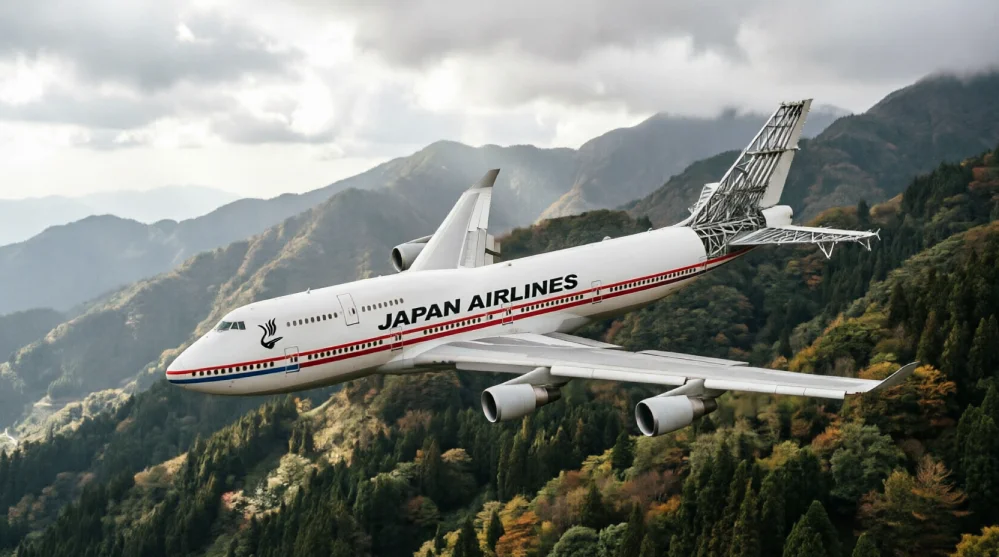
On August 12, 1985, Japan Airlines Flight 123, a Boeing 747SR with 524 people, suffered explosive decompression 12 minutes after takeoff from Tokyo Haneda. The rear pressure bulkhead blew out, destroying all hydraulic systems and tearing off the vertical tail fin. Consequently, the pilots had no conventional control.
For 32 minutes, they flew using differential engine thrust — increasing power on one side to turn, reducing it to descend. It’s one of the greatest feats of manual flying in history. However, it wasn’t enough. The aircraft crashed into Mount Takamagahara, killing 520 people. Miraculously, four passengers, seated near the tail, survived.
The cause: a faulty repair. Seven years earlier, a Boeing team had improperly repaired the bulkhead after a tailstrike, using a splice plate that reduced structural strength by about 70%. Following the disaster, JAL 123 implemented stricter aircraft repair certification, post-repair inspections, and mandatory recurring structural checks.
Passenger Takeaway
The brace position is not a formality. All four survivors were seated near the tail and braced. Post-accident research on them shaped modern brace position standards.
Delta Flight DL56 (2025): How Did Turbulence Hospitalize 25 Passengers Mid-Flight?
What the Passengers Experienced
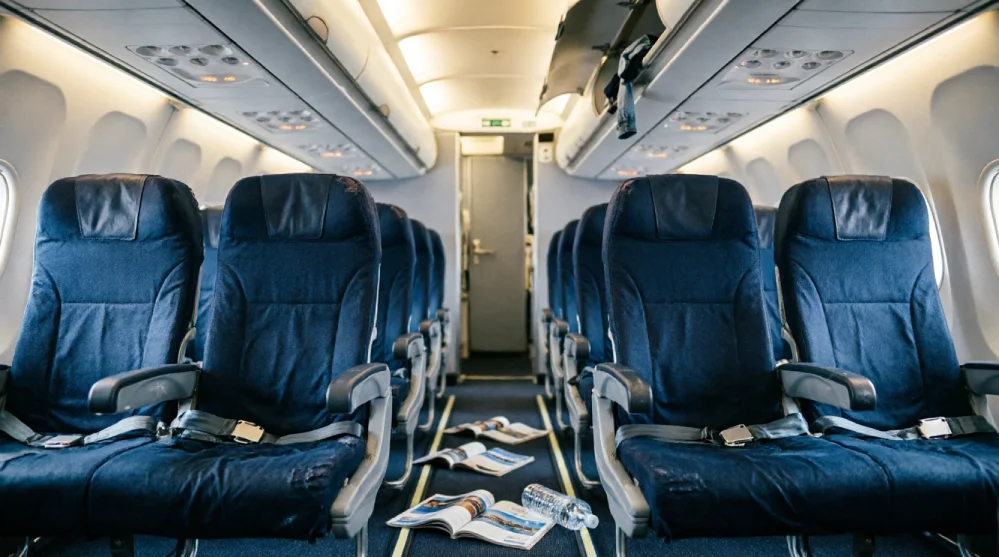
Most passengers have encountered brief turbulence. Delta Flight DL56, on July 30–31, 2025, hit severe turbulence over Wyoming that was nothing like a rough patch. The Airbus A330-900 was en route from Salt Lake City to Amsterdam with 275 passengers and 13 crew. It diverted to Minneapolis-Saint Paul, where paramedics transported 25 people to hospitals. No fatalities occurred, but the scale of injuries — across crew and passengers — fell far outside what standard turbulence events produce.
How Delta Responded After Landing
Doctors treated and released all seven hospitalized crew members by Thursday morning. Meanwhile, Delta’s Care Team reached out personally to every affected customer. The airline also operated a dedicated replacement flight from MSP to Amsterdam that evening. Furthermore, the NTSB opened a formal investigation. This coordinated response — medical care, personal outreach, a dedicated replacement flight, and immediate regulatory cooperation — shows how far airline emergency protocols have evolved.
Passenger Takeaway
Keep your seatbelt fastened whenever you’re seated, regardless of whether the sign is on. Severe clear-air turbulence forms at high altitude with no visible clouds and no radar warning. It gives zero advance notice. The passengers most seriously injured in DL56 were unrestrained when the turbulence hit.
Delta Flight DL275 (2025): What Forced a Tokyo-Bound Plane to Divert to Los Angeles?
The Engine Anti-Ice System Failure
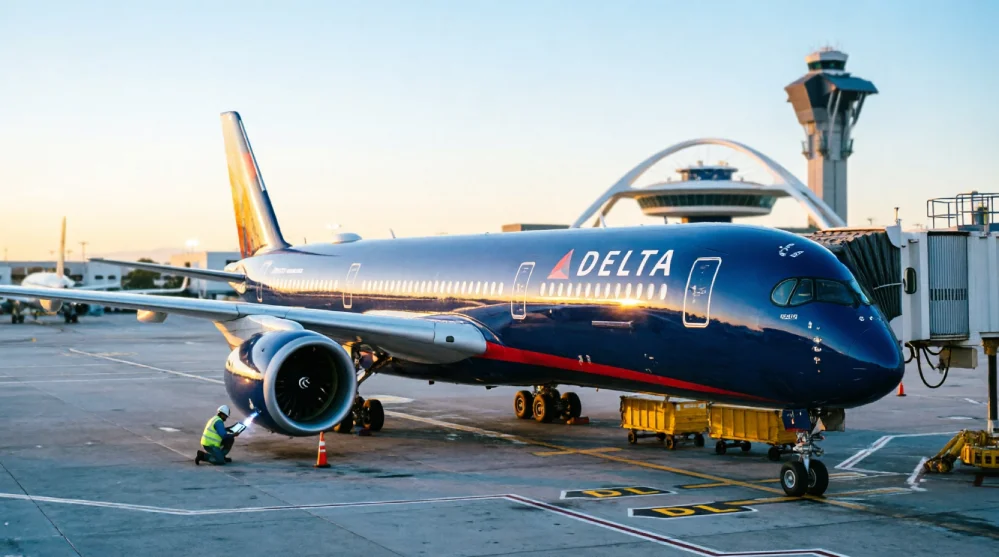
On May 28, 2025, Delta Flight DL275 left Detroit (DTW) for Tokyo Haneda. The Airbus A350-900 was cruising at 38,000 feet over the Pacific when sensors flagged a malfunction in the engine anti-ice system. No emergency. No injuries. The crew diverted.
Why LAX Was the Strategic Choice
Los Angeles International Airport is a full Delta maintenance hub with the staff and equipment to handle wide-body aircraft. It wasn’t the closest airport — it was the nearest where the A350-900 could be properly inspected, diagnosed, and cleared by Delta technicians. Delta grounded the aircraft for about 18 hours, put passengers in hotels, covered meals, and rebooked onward flights. No drama, no injuries, no emergency declaration. This is a functioning safety system: a sensor flags an anomaly, the crew acts conservatively, and the airline absorbs the operational cost so passengers don’t absorb the risk.
Passenger Takeaway
A diversion is the safety system working as designed, not a near-miss. Follow crew instructions calmly. The priority is aircraft integrity — and your safety.
LaGuardia Ground Collision (2025): How Did Two Delta Jets Clip Each Other on the Taxiway?
The Moment of Impact
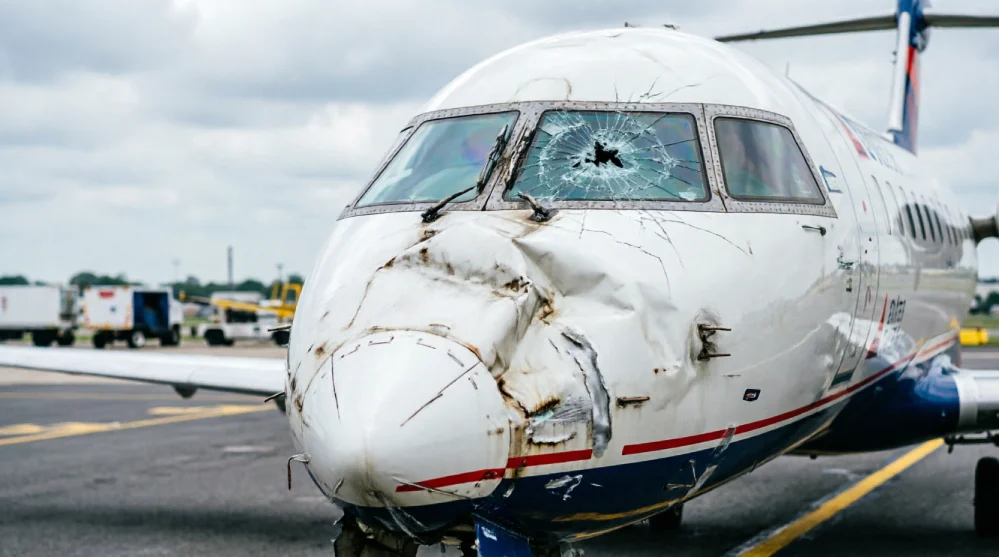
At LaGuardia Airport in 2025, two Delta Connection CRJ900 regional jets collided on the taxiway. Flight DL5155 (bound for Roanoke) and Flight DL5047 (arriving from Charlotte) clipped wing-to-nose. A winglet tore off; the other jet’s nose and cockpit windows shattered. One crew member suffered injuries, and Delta immediately took both aircraft out of service.
Ground Movement Safety Questions
Aviation experts recognize ground collisions as a persistent risk at busy airports, particularly at LaGuardia, where taxiways are tightly constrained. Although Tenerife remains the most catastrophic example, smaller ground incidents happen worldwide more often than passengers realize. Following the collision, Delta provided hotels, meals, and rebooking for all affected passengers.
Passenger Takeaway
Pay attention during ground movement. If you hear an unusual sound — grinding, a sharp lurch, or crew responding with urgency — don’t dismiss it. Alert a flight attendant immediately. Ground phase incidents are rare but fast-moving.
Malaysia Airlines MH370 (2014): Why Is This Still Aviation’s Biggest Mystery?
On March 8, 2014, Malaysia Airlines Flight MH370 departed Kuala Lumpur for Beijing with 239 people. Less than an hour after takeoff, the transponder was switched off. Military radar tracked the Boeing 777 turning sharply west, then south. It flew for another six hours on autopilot before satellite data placed its final position somewhere in the remote southern Indian Ocean.
No distress call. No wreckage on the seabed. And, no confirmed cause.
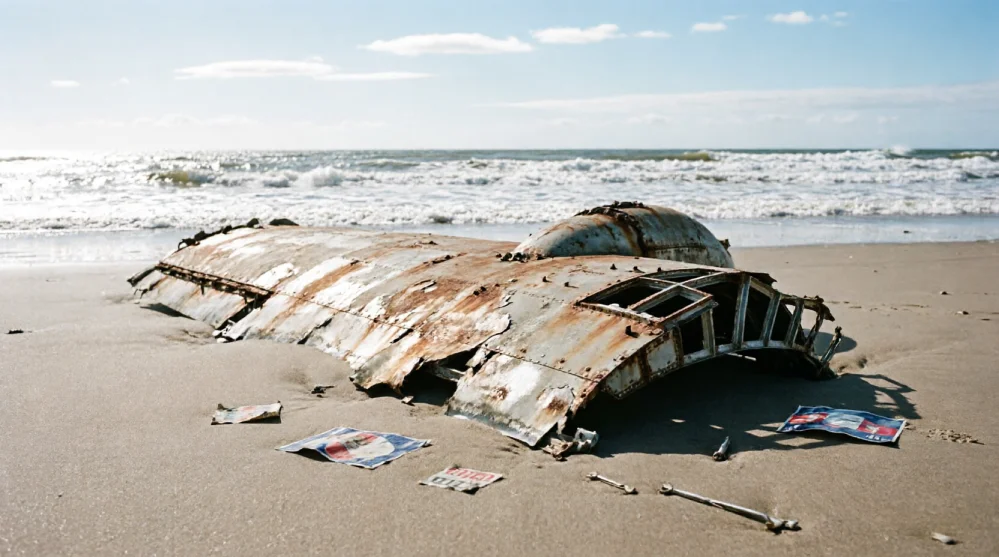
A handful of surface debris fragments have been identified — including a flaperon that washed ashore on Réunion Island in 2015, confirmed as part of MH370. But the main aircraft has never been found. Malaysia signed a new “no find, no fee” contract with Ocean Infinity in March 2025, commissioning a fresh 15,000-square-kilometer seabed search. As of March 8, 2026 — the 12th anniversary — Malaysia’s Air Accident Investigation Bureau confirmed the operation had not located the wreckage.
The aircraft is still missing.
Despite the mystery, MH370 forced a critical change: ICAO now requires real-time position reporting for commercial aircraft on long-haul routes. That standard did not exist before. The disappearance of a 777 with 239 people made it clear that tracking was essential.
Passenger Takeaway
Modern aircraft operating under current ICAO standards transmit position data in real time. If you want to share your flight details with family before a long-haul trip, tools like Flightradar24 and airline flight-tracking apps make it easy.
Delta Flight 1329 & DL3543 (2025): What Triggered Emergency Landings?
Delta Flight 1329 — Jacksonville Emergency Landing
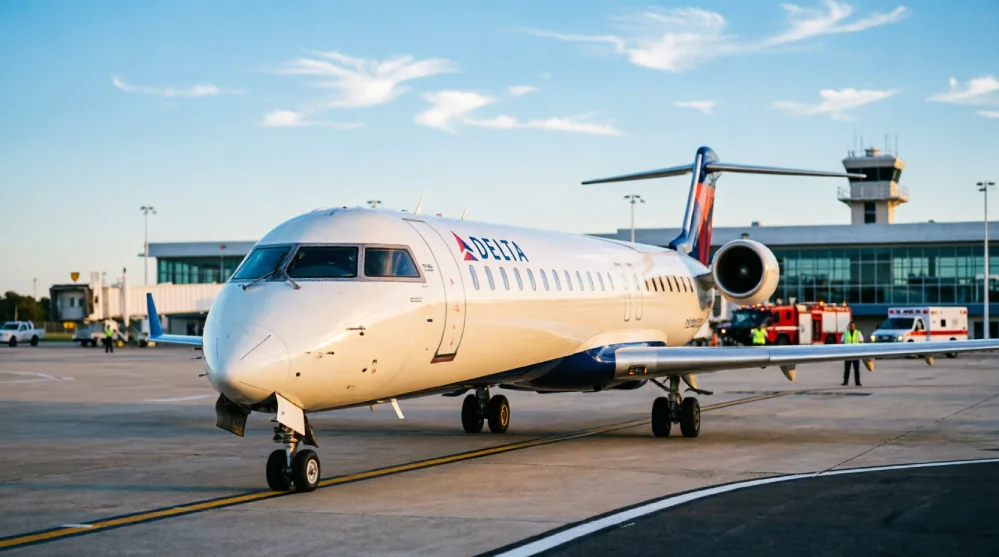
In 2025, Delta Flight 1329 declared an in-flight emergency and landed at Jacksonville International Airport. The crew received a mechanical system alert serious enough to warrant immediate diversion. Emergency services met the aircraft. No fatalities, no serious injuries.
Delta Connection DL3543 — What Went Wrong
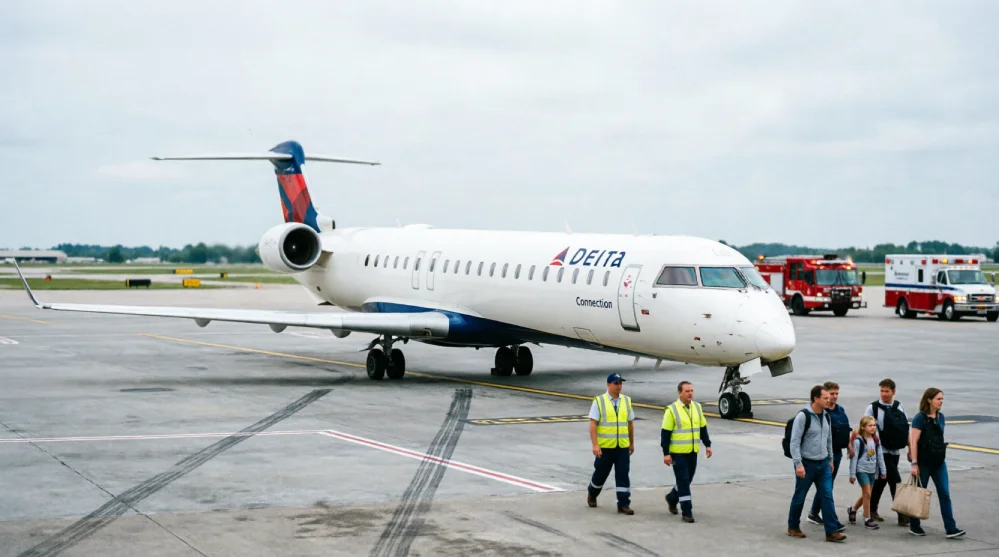
DL3543, a Delta Connection regional service on a Bombardier CRJ-series aircraft, encountered an in-flight anomaly that required an emergency landing. Ground crews responded swiftly, passengers received care, and Delta coordinated rebooking. Again, no fatalities.
Both incidents highlight a key fact: most declared emergencies end without injury. That’s not luck. It’s the result of rigorous pilot training under Part 121, built-in system redundancy, and a culture of diverting early rather than pressing on.
Passenger Takeaway
Hearing “we’ve declared an emergency” on the PA does not mean the aircraft is going down. It means the crew is following a precise procedure. Stay calm, keep your seatbelt on, and wait for crew instructions.
Germanwings Flight 9525 (2015): What Went Wrong in the Cockpit?

On March 24, 2015, Germanwings Flight 9525 was cruising at 38,000 feet between Barcelona and Düsseldorf. The captain left the cockpit for a routine break. Co-pilot Andreas Lubitz, 27, locked the cockpit door from the inside — using a post-9/11 security feature — and deliberately set a controlled descent. The captain hammered on the door, audible on the cockpit voice recorder. Eight minutes later, the Airbus A320 struck the French Alps. All 150 people aboard died.
Lubitz had been hiding a serious psychiatric diagnosis from his employer and regulators. A German doctor had declared him unfit to fly days before the crash, but German law did not require reporting this to aviation authorities. He had torn up the medical certificates and returned to work.
The US FAA already requires two crew members in the cockpit at all times. After Germanwings, EASA mandated the same rule for European carriers, and other regions quickly followed. Within weeks, the two-person cockpit rule became global. Moreover, multiple jurisdictions tightened mental health disclosure requirements and psychological screening standards for pilots.
Passenger Takeaway
The two-person cockpit rule now applies across most commercial aviation. On any certified airline operating under ICAO standards, a pilot cannot be alone on the flight deck — a direct result of 150 lives lost in 2015.
All 10 Incidents at a Glance
| Incident | Year | Aircraft | Primary Cause | Fatalities / Injuries |
|---|---|---|---|---|
| Tenerife Disaster | 1977 | Boeing 747 × 2 | Runway collision/radio miscommunication | 583 killed |
| Japan Airlines 123 | 1985 | Boeing 747SR | Faulty pressure bulkhead repair | 520 killed |
| Delta DL56 | 2025 | Airbus A330-900 | Severe clear-air turbulence over Wyoming | 25 hospitalized |
| Delta DL275 | 2025 | Airbus A350-900 | Engine anti-ice system malfunction | 0 injuries |
| LaGuardia Collision | 2025 | CRJ900 × 2 | Ground taxiway collision | 1 crew injured |
| Malaysia MH370 | 2014 | Boeing 777-200ER | Unknown; seabed wreck not located | 239 missing |
| Delta 1329 | 2025 | Regional jet | Mechanical alert in flight | 0 fatalities |
| Delta DL3543 | 2025 | Bombardier CRJ | In-flight anomaly | 0 fatalities |
| Germanwings 9525 | 2015 | Airbus A320 | A deliberate act by the co-pilot | 150 killed |
| MH17 | 2014 | Boeing 777-200ER | Shot down by a surface-to-air missile over Ukraine | 298 killed |
MH17 (2014): How Was a Passenger Jet Shot Down Over Ukraine?
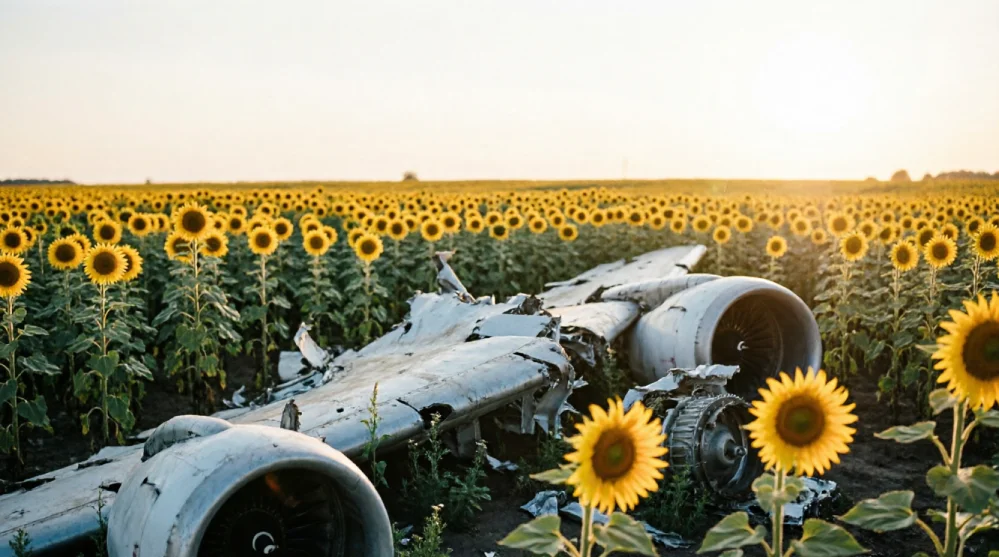
Malaysia Airlines Flight MH17 was shot down by a surface-to-air missile over eastern Ukraine in 2014, killing all 298 people aboard. That tragedy prompted ICAO to launch conflict zone airspace routing reviews, tightening the safeguards for flights over volatile regions.
What Can Passengers Actually Do to Stay Safe During a Flight Emergency?
Knowing what to do in an emergency matters more than knowing the history. Most passengers board without a plan. Here are concrete steps that make a difference.
Before You Board
- Read the safety card. Every aircraft type is configured differently. Exit locations, door handle mechanics, and flotation device positions vary between a Boeing 737 and an Airbus A321. Ninety seconds is all it takes.
- Count the rows to your nearest exit. If the cabin fills with smoke, visibility drops to near zero. Knowing “the exit is four rows behind me” turns a disorienting situation into a direction.
- Note the exits as you board. There may be an emergency exit closer to your seat than the front doors — especially in the middle of a wide-body aircraft.
- Wear shoes and keep them on. In an emergency evacuation onto a tarmac or rough terrain, bare feet cause injuries. It’s a small thing that survivors consistently mention.
During Turbulence or Emergency
- Keep your seatbelt on whenever you’re seated — not just when the sign is lit. Clear-air turbulence forms without warning and doesn’t appear on weather radar. Delta DL56 is real-world proof of what happens when passengers are unrestrained.
- Brace immediately if instructed. Lean forward, cross your arms over the seatback in front, place your head on your arms, and keep both feet flat on the floor. Don’t wait to assess how serious it looks. Brace first, evaluate later.
- Follow crew instructions only. Flight attendants train for emergencies repeatedly throughout the year under FAA Part 121 requirements. Passengers who follow instructions survive at measurably higher rates than those who improvise.
After the Incident
- Stay seated until the crew clears movement. Post-incident conditions on the tarmac can be hazardous — fuel, debris, and emergency slides under pressure. The evacuation order comes from the crew, not from personal judgment.
- Leave your carry-on. Stopping to pull a bag from the overhead bin slows the entire cabin’s evacuation. In several documented incidents, this delay has cost lives.
Conclusion
Aviation is the safest form of long-distance travel. That safety was built through hard lessons, incident by incident. The events above are why aircraft report real-time position, no commercial pilot flies alone, and Delta’s Care Team responds when passengers are hospitalized. They’re why the safety card in your seatback pocket contains information worth reading.
Key Takeaways:
- Most modern incidents end without fatalities because specific past disasters forced specific protocol changes.
- Turbulence-related injuries are largely preventable: seatbelt on, every time you’re seated.
- A flight diversion means the safety system is doing its job correctly — not failing.
- The two-person cockpit rule, real-time aircraft tracking, and structured post-incident passenger care all exist because of specific named tragedies.
- Three things are entirely within your control on any flight: knowing your nearest exit, keeping your seatbelt fastened, and following crew instructions without hesitation.
Have you ever experienced turbulence severe enough to make you genuinely nervous? Share your experience in the comments — and the next time you board a flight, remember: a few minutes of preparation is the most practical thing you can bring aboard.

