

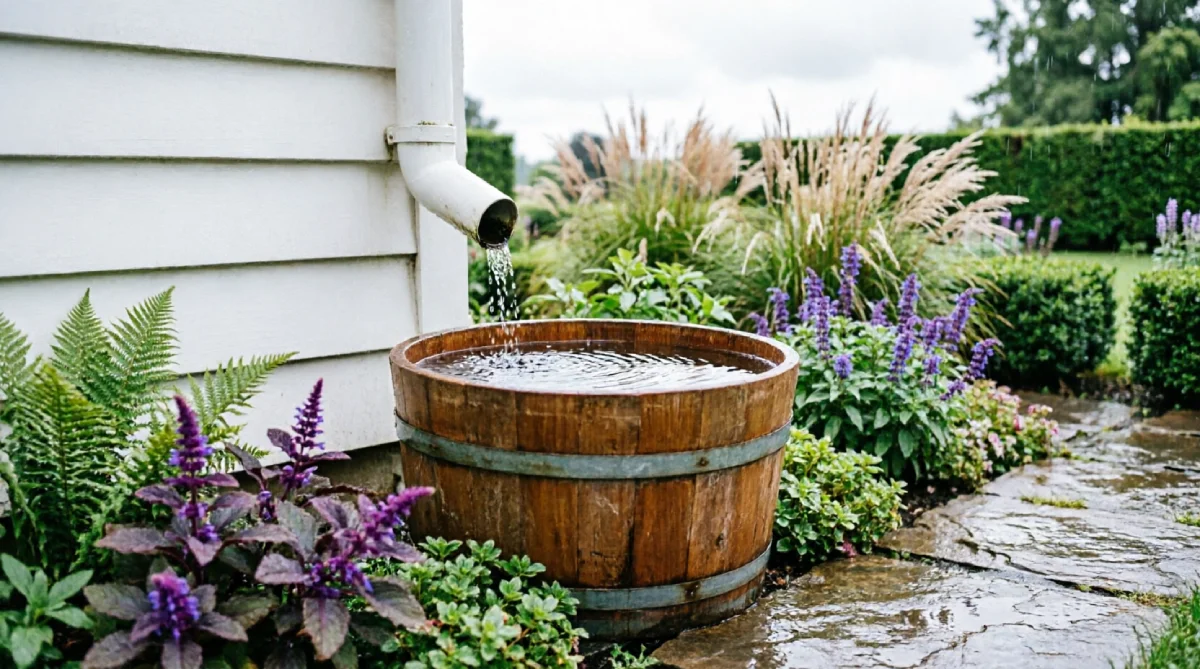
You’ve probably seen this claim floating around the internet at some point: “Did you know it’s illegal to collect rainwater in the US?” And your first reaction was probably something like — wait, what? That can’t be real.
Well, here’s the thing. It’s not entirely wrong. But it’s not entirely right, either. And that gap between the two is exactly where things get interesting.
Let’s clear this up once and for all.
So… Is Collecting Rainwater Illegal?
Short answer: No, not really — but some states do have restrictions.
The federal government has no laws or restrictions on rainwater harvesting. Most states allow citizens to collect rainwater and even encourage them to do so.
And here’s the kicker — though the list of states where it is entirely illegal to collect rainwater is essentially nonexistent, many states do have laws regulating how you collect it, how much you can keep, and whether any of it can be used as drinking water.
So the viral claim isn’t totally made up — there are real restrictions in some places. But calling it flatly “illegal” everywhere? That’s a bit of an internet exaggeration doing what it does best.
The States That Actually Have Rules
Most of the drama around this topic comes from a small group of western US states, and there are pretty logical (if old-fashioned) reasons behind it.
There are only two US states with laws and regulations that strictly restrict the practice of rainwater harvesting for residents: Colorado and Utah. Notably, both are western states located in the most arid region of the country.
Colorado
Colorado was previously one of the most restrictive states — rainwater harvesting was considered entirely illegal due to prior appropriation laws and water rights. That changed on August 10, 2016, when Colorado’s legislature passed House Bill 16-1005, allowing residents to collect rainwater in up to two containers with a combined capacity of 110 gallons.
So yes — in Colorado, you can legally collect rainwater now, but you’re capped at 110 gallons. That’s roughly two standard rain barrels. Not exactly a backyard reservoir situation.
Utah
Utah residents can collect and store up to 2,500 gallons of rainwater. Any system using cisterns of over 100 gallons or more than two containers must be registered with the state — though the registration is free. The harvested water must be used on the same property where it was collected, and it must be put to what the state defines as “beneficial use.”
That’s significantly more generous than Colorado — 2,500 gallons is actually enough to make a real difference in a home garden. But you still can’t just do whatever you want.
Other States With Some Rules
States that have some level of rainwater collection restrictions include Arkansas, California, Colorado, Georgia, Illinois, Nevada, North Carolina, Ohio, Oregon, Rhode Island, Texas, Utah, Virginia, Washington, and Wisconsin. Kansas and North Dakota may require a permit in certain situations.
Notice that many of those states — like Texas and California — aren’t banning collection at all. They’re just setting guidelines around how it’s done.
Why Do These Laws Exist in the First Place?
Here’s where it gets genuinely fascinating.
A lot of these restrictions trace back to an old legal concept called prior appropriation — a “first-come, first-served” water rights system that dates back to the days of westward expansion in the 1800s.
In Western states, restrictions exist because old water laws stated that all precipitation belonged to existing water-rights owners. These laws were known as prior appropriation, or “first-come, first-served” laws for settlers in the Old West.
The idea was that water flowing downstream belonged to whoever had staked a legal claim to it first. So when rain falls on your roof, and you collect it — in the eyes of some old laws — you’re technically intercepting water that was “promised” to someone downstream.
It sounds absurd by modern standards. But these legal frameworks were written long before anyone imagined a suburban homeowner with a rain barrel on the back patio.
In states like Colorado, where water is a precious commodity, these laws ensure that every drop is allocated to specific uses — including surface water that eventually flows into rivers, lakes, or reservoirs. Rainwater collection in these states can divert water from its intended destination, affecting downstream users and local ecosystems.
The Big Misunderstanding
Here’s the myth that keeps spreading online: people read “some states restrict rainwater collection” and immediately hear “it’s illegal everywhere to collect rain in a bucket.”
That’s simply not true.
At least 31 states, Washington D.C., and two territories broadly allow unrestricted collection. The remaining 19 states maintain some level of restrictions.
“Some restrictions” doesn’t mean “totally banned.” In most cases, it means there are size limits, registration requirements, or rules about what you can use the water for. And in many states, the government isn’t just tolerating rainwater collection — they’re actively rewarding it.
Rhode Island, Texas, and Virginia encourage residents to collect rainwater by offering a tax credit or exemption for equipment purchased for rainwater harvesting systems.
New Mexico takes it even further — cities like Albuquerque and Santa Fe offer cash rebates to residents who install rain barrels. Hawaii actively promotes it. Arizona offers tax incentives. This is hardly the picture of a country cracking down on people who want to water their tomatoes.
A Simple Real-Life Example
Imagine you live in Austin, Texas. It’s a dry summer, your garden is thirsty, and you want to set up a simple rain barrel under your downspout to collect water when it rains.
Totally fine. In fact, Texas encourages it.
Now imagine you live in Denver, Colorado. Same scenario. You can still do it — but you’re limited to two rain barrels totaling no more than 110 gallons, and the water must be used on your own property for outdoor purposes only.
You’re not getting arrested. You’re not breaking some dramatic law. You’re just working within the rules of your state’s water management system.
What About Drinking Collected Rainwater?
Worth mentioning: regardless of whether collection is legal in your state, most regulations distinguish between potable (safe to drink) and non-potable (not for drinking) uses.
Most areas require captured rainwater to be non-potable. This means the rainwater isn’t safe to drink, cook with, or bathe in — but it can be used for agriculture and home gardens.
So your rain barrel is great for your lawn. It’s not great as a water bottle. Makes sense.
FAQs
Is it illegal to collect rainwater in all 50 US states?
No. There is no US state where collecting rainwater is entirely banned. Some states have restrictions on how much you can collect or how you must do it, but outright prohibition doesn’t exist anywhere in the country.
Which state has the strictest rainwater rules?
Colorado has historically been the most restrictive. Homeowners there can collect up to 110 gallons of rainwater, but only for outdoor use.
Can I just put a bucket outside in the rain?
In most states, yes — absolutely. A small container catching rain in your backyard is unlikely to raise any legal eyebrows anywhere. Regulations typically kick in when you’re setting up larger, more permanent collection systems.
The Bottom Line
Collecting rainwater is one of those topics where the internet loves to go “wow, can you believe this?!” — and then leaves out all the nuance.
The truth is straightforward: most of the US allows rainwater collection, many states encourage it, and the handful of places with restrictions have them for historically logical (if outdated) reasons related to water rights and dry climates.
It’s a weird quirk of American water law, not a widespread crackdown on backyard gardeners. If anything, it’s a reminder that the legal world is full of rules that made perfect sense 150 years ago and sound completely bonkers today.
For exact rules in your area, check your state’s water management agency or local regulations — or have a quick chat with a licensed expert before setting up a larger collection system.
Curious about more strange-but-true laws? Keep exploring the Legal section for more surprising facts explained in plain English.

