

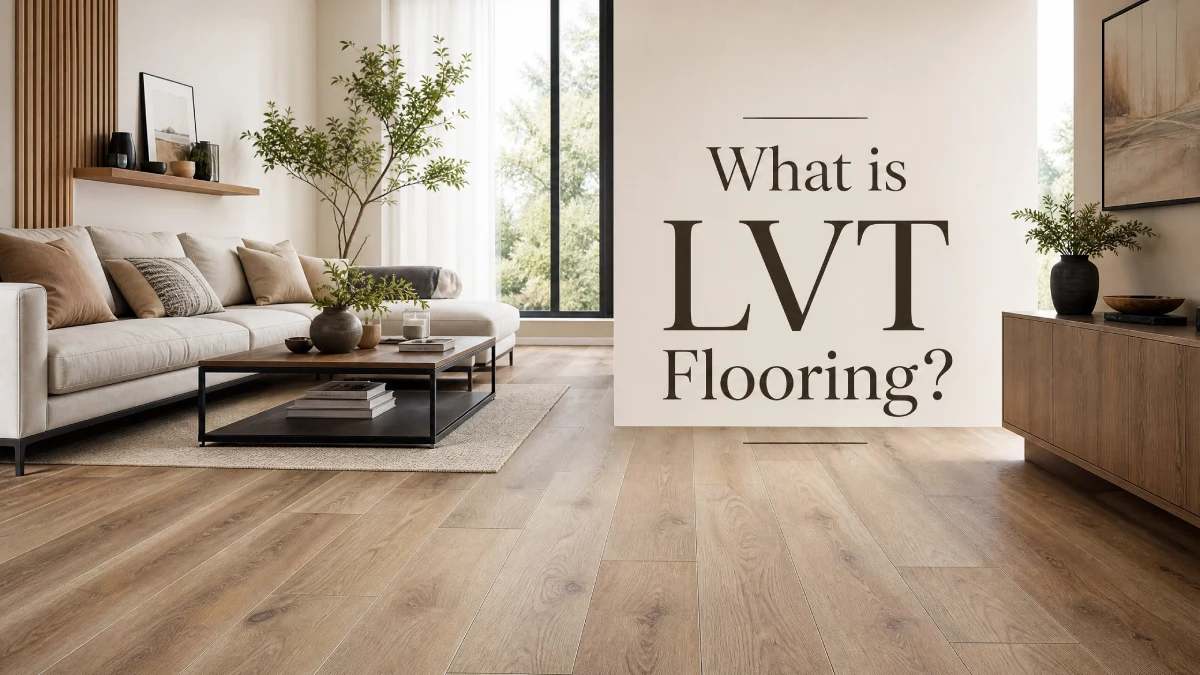
You’re standing in a flooring showroom, staring at dozens of samples that all look like wood but aren’t, when the salesperson drops a term you’ve barely heard: luxury vinyl tile. You nod like you know what it means, but inside — what is LVT flooring, really? Is it the right choice for your home, or just another product riding on hype?
In this guide, you’ll learn what LVT flooring is made of, how it stacks up against laminate, hardwood, and tile, what it costs per square foot, where it works best, and whether it’s worth your money.
By the time you finish, you’ll have everything you need to walk into any flooring store and make a confident choice — no nodding required.
What Is LVT Flooring, and Why Is Everyone Talking About It?
At its core, LVT flooring is a high-performance vinyl floor that gives you the natural beauty of hardwood or stone without the price or the upkeep. Think of it as a modern alternative: a floor that shrugs off water, resists scratches from your dog’s nails, and feels warmer underfoot than ceramic tile — all while looking remarkably like the real thing.
When you hear “vinyl flooring,” you might picture the shiny, peel-and-stick sheets your grandmother had in her kitchen. LVT is nothing like that. Today’s luxury vinyl tile uses high-definition photographic printing and protective coatings to create depth, texture, and realism that older vinyl never managed. That’s why you’ll see LVT popping up in everything from builder-grade apartments to custom homes.
What Does “Luxury Vinyl Tile” Actually Mean?
Let’s break down the name. “Luxury” refers to the realistic appearance and greater durability — these aren’t cheap-looking floors. “Vinyl” tells you the core material is PVC (polyvinyl chloride), a resilient plastic that gives the floor its flexibility, waterproof nature, and comfort. “Tile” originally described the square format, but the category has grown to include planks that mimic hardwood floorboards. In daily conversation, LVT and LVP are used interchangeably; the difference is mainly shape, not quality or construction.
The short version: it’s modern vinyl flooring, engineered for the look of premium materials without the typical drawbacks. That’s why it’s everywhere now.
What Is LVT Flooring Made Of? (The Layer-by-Layer Breakdown)
Before we get technical, imagine LVT as a layered sandwich. Every layer exists for a reason — take one away, and the whole thing falls apart. Here’s what’s between the bread.
The 4 Core Layers Explained
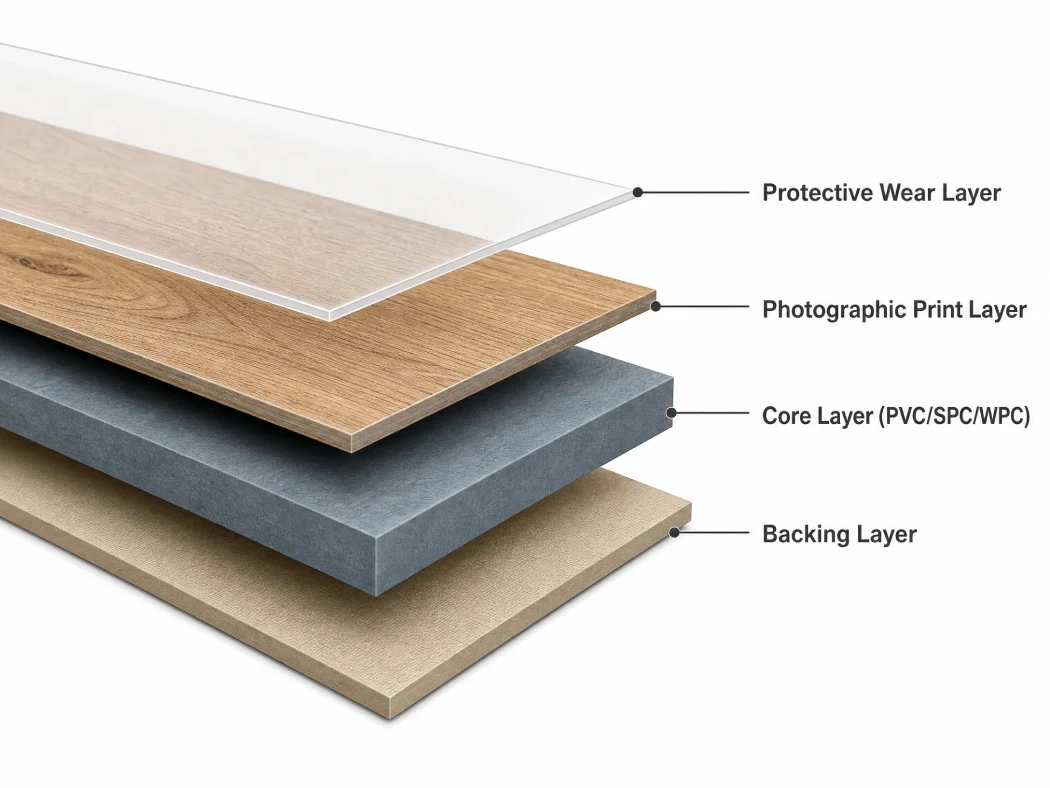
Every quality LVT floor is built from four distinct layers:
- Backing Layer — The bottom foundation that rests on your subfloor. It provides stability, can include a pre-attached underlayment for sound absorption, and keeps the plank flat and dimensionally stable.
- Core Layer — The thick middle that gives LVT its backbone. Depending on the product, this core is made of PVC, SPC (stone plastic composite), or WPC (wood plastic composite). This layer delivers the waterproof performance and most of the floor’s impact resistance.
- Photographic Print Layer — A high-definition image of wood grain, stone, or tile, printed onto a film that sits on top of the core. The realism is striking; modern printing captures knots, grain variations, and subtle color shifts that make LVT hard to distinguish from real wood at a glance.
- Protective Wear Layer — The clear top coat that takes all the abuse. It’s measured in mils (thousandths of an inch). A 12-mil wear layer works fine for a guest bedroom, but if you have kids, pets, or a busy kitchen, you want 20 mils or more. This layer is why good LVT doesn’t look scratched and tired after three years.
What Raw Materials Go Into LVT?
PVC resins combined with plasticizers give the vinyl its flexibility. Stabilizers prevent the floor from breaking down under heat or UV exposure, and the photographic film layer is a high-resolution print sealed under the wear layer. Modern LVT manufacturing has come a long way — many products today are phthalate-free and meet strict low-VOC standards like FloorScore, so they off-gas little and are safe for indoor air quality.
What Are the Different Types of LVT Flooring?
Now that you understand how LVT is built, let’s talk about the forms it takes at the store. LVT flooring generally comes in three installation styles, and the right pick depends on your room, your budget, and how handy you feel on a Saturday afternoon.
Glue-Down LVT
Each tile or plank is bonded directly to the subfloor using a specialized adhesive. This creates a rock-solid, stable floor that won’t shift, making it ideal for large, open spaces and commercial settings where heavy foot traffic is constant. The trade-off is that subfloor preparation must be nearly perfect — any bump or debris will telegraph through over time. Glue-down works beautifully for long-term installations, but it’s not the friendliest option for a first-time DIYer.
- Best for: large living areas, commercial spaces, basements where floor height is limited
- Downside: harder to replace a single damaged tile and more demanding subfloor requirements
Click-Lock (Rigid Core) LVT
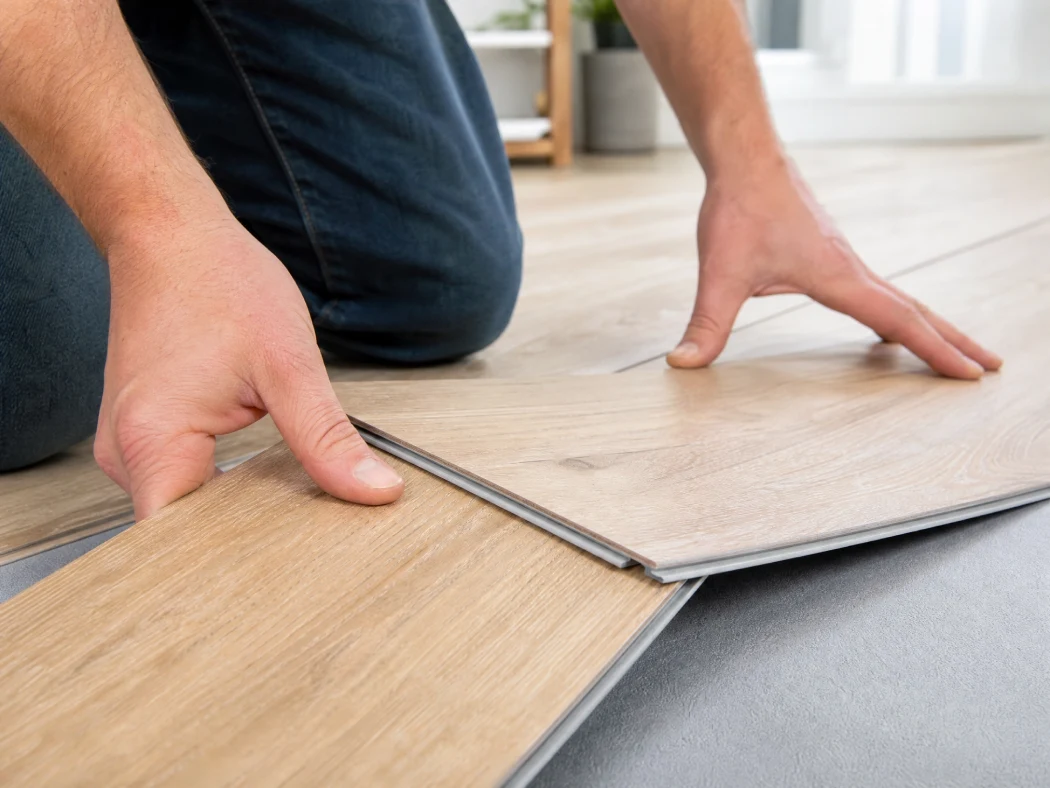
This is the category that dominates residential sales. Click-lock LVT planks have interlocking edges that snap together over an underlayment, much like laminate flooring. The core is usually rigid SPC or WPC, giving the floor a solid, substantial feel. For most homeowners, this is the sweet spot: it floats over most existing hard surfaces, installs without glue, and is genuinely DIY-friendly. Honestly, if you’ve put together a piece of IKEA furniture, you can handle click-lock LVT.
- Best for: DIY installations, living rooms, bedrooms, kitchens, bathrooms, rental properties
- Downside: requires a little more attention to expansion gaps around walls
Loose Lay LVT
Loose lay LVT is the outlier. These thick, heavy tiles have a friction-grip backing that holds them in place without any adhesive or locking mechanism. You simply lay them on a flat subfloor, and they stay put. Installation is fast, and you can pull up a single tile and replace it in seconds. The catch? The subfloor has to be dead flat, and loose lay isn’t recommended for rooms with extreme temperature swings that could affect the material’s stability.
- Best for: renters, temporary installations, small spaces like powder rooms or laundry rooms
- Downside: limited style selection compared to click-lock and glue-down options
How Does LVT Compare to Other Flooring Options?
Chances are, you’re not just comparing one LVT against another — you’re weighing it against laminate, hardwood, and tile. Here’s how it stacks up in the areas that matter most.
| Feature | LVT | Laminate | Hardwood | Ceramic Tile |
|---|---|---|---|---|
| Waterproof | ✅ Yes | ❌ No | ❌ No | ✅ Yes |
| Durability | High | Medium-High | High | Very High |
| Cost/sq ft (material) | $2–$7 | $1–$5 | $6–$15 | $5–$15 |
| Comfort underfoot | Warm & soft | Firm | Warm | Cold & hard |
| Maintenance | Easy | Easy | High | Medium |
| DIY installation | Easy | Easy | Difficult | Difficult |
| Lifespan | 15–25 years | 10–20 years | 25–100+ years | 50+ years |
| Best for | Any room, especially wet areas | Living areas, bedrooms | Living areas, bedrooms | Bathrooms, kitchens, entryways |
What Are the Real Benefits (and Drawbacks) of LVT Flooring?
Let’s get past the marketing talk and look at what LVT flooring actually delivers in a busy American home — and where it falls short.
The Pros:
- 100% waterproof — Spills, pet accidents, tracked-in snow, and bathroom humidity won’t warp or stain a quality LVT floor. Mop it without a second thought.
- Realistic looks — High-definition photographic layers now mimic everything from wire-brushed oak to Carrara marble with depth and texture.
- Warm and comfortable underfoot — Unlike tile, LVT doesn’t feel icy in the morning. Its slight give is easier on joints during long kitchen sessions.
- Scratch and stain resistant — A 20-mil wear layer can handle years of dog nails, dropped toys, and kitchen traffic without showing battle scars. It’s about as pet-friendly as flooring gets.
- Low-maintenance — Sweep or vacuum, then mop with a damp cloth. No waxing, no sealing, no special cleaners.
- Compatible with underfloor heating — Most LVT can be used over radiant heating systems (up to about 80°F), so you get the look of wood with cozy, even warmth.
The Cons:
- Can dent under extreme weight — A heavy refrigerator or piano left in one spot for years can create permanent indentations. Use furniture pads, and you’ll be fine, but don’t expect it to bounce back like rubber.
- Shorter lifespan than natural materials — Good LVT lasts 15–25 years, which is solid, but real hardwood or tile can outlive you. LVT is a replacement-level floor, not an heirloom.
- Subfloor demands are real — Any bump, nail head, or low spot can telegraph through and even cause click-lock joints to fail over time. You need a smooth, level base — no shortcuts.
- Lower-quality options can off-gas — Cheap, imported LVT may have a chemical smell initially. Stick with FloorScore-certified products to keep your indoor air quality safe.
Where Should You Install LVT Flooring in Your Home?
LVT’s strongest advantage is versatility — it makes sense in rooms where hardwood fears to tread, and tile feels too harsh.
Is LVT Flooring Good for Bathrooms and Kitchens?
Absolutely. These are the rooms where LVT excels. Spilled water, steam from a hot shower, the occasional overflowing sink — none of it fazes a properly installed LVT floor. And unlike ceramic tile, the surface stays warm on bare feet during cold winter mornings. In a bathroom, LVT gives you the look of stone or wood without the grout lines that collect mildew.
Imagine stepping out of the shower onto a warm, wood-look floor instead of ice-cold porcelain. That’s the everyday difference LVT makes — it turns a purely functional room into a comfortable space you actually want to spend time in.
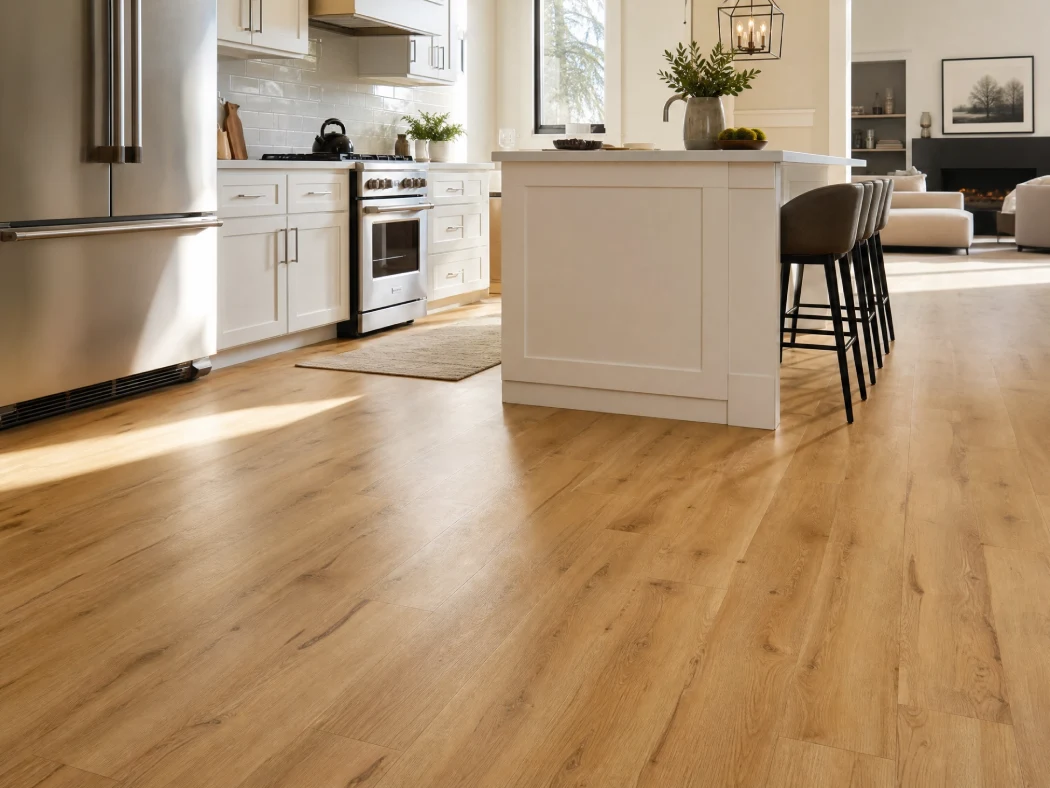
Kitchens benefit similarly: dropped cans, splattered grease, and constant foot traffic are daily realities, and LVT handles them without complaint. Just be sure to choose a wear layer of at least 20 mil in these high-moisture, high-impact areas.
Living Rooms, Bedrooms, and Beyond
Living rooms and bedrooms are natural fits. The floor feels softer than tile and looks high-end, creating a cohesive, open feel when you run the same LVT throughout your main living areas. Basements are another top application — LVT goes directly over concrete slabs and handles the slight dampness that would destroy hardwood or laminate. Entryways and mudrooms also love LVT; its scratch resistance stands up to grit, boots, and wet umbrellas day after day.
LVT Flooring Installation, Cost, and Maintenance: What to Expect
How Much Does LVT Flooring Cost?
In the US, LVT material prices typically fall into three tiers. Budget products start around $1 per square foot — functional, but usually with a thin wear layer and fewer style choices. Mid-range LVT, where most homeowners land, runs $2.50 to $5 per square foot. This gets you a 20-mil wear layer, better print realism, and a rigid core. Premium LVT can climb to $8 or more per square foot and often includes features like deeper texture embossing and integrated underlayment.
Professional installation adds $1.50 to $4 per square foot, depending on your location, the type of LVT, and subfloor condition. Glue-down generally costs slightly more in labor than click-lock. All told, for a typical 200-square-foot kitchen, expect to pay between $500 and $2,400 — far less than a comparable hardwood or tile job.
| LVT Tier | Material Cost/sq ft | Installation Cost/sq ft | Total Cost/sq ft |
|---|---|---|---|
| Budget | $1.00–$2.50 | $1.50–$2.50 | $2.50–$5.00 |
| Mid-Range | $2.50–$5.00 | $2.00–$3.00 | $4.50–$8.00 |
| Premium | $5.00–$8.00+ | $2.50–$4.00 | $7.50–$12.00 |
Can You Install LVT Flooring Yourself?
For the hands-on homeowner, click-lock rigid core LVT is one of the most DIY-friendly flooring options on the market. The planks click together without glue, and they float over an underlayment — no nails, no mess. Loose lay is even simpler: you just set the tiles in place. Glue-down is doable but requires more patience and a perfectly prepped subfloor; many DIYers prefer to hire a pro for that.
How to Keep Your LVT Floor Looking New
LVT’s easy-care reputation is well-earned. Stick to a few simple habits and the floor will look fresh for years:
- Sweep or vacuum regularly to remove abrasive grit — sand and small stones are the real enemies of any floor.
- Damp-mop with a pH-neutral cleaner made for vinyl floors; avoid soaking the floor, even though it’s waterproof.
- Place felt pads under furniture legs and lift heavy items rather than dragging them.
- Wipe up spills as they happen, not because the floor will be damaged, but because dried sticky residue attracts dirt.
- Skip the steam mop, wax, and abrasive scrubbers — they can cloud or damage the wear layer over time.
Conclusion
For homeowners who want the beauty of natural materials without the cost, the stress, or the constant maintenance, LVT flooring delivers. It’s waterproof, tough enough for pets and kids, and looks so close to real wood or stone that guests tap it with their toe to check. Whether you’re renovating a single bathroom or re-flooring an entire open-plan home, LVT brings practicality and style together at a price that makes sense.
If you’re leaning toward LVT, the next step is simple: measure the rooms you want to upgrade, then head to a local flooring showroom. See the samples in person, feel the texture, and compare the wear layers. Once you walk on a good LVT floor yourself, the decision usually becomes easy.

