


Have you ever caught yourself reacting to your child the exact same way your parents once reacted to you? Maybe you heard your mother’s words come out of your mouth. Maybe you felt your father’s frustration rise in your chest. That moment — that flash of recognition — is more common than you might think.
Your parenting style shaped by your parents is one of the most well-documented patterns in developmental psychology. The behaviors, emotional reactions, and habits you carry into parenthood are often ones you absorbed long before you ever had children of your own. But here’s what matters most: these patterns are not permanent. With awareness and consistent effort, you can change them.
Parenting styles are often shaped by how individuals were raised, through learned behaviors and emotional patterns absorbed in childhood. However, these patterns are not permanent. With awareness and intentional effort, parents can change their responses and create healthier, more supportive environments for their children.
Why Your Childhood Shapes the Way You Parent
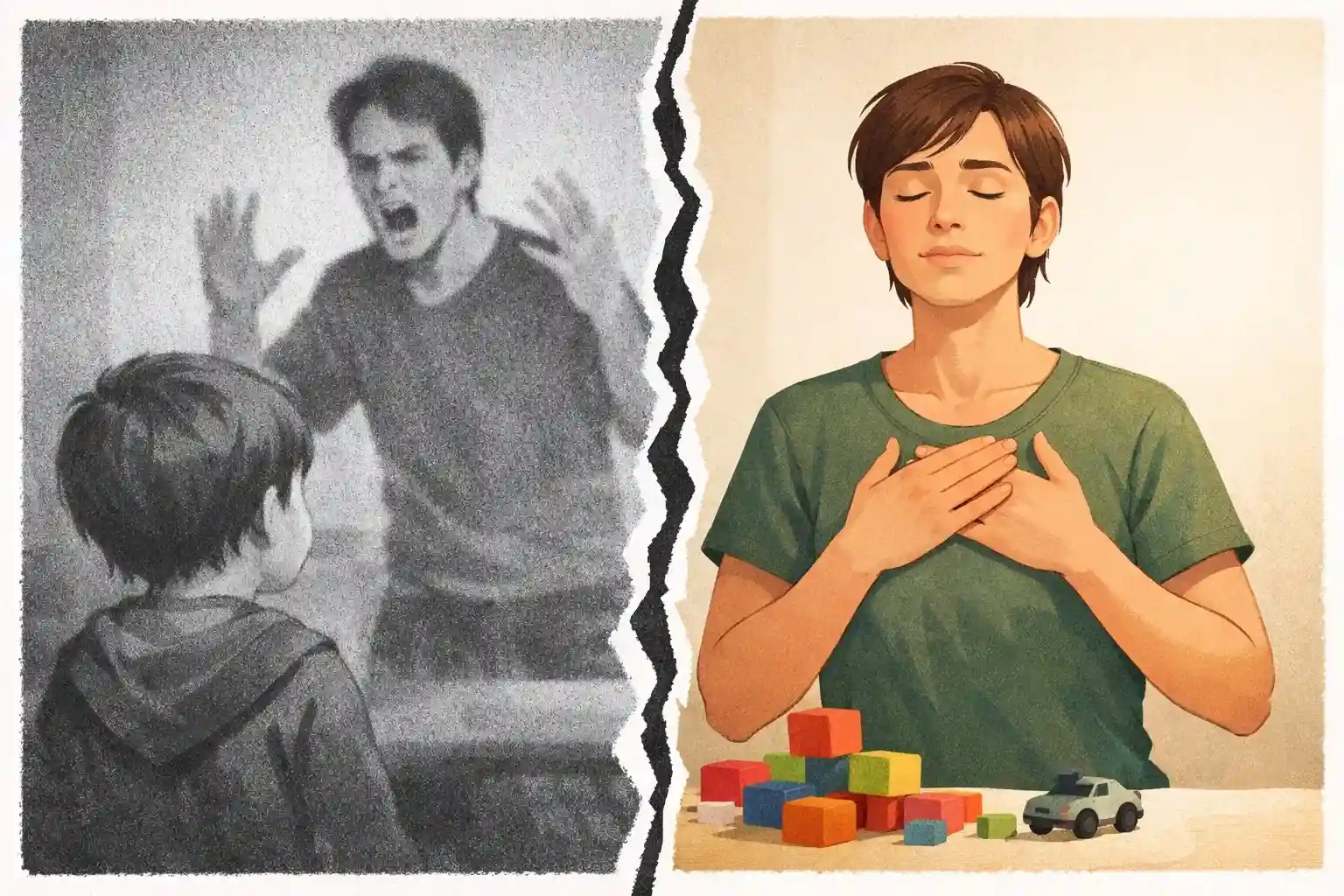
Children are natural observers. From the moment they’re born, they watch how adults around them handle stress, express love, set rules, and manage conflict. This isn’t something children consciously choose to do — it happens automatically, through a process psychologists call observational learning.
Albert Bandura’s foundational research on social learning theory showed that children model behavior by watching others, particularly caregivers. When a child sees a parent respond to frustration with yelling, their brain files that away as a normal stress response. This kind of chronic household tension can have long-lasting effects; in fact, science shows that parental stress effects on child DNA can influence a child’s biological stress-response system over time.
By the time you became a parent yourself, these responses had already been practiced thousands of times. They became automatic — firing before you even had a chance to think. That’s not weakness or failure. That’s simply how the human brain works. Research published by the American Psychological Association (APA) consistently shows that parenting behaviors are passed down across generations through a combination of learned behavior, stress response patterns, and attachment styles formed in early childhood.
The Three Most Common Patterns People Repeat
Not all inherited parenting patterns are harmful — many are genuinely positive. But some cycles do create difficulties. Here are three of the most common ones:
- Strict or Authoritarian Parenting: Parents raised with rigid rules and little emotional warmth sometimes replicate that environment without realizing it.
- Overprotective Parenting: Adults who grew up in unpredictable or unsafe environments sometimes respond by over-controlling their children’s world.
- Emotional Reactivity: If you grew up around frequent anger or anxiety, your nervous system learned to stay on alert.
When these patterns become repetitive and harmful, they can manifest as signs of bad parenting, such as constant criticism or emotional neglect. Identifying these early is key to making a positive change.
Signs You’re Repeating Old Patterns
Most parents who repeat generational patterns aren’t doing it on purpose. Here are some signs worth paying attention to:
- You react before you think — and the reaction feels bigger than the situation
- You hear yourself saying phrases your own parents used, especially during conflict
- You feel strong guilt or shame after certain interactions with your child
- You find it hard to stay calm when your child expresses strong emotions
- You struggle to set boundaries, or you set them in ways that feel harsh even to you
It’s particularly difficult to stay mindful when you are physically depleted. For instance, the extreme exhaustion caused by sleep loss in the first year of a baby can make it much harder to interrupt these automatic reactions and stay present.
The Good News: Your Brain Can Change
Neuroscience has established something genuinely encouraging: the brain retains the ability to change throughout your entire life. This is called neuroplasticity — the brain’s capacity to form new connections and rewire existing ones in response to new experiences and repeated behaviors.
Studies available through the National Institutes of Health (NIH) confirm that intentional behavioral practice — doing something new repeatedly, especially with emotional engagement — creates measurable changes in brain structure. In practical terms: every time you pause instead of reacting, you’re laying down a new neural pathway. Do it enough times, and it becomes your new default.
How to Break the Cycle: 6 Practical Steps

- Pause before you react. When you feel a strong emotional response rising, physically stop. Take one breath.
- Identify your triggers. Keep a simple note on your phone. Triggers often connect directly to unresolved childhood experiences.
- Name the feeling. Labeling emotions reduces their intensity.
- Choose one new response. Don’t try to overhaul everything at once. Pick one situation and decide on a different response in advance.
- Repair after rupture. A genuine apology to your child — “I lost my temper and that wasn’t fair to you” — builds trust.
- Seek support when needed. Conscious parenting is genuinely difficult work. Working through these changes alongside a partner can provide much-needed stability; exploring the 10 secrets to parenting as partners can help you stay on the same page.
5 Psychology Facts Worth Knowing
| Fact Number | Psychology Fact |
|---|---|
| 1 | Most core behavioral patterns are established before age 7, but remain changeable throughout adulthood. |
| 2 | Awareness alone — without action — has been shown to reduce reactivity in parents within 8 weeks. |
| 3 | Children whose parents repair after conflict develop higher emotional resilience. |
| 4 | Attachment security in adults predicts parenting warmth more accurately than income or education. |
| 5 | It takes an average of 66 days to form a new behavioral habit, according to University College London. |
Frequently Asked Questions
Why do I parent like my parents?
Because parenting behavior is largely learned, not innate. You absorbed patterns through years of observation and emotional experience. Your brain stored those responses and now triggers them automatically.
Can parenting habits actually change?
Yes. The brain’s neuroplasticity means behavioral patterns can shift at any age. Change requires consistent practice, not a single moment of insight.
How long does it take to break a parenting pattern?
Meaningful change is typically noticeable within 2 to 3 months of consistent effort. Complex patterns rooted in childhood trauma may take longer.
You Get to Choose Something Different
Your childhood shaped you. It handed you a set of instincts, reactions, and beliefs about what parenting looks like. Some of those are gifts. Some of them — honestly — aren’t.
Generational parenting patterns that reached you don’t have to continue through you. Not because breaking them is easy — it isn’t. But because you now know what to look for, and because your brain is built for exactly this kind of change.
Start with one moment. One pause. One different response. That’s where new patterns begin.

